Old-Fashioned Weigela
/
(Weigela florida)
Old-Fashioned Weigela (Weigela florida)
/


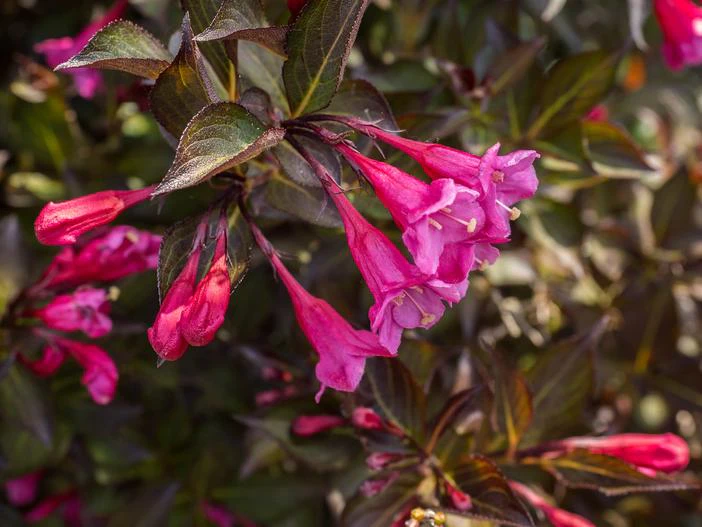

F. D. Richards
CC BY-SA 2.0

Image By:
F. D. Richards
Recorded By:
Copyright:
CC BY-SA 2.0
Copyright Notice:
Photo by: F. D. Richards | License Type: CC BY-SA 2.0 | License URL: https://creativecommons.org/licenses/by-sa/2.0/ | Uploader: F. D. Richards | Publisher: Flickr





Summary
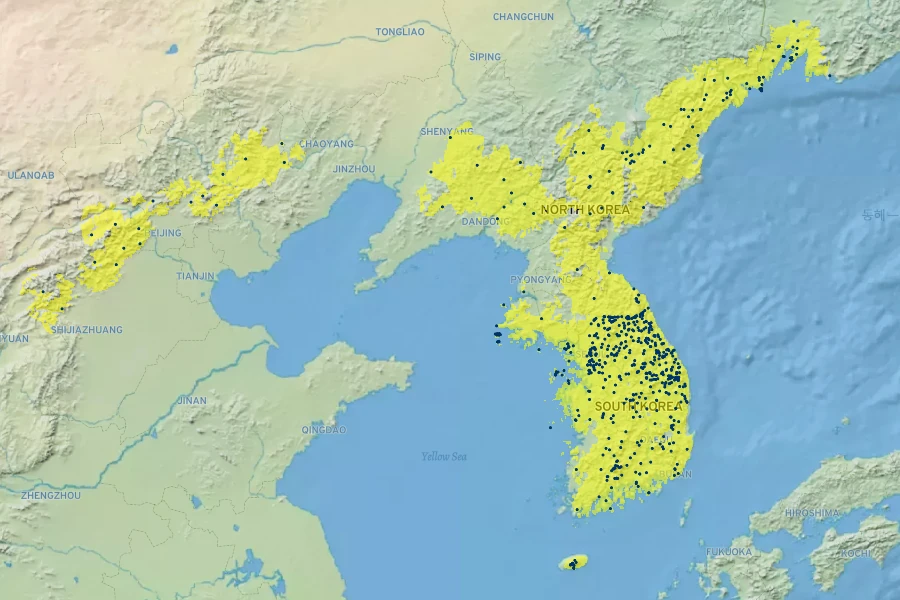
Weigela florida, commonly known as Weigela, is a deciduous shrub native to open woodlands, forest edges, and along riverbanks in Korea and parts of northern China. It typically grows to a height of 4-6 feet and a width of 3-5 feet. The plant has a rounded, densely branched form and is noted for its showy flowers, which are trumpet-shaped with a five-lobed corolla, blooming in shades of white, pink, or red, and occasionally yellow, in early summer. The flowers are particularly attractive to hummingbirds and beneficial insects. The fruit is a dry capsule that contains numerous small winged seeds, though it is not ornamentally significant.
Weigela is valued for its easy maintenance and the profusion of flowers that add color to gardens in the spring and early summer. It is commonly used for border planting, as a specimen plant, or in mass plantings for a dramatic effect. Weigela thrives in full sun but can tolerate part shade, and it prefers well-drained soils. While adaptable to various soil types, it performs best in soils with moderate fertility. Regular pruning after flowering helps maintain its shape and encourages more prolific blooming in the following season. Potential problems include leaf and twig blights, but these are generally not severe.CC BY-SA 4.0
Weigela is valued for its easy maintenance and the profusion of flowers that add color to gardens in the spring and early summer. It is commonly used for border planting, as a specimen plant, or in mass plantings for a dramatic effect. Weigela thrives in full sun but can tolerate part shade, and it prefers well-drained soils. While adaptable to various soil types, it performs best in soils with moderate fertility. Regular pruning after flowering helps maintain its shape and encourages more prolific blooming in the following season. Potential problems include leaf and twig blights, but these are generally not severe.CC BY-SA 4.0
Plant Description
- Plant Type: Shrub
- Height: 4-6 feet
- Width: 3-5 feet
- Growth Rate: Moderate
- Flower Color: Pink, Red, White
- Flowering Season: Spring, Summer
- Leaf Retention: Deciduous
Growth Requirements
- Sun: Full Sun, Part Shade
- Drainage: Fast, Medium, Slow
Common Uses
Bee Garden, Bird Garden, Border Plant, Butterfly Garden, Deer Resistant, Fragrant, Hedges, Hummingbird Garden, Low Maintenance, Potted Plant, Showy Flowers, Street Planting
Natural Habitat
Open woodlands, forest edges, and along riverbanks in Korea and parts of northern China
Other Names
Common Names: Weigelia
Scientific Names: Weigela florida, Weigela rosea, Weigela praecox, Diervilla florida, Weigela toensis, Weigela florida f. candida, Diervilla rosea, Weigela florida f. subtricolor, Weigela florida var. venusta, Weigela florida f. alba
GBIF Accepted Name: Weigela florida (Bunge) A.DC.