Orange Mullein
/
(Verbascum phlomoides)
Orange Mullein (Verbascum phlomoides)
/


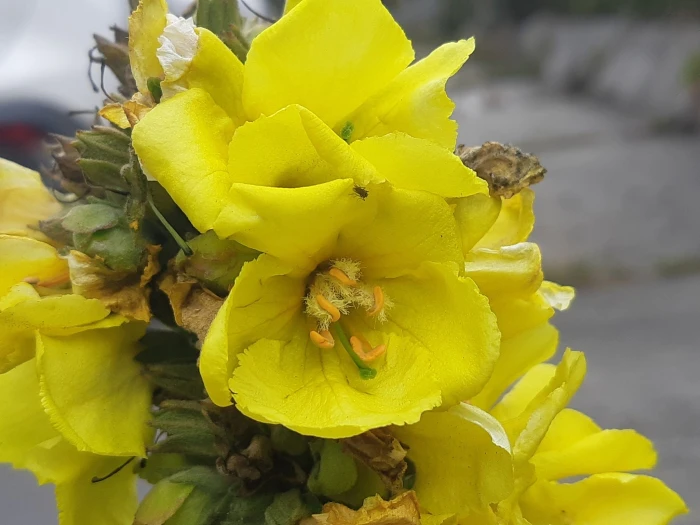

Daniel Velasco C.
CC BY 4.0

Image By:
Daniel Velasco C.
Recorded By:
Copyright:
CC BY 4.0
Copyright Notice:
Photo by: Daniel Velasco C. | License Type: CC BY 4.0 | License URL: http://creativecommons.org/licenses/by/4.0/ | Rights Holder: Daniel Velasco C. | Publisher: iNaturalist | Date Created: 2022-04-08T14:01:23-07:00 |





Summary
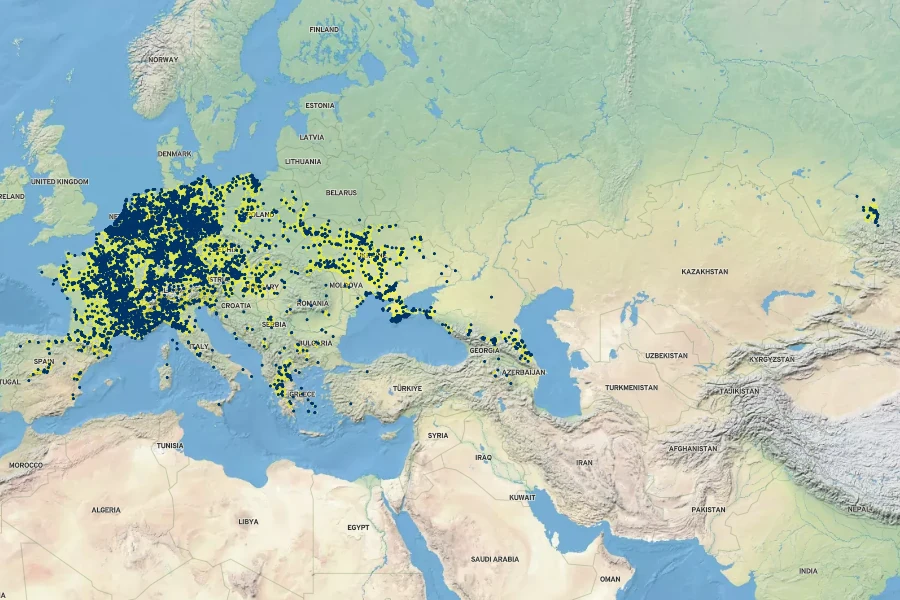
Verbascum phlomoides, commonly known as Orange Mullein or Woolly Mullein, is a biennial herb that is native to Europe and Asia Minor, typically found in dry, open areas such as grasslands and roadsides. It has naturalized in North America, where it is often considered a weed. This species can reach a height of 30-120 cm and is characterized by its rosette of woolly leaves and a tall spike of densely clustered, bright yellow flowers that bloom in the summer. The flowers are showy and attract a variety of pollinators, including bees and butterflies.
Orange Mullein is appreciated for its striking vertical form and vibrant flowers, which can add visual interest to wildflower gardens and informal borders. It is relatively easy to grow, requiring minimal maintenance once established. It prefers full sun and can tolerate a range of soil types, provided they are well-drained. While it is used medicinally for respiratory catarrh and as a diuretic, gardeners should be cautious as Verbascum phlomoides can become invasive outside its native range. It is recommended to deadhead spent flowers to prevent self-seeding and potential invasiveness.CC BY-SA 4.0
Orange Mullein is appreciated for its striking vertical form and vibrant flowers, which can add visual interest to wildflower gardens and informal borders. It is relatively easy to grow, requiring minimal maintenance once established. It prefers full sun and can tolerate a range of soil types, provided they are well-drained. While it is used medicinally for respiratory catarrh and as a diuretic, gardeners should be cautious as Verbascum phlomoides can become invasive outside its native range. It is recommended to deadhead spent flowers to prevent self-seeding and potential invasiveness.CC BY-SA 4.0
Plant Description
- Plant Type: Herb
- Height: 2-5 feet
- Width: 1-2 feet
- Growth Rate: Moderate
- Flower Color: Yellow
- Flowering Season: Summer, Fall
- Leaf Retention: Deciduous
Growth Requirements
- Sun: Full Sun
- Drainage: Medium, Fast
Common Uses
Border Plant, Drought Tolerant, Low Maintenance
Natural Habitat
Native to dry, open areas such as grasslands and roadsides in Europe and Asia Minor
Other Names
Common Names: Orange Mullein, Woolly Mullein
Scientific Names: Verbascum phlomoides, Flomosia condensata, Flomosia nemarosa, Flomosia phlomoides, Thapsus phlomoides, Verbascum argyrostachyon, Verbascum australe, Verbascum avarorum, Verbascum belasitzae
GBIF Accepted Name: Verbascum phlomoides