White Mullein
/
(Verbascum lychnitis)
White Mullein (Verbascum lychnitis)
/


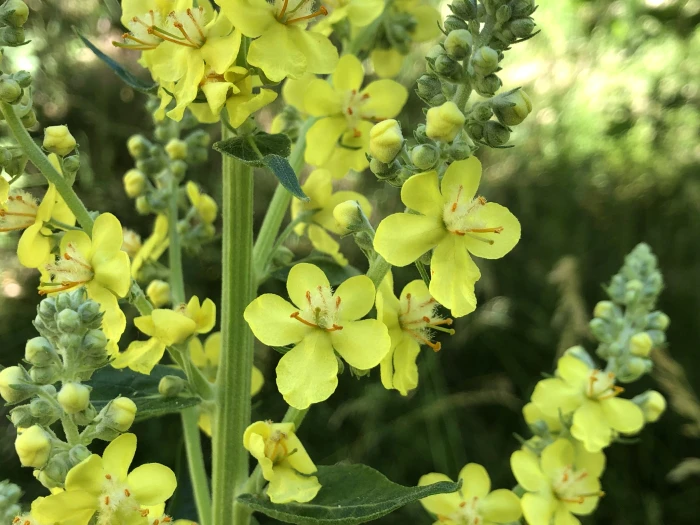

Jason Grant
CC BY 4.0

Image By:
Jason Grant
Recorded By:
Copyright:
CC BY 4.0
Copyright Notice:
Photo by: Jason Grant | License Type: CC BY 4.0 | License URL: http://creativecommons.org/licenses/by/4.0/ | Rights Holder: Jason Grant | Publisher: iNaturalist | Date Created: 2021-06-14T10:31:01-07:00 |





Summary
Verbascum lychnitis, commonly known as White Mullein, is a biennial or short-lived perennial herb native to a wide range of habitats in Europe and Asia, including open woodlands, grasslands, and disturbed areas. It has been naturalized in parts of North America. The plant typically grows up to 31 inches tall and features a rosette of basal leaves that are sessile and non-clasping. The erect stem bears small, densely packed flowers that are predominantly white, though some may appear yellow. Flowering occurs in the summer, and the blooms are not particularly showy, but they do attract pollinators such as bees.
White Mullein is valued for its vertical form and its ability to thrive in poor, dry soils, making it suitable for rock gardens and wildflower meadows. It is also used in traditional medicine, though care should be taken due to its potential toxicity. In cultivation, it prefers full sun to partial shade and requires well-drained soil. It is drought-tolerant once established and generally requires little maintenance. However, it can self-seed prolifically and may become invasive outside its native range, so gardeners should monitor its spread.CC BY-SA 4.0
White Mullein is valued for its vertical form and its ability to thrive in poor, dry soils, making it suitable for rock gardens and wildflower meadows. It is also used in traditional medicine, though care should be taken due to its potential toxicity. In cultivation, it prefers full sun to partial shade and requires well-drained soil. It is drought-tolerant once established and generally requires little maintenance. However, it can self-seed prolifically and may become invasive outside its native range, so gardeners should monitor its spread.CC BY-SA 4.0
Plant Description
- Plant Type: Herb
- Height: 2-4 feet
- Width: 1-2 feet
- Growth Rate: Moderate
- Flower Color: White
- Flowering Season: Summer
- Leaf Retention: Evergreen
Growth Requirements
- Sun: Full Sun
- Drainage: Medium, Fast
Common Uses
Bee Garden, Border Plant, Drought Tolerant, Low Maintenance
Natural Habitat
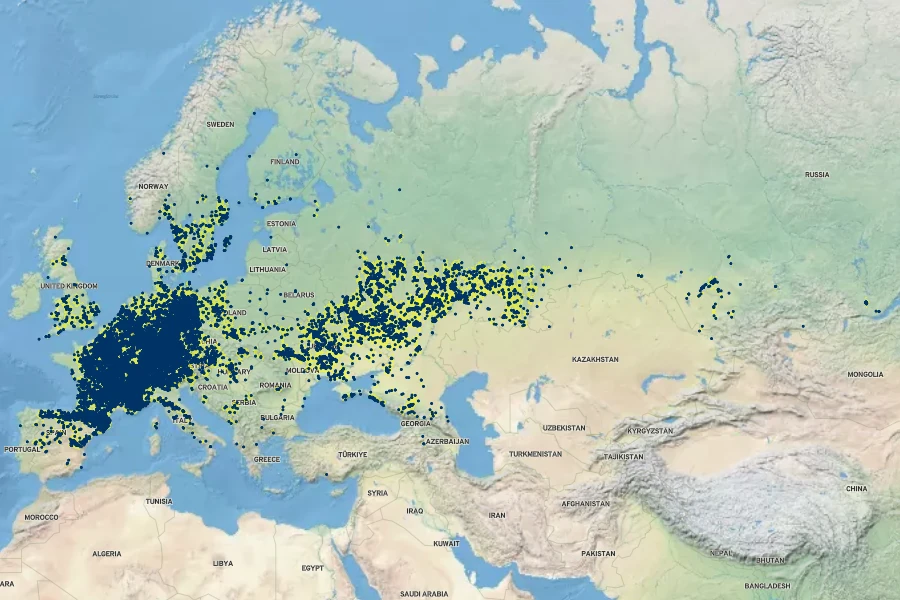
Open woodlands, grasslands, and disturbed areas in Europe and Asia
Other Names
Common Names: Candlewick Plant
Scientific Names: Verbascum lychnitis, Blattaria alba, Lychnitis alba, Lychnitis lutea, Thapsus lychnitis, Verbascum album, Verbascum bracteatum, Verbascum firmum, Verbascum lapeyrouseanum
GBIF Accepted Name: Verbascum lychnitis