/
(Tristerix longebracteatus)
(Tristerix longebracteatus)
/


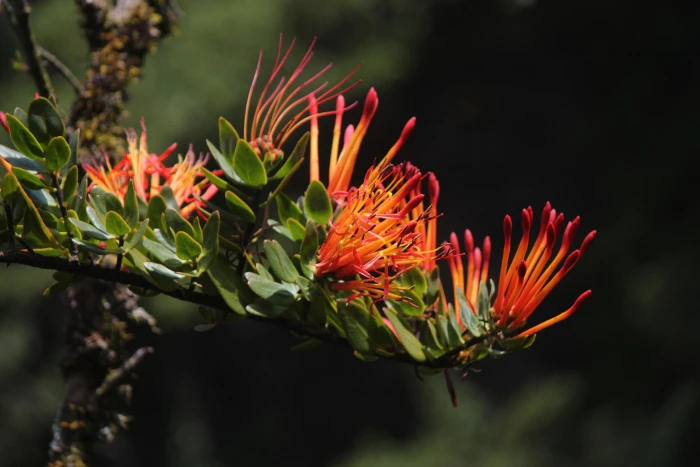

© Daniel Velasco C.
CC BY 4.0

Image By:
© Daniel Velasco C.
Recorded By:
Copyright:
CC BY 4.0
Copyright Notice:
Photo by: © Daniel Velasco C. | License Type: CC BY 4.0 | License URL: http://creativecommons.org/licenses/by/4.0/ | Uploader: davelascoc | Publisher: iNaturalist |





Summary
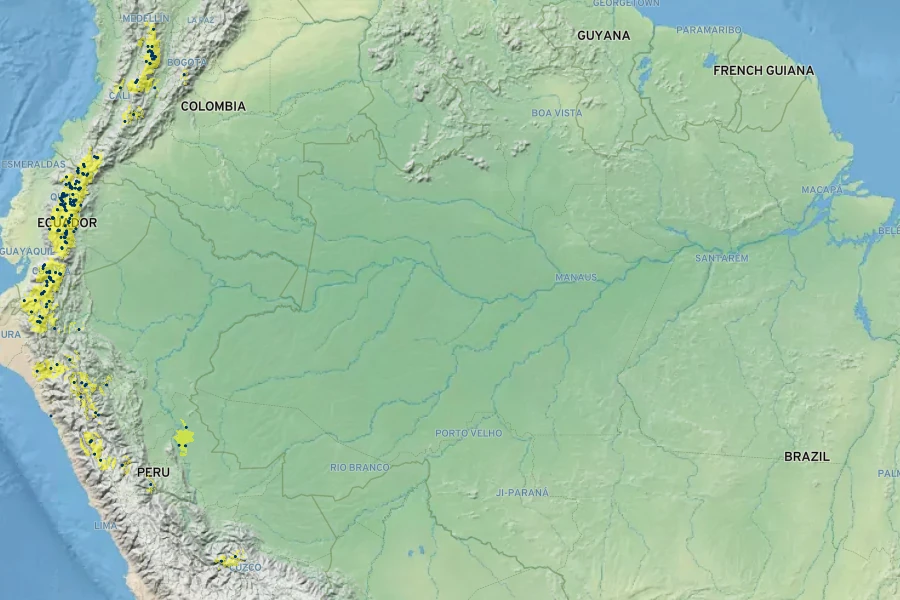
Tristerix longebracteatus, with no widely recognized common name, is a parasitic vine native to the high-altitude Andean forests of Colombia and Ecuador. It is adapted to cool, moist conditions found in cloud forests and often attaches to various host trees. This species is not typically grown for ornamental purposes due to its parasitic nature, but it is of interest for its unique ecological role.
Tristerix longebracteatus has a distinctive appearance with long, tubular red flowers that are adapted to pollination by hummingbirds. The flowering season varies depending on the altitude and climate of its native habitat. While not commonly cultivated, it could potentially be used in botanical gardens or research settings to demonstrate plant parasitism and coevolution with pollinators. In cultivation, it would require a host plant, cool temperatures, and high humidity to thrive. It is not known for particular diseases, but its parasitic lifestyle means it could potentially weaken or damage its host plants.CC BY-SA 4.0
Tristerix longebracteatus has a distinctive appearance with long, tubular red flowers that are adapted to pollination by hummingbirds. The flowering season varies depending on the altitude and climate of its native habitat. While not commonly cultivated, it could potentially be used in botanical gardens or research settings to demonstrate plant parasitism and coevolution with pollinators. In cultivation, it would require a host plant, cool temperatures, and high humidity to thrive. It is not known for particular diseases, but its parasitic lifestyle means it could potentially weaken or damage its host plants.CC BY-SA 4.0
Plant Description
- Plant Type: Vine, Shrub
- Height: 2-3 feet
- Width: 1-2 feet
- Growth Rate: Moderate
- Flower Color: Red
- Flowering Season: Summer
- Leaf Retention: Deciduous
Growth Requirements
- Sun: Full Sun
- Drainage: Fast
Common Uses
Drought Tolerant, Low Maintenance
Natural Habitat
High-altitude Andean forests
Other Names
Common Names: Cactus Mistletoe, Cardón Mistletoe
Scientific Names: Tristerix longebracteatus, Loranthus caesius, Loranthus corymbosus, Loranthus destructor, Loranthus glaucus, Loranthus longebracteatus, Loranthus pereskiifolius, Loranthus pereskiifolius, Loranthus pycnanthus
GBIF Accepted Name: Tristerix longebracteatus