Kenya Clover
/
(Trifolium semipilosum)
Kenya Clover (Trifolium semipilosum)
/


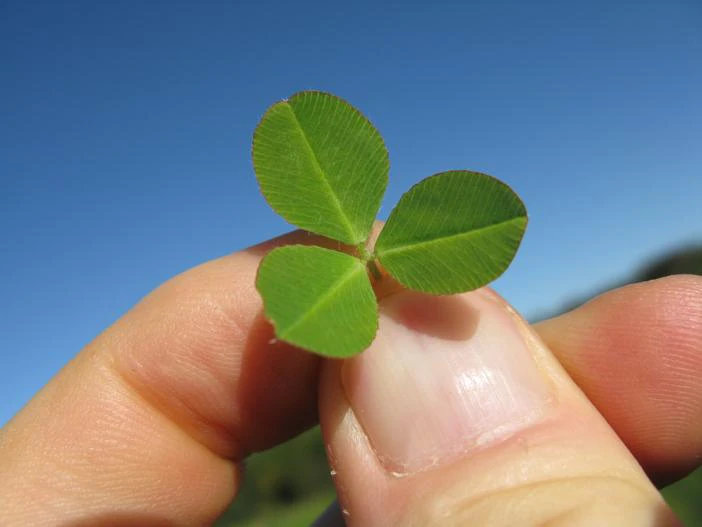

Harry Rose
CC BY 2.0

Image By:
Harry Rose
Recorded By:
Copyright:
CC BY 2.0
Copyright Notice:
Photo by: Harry Rose | License Type: CC BY 2.0 | License URL: https://creativecommons.org/licenses/by/2.0 | Uploader: Amada44 | Publisher: Wikipedia Commons





Summary
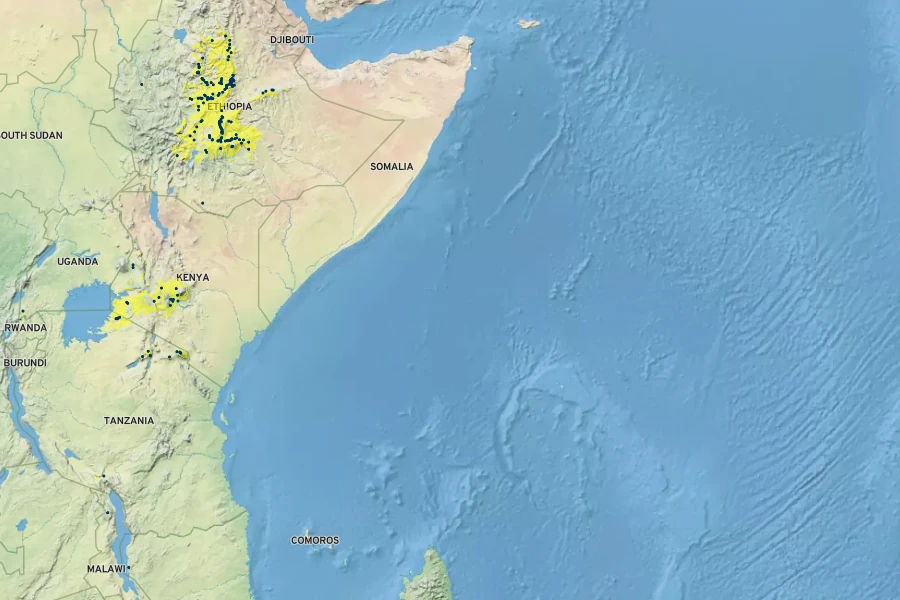
Trifolium semipilosum, commonly known as Kenya clover or Kenya white clover, is a perennial herb that is part of the legume family. It is native to grasslands and open woodlands in East Africa, specifically in countries such as Yemen, Eritrea, Ethiopia, Kenya, Uganda, Tanzania, Malawi, and Zimbabwe, and has been introduced to Saint Helena. This species typically forms a low-growing mat with trifoliate leaves and round heads of white to pinkish flowers that bloom in the appropriate seasons, depending on the regional climate.
Kenya clover is valued for its nitrogen-fixing abilities, which improve soil fertility, making it an excellent cover crop in agricultural settings. It is also used for grazing in pastures and can be a component in wildflower meadows due to its attractive flowers and benefits to pollinators. In cultivation, it prefers full sun to partial shade and thrives in well-drained soils. While it is not commonly found in ornamental gardens, its utility in improving soil health and forage quality makes it a significant species in sustainable agriculture practices.CC BY-SA 4.0
Kenya clover is valued for its nitrogen-fixing abilities, which improve soil fertility, making it an excellent cover crop in agricultural settings. It is also used for grazing in pastures and can be a component in wildflower meadows due to its attractive flowers and benefits to pollinators. In cultivation, it prefers full sun to partial shade and thrives in well-drained soils. While it is not commonly found in ornamental gardens, its utility in improving soil health and forage quality makes it a significant species in sustainable agriculture practices.CC BY-SA 4.0
Plant Description
- Plant Type: Herb
- Height: 0.5-2 feet
- Width: 0.5-1 feet
- Growth Rate: Moderate
- Flower Color: White, Pink
- Flowering Season: Spring, Summer
- Leaf Retention:
Growth Requirements
- Sun: Full Sun, Part Shade
- Drainage: Medium
Common Uses
Bee Garden, Border Plant, Low Maintenance
Natural Habitat
Native to grasslands and open woodlands in East Africa
Other Names
Common Names: Hairy Clover, Kenya White Clover, African Clover
Scientific Names: Trifolium semipilosum, Trifolium repens
GBIF Accepted Name: Trifolium semipilosum