Clammy Clover
/
(Trifolium obtusiflorum)
Clammy Clover (Trifolium obtusiflorum)
/


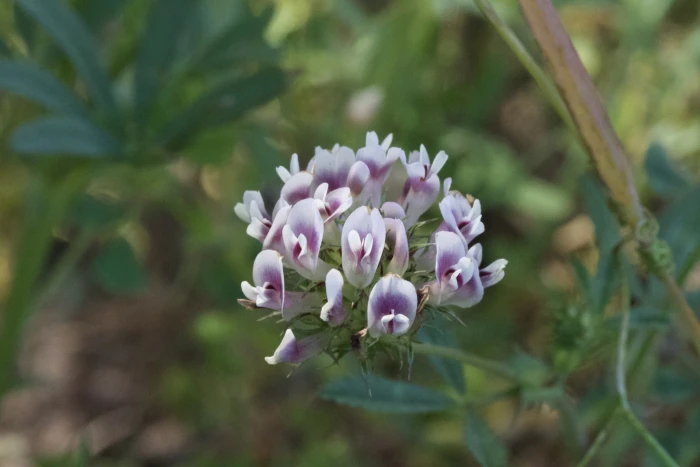

Arvel Hernandez
CC BY 4.0

Image By:
Arvel Hernandez
Recorded By:
Copyright:
CC BY 4.0
Copyright Notice:
Photo by: Arvel Hernandez | License Type: CC BY 4.0 | License URL: http://creativecommons.org/licenses/by/4.0/ | Rights Holder: Arvel Hernandez | Publisher: iNaturalist | Date Created: 2022-05-25T10:11:24-07:00 |





Summary
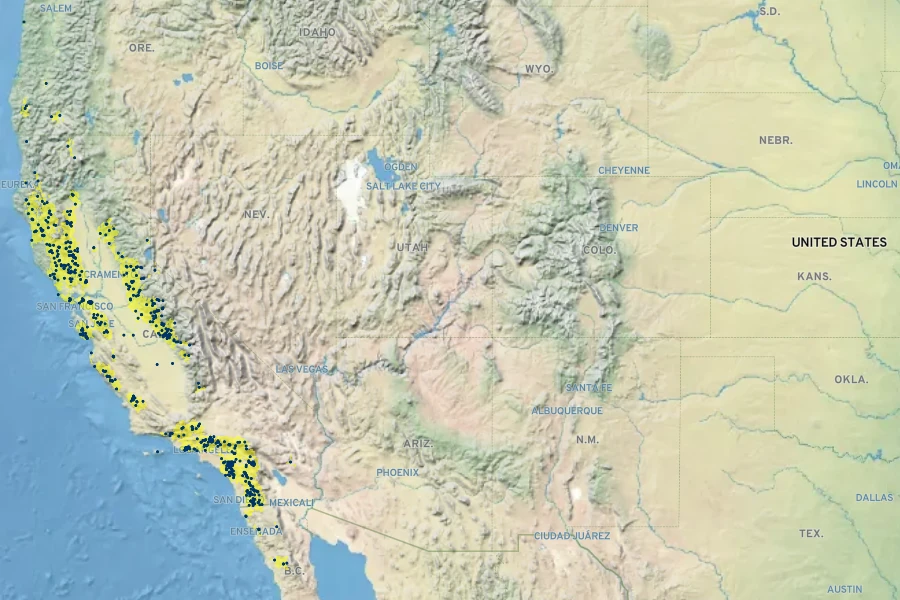
Trifolium obtusiflorum, commonly known as Clammy Clover, is an annual herb native to the grasslands, meadows, and open areas within the California Floristic Province, which includes the Peninsular, Transverse, and Sierra Nevada ranges, as well as the California Coast Ranges and extends into southwestern Oregon. It typically thrives in moist, well-drained soils along streambanks, in wet meadows, and in other seasonally damp environments. Clammy Clover reaches a modest height of up to 12 inches (30 cm) and has a distinctive appearance with its hairy, glandular, and sticky leaves. The leaves consist of sharply toothed, pointed oval leaflets that can grow up to 2 inches long. During its flowering season in the spring and early summer, it produces an inflorescence that is a dense head of small, pea-like flowers, which are pink and purple with white tips, adding a splash of color to its native habitats.
Clammy Clover is valued for its ability to fix nitrogen in the soil, making it beneficial for soil health and an excellent choice for restoration projects and naturalized plantings. It is also used in wildflower meadows and as a cover crop in agriculture. This species prefers full sun to partial shade, but it is relatively low maintenance once established. While not commonly used in ornamental horticulture, it can be an interesting addition to native plant gardens.CC BY-SA 4.0
Clammy Clover is valued for its ability to fix nitrogen in the soil, making it beneficial for soil health and an excellent choice for restoration projects and naturalized plantings. It is also used in wildflower meadows and as a cover crop in agriculture. This species prefers full sun to partial shade, but it is relatively low maintenance once established. While not commonly used in ornamental horticulture, it can be an interesting addition to native plant gardens.CC BY-SA 4.0
Plant Description
- Plant Type: Herb
- Height: 0.5-1.5 feet
- Width: 0.5-2 feet
- Growth Rate: Moderate
- Flower Color: White, Pink
- Flowering Season: Spring, Summer
- Leaf Retention:
Growth Requirements
- Sun: Full Sun, Part Shade
- Drainage: Medium
Common Uses
Bee Garden, Low Maintenance
Natural Habitat
Native to grasslands, meadows, and open areas within the California Floristic Province, including moist, well-drained soils along streambanks and in wet meadows
Other Names
Common Names: Clustered Clover, Sharp-Tooth Clover, Creek Clover, Sour-Salt Clover
Scientific Names: Trifolium obtusiflorum, Trifolium majus, Trifolium obtusiflorum var. majus, Trifolium roscidum, Trifolium tridentatum var. obtusiflorum
GBIF Accepted Name: Trifolium obtusiflorum