Mountain Clover
/
(Trifolium montanum)
Mountain Clover (Trifolium montanum)
/


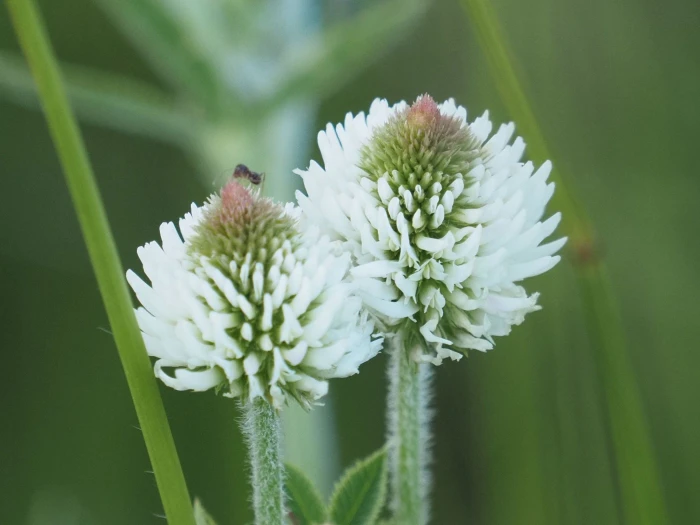

Michael Knapp
CC BY 4.0

Image By:
Michael Knapp
Recorded By:
Copyright:
CC BY 4.0
Copyright Notice:
Photo by: Michael Knapp | License Type: CC BY 4.0 | License URL: http://creativecommons.org/licenses/by/4.0/ | Rights Holder: Michael Knapp | Publisher: iNaturalist | Date Created: 2021-06-10T18:37:17-07:00 |



Summary
Trifolium montanum, commonly known as mountain clover, is a perennial herb native to mountainous regions of Europe, including the Alps, Pyrenees, the Balkans, and Siberia. It is also found in meadows and grassy slopes in Scandinavia, as evidenced by its status as the county flower of Oslo, Norway. This species typically forms low clumps reaching 10-30 cm in height and is characterized by its trifoliate (three-parted) leaves and spherical, creamy white to pale pink flower heads that bloom from June to August. The flowers are modest in size but can be quite showy en masse.
Mountain clover is valued for its ability to thrive in poor soils and its use in wildflower meadows and alpine gardens. It is also appreciated for its nitrogen-fixing properties, which improve soil fertility. In cultivation, it prefers full sun to partial shade, well-drained soils, and tolerates drought once established. While not commonly used, it can serve as a ground cover or for erosion control on slopes. It is generally low-maintenance but can be susceptible to root rot in overly wet conditions.CC BY-SA 4.0
Mountain clover is valued for its ability to thrive in poor soils and its use in wildflower meadows and alpine gardens. It is also appreciated for its nitrogen-fixing properties, which improve soil fertility. In cultivation, it prefers full sun to partial shade, well-drained soils, and tolerates drought once established. While not commonly used, it can serve as a ground cover or for erosion control on slopes. It is generally low-maintenance but can be susceptible to root rot in overly wet conditions.CC BY-SA 4.0
Plant Description
- Plant Type: Herb
- Height: 0.5-1.5 feet
- Width: 0.5-1 feet
- Growth Rate: Moderate
- Flower Color: White
- Flowering Season: Summer
- Leaf Retention: Deciduous
Growth Requirements
- Sun: Full Sun, Part Shade
- Drainage: Medium, Fast
Common Uses
Bee Garden, Low Maintenance
Natural Habitat
native to mountainous regions of Europe, including the Alps, Pyrenees, the Balkans, and Siberia
Other Names
Common Names: Mountain Clover, White Clover, European Clover
Scientific Names: Trifolium montanum, Amoria montana, Lagopus montanus, Trifolium endressii
GBIF Accepted Name: Trifolium montanum