Aztec Clover
/
(Trifolium amabile)
Aztec Clover (Trifolium amabile)
/


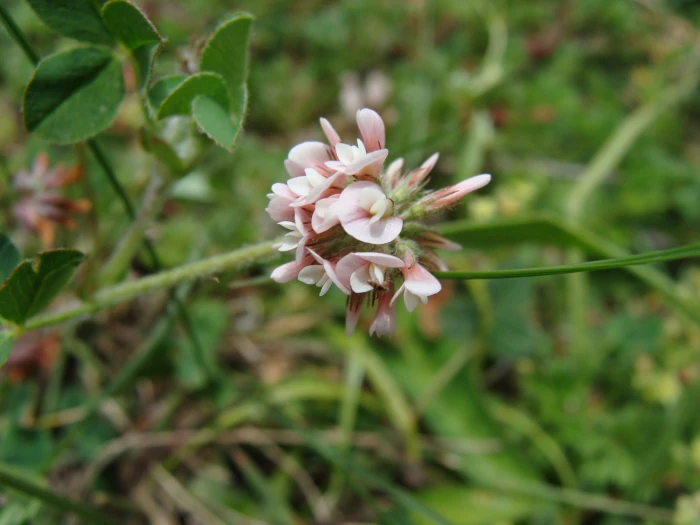

Alexis López Hernández
CC BY 4.0

Image By:
Alexis López Hernández
Recorded By:
Copyright:
CC BY 4.0
Copyright Notice:
Photo by: Alexis López Hernández | License Type: CC BY 4.0 | License URL: http://creativecommons.org/licenses/by/4.0/ | Rights Holder: Alexis López Hernández | Publisher: iNaturalist | Date Created: 2020-07-19T13:07:25-07:00 |



Summary
Trifolium amabile, commonly known as Aztec Clover, Lovely Clover, or Amiable Clover, is a perennial herb that is native to the high-altitude grasslands and open areas throughout South and Central America, going up to the southern half of North America. It typically grows at a moderate rate to a height and width of 0.5-1 feet (0.15-0.3 meters). The plant forms a low mound with trifoliate leaves and bears charming pink or white flowers that bloom profusely in the spring and summer, adding a delicate touch to garden settings. The flowers are not only showy but also attract pollinators such as bees.
Aztec Clover is appreciated for its ease of maintenance and its ability to fix nitrogen in the soil, which can improve soil fertility for surrounding plants. It is often used in wildflower meadows, as a ground cover, or in borders where its cheerful blossoms can be enjoyed. It thrives in full sun to part shade and prefers medium draining soils such as clay, loam, or sandy types. Regular watering is necessary, especially during dry periods. While generally disease-free, it can occasionally suffer from common clover pests and diseases. Gardeners should also be aware that in some conditions, it can spread vigorously outside its native range.CC BY-SA 4.0
Aztec Clover is appreciated for its ease of maintenance and its ability to fix nitrogen in the soil, which can improve soil fertility for surrounding plants. It is often used in wildflower meadows, as a ground cover, or in borders where its cheerful blossoms can be enjoyed. It thrives in full sun to part shade and prefers medium draining soils such as clay, loam, or sandy types. Regular watering is necessary, especially during dry periods. While generally disease-free, it can occasionally suffer from common clover pests and diseases. Gardeners should also be aware that in some conditions, it can spread vigorously outside its native range.CC BY-SA 4.0
Plant Description
- Plant Type: Herb
- Height: 0.5-1 feet
- Width: 0.5-1 feet
- Growth Rate: Moderate
- Flower Color: Pink, White
- Flowering Season: Spring, Summer
- Leaf Retention: Deciduous
Growth Requirements
- Sun: Full Sun, Part Shade
- Drainage: Medium
Common Uses
Bee Garden, Border Plant, Butterfly Garden, Low Maintenance
Natural Habitat
High-altitude grasslands and open areas of the Andean regions
Other Names
Common Names: Lovely Clover, Amiable Clover
Scientific Names: Trifolium amabile, Lupinaster amabilis, Trifolium lozanoi, Trifolium pauciflorum, Trifolium reflexum, Trifolium roseum, Trifolium titicacense
GBIF Accepted Name: Trifolium amabile