Japanese Star Jasmine
/
(Trachelospermum asiaticum)
Japanese Star Jasmine (Trachelospermum asiaticum)
/


Krzysztof Ziarnek, Kenraiz
CC BY-SA 4.0






Summary
Japanese star jasmine is valued for its versatility, being heat and cold tolerant, and its ability to grow in both sunny and shady conditions. It is often used to cover fences, walls, and trellises, providing a dense green backdrop and intense fragrance during the flowering period. It is also suitable for container planting and can be grown against a sheltered wall or fence in temperate areas. While it can withstand brief frosts down to -15°C, it thrives best in full sun to part shade and in well-drained soil. Because of its rapid growth, monitor and prune regularly to keep plantings within bounds.CC BY-SA 4.0
Plant Description
- Plant Type: Vine
- Height: 0.5-1 feet
- Width: 5-10 feet
- Growth Rate: Slow
- Flower Color: Cream, White
- Flowering Season: Spring, Summer
- Leaf Retention: Evergreen
Growth Requirements
- Sun: Full Sun, Part Shade
- Drainage: Fast, Medium, Slow
Common Uses
Bank Stabilization, Bee Garden, Bird Garden, Border Plant, Butterfly Garden, Deer Resistant, Drought Tolerant, Erosion Control, Fragrant, Groundcover, Hedges, Hummingbird Garden, Potted Plant, Rock Garden, Salt Tolerant, Showy Flowers, Street Planting
Natural Habitat
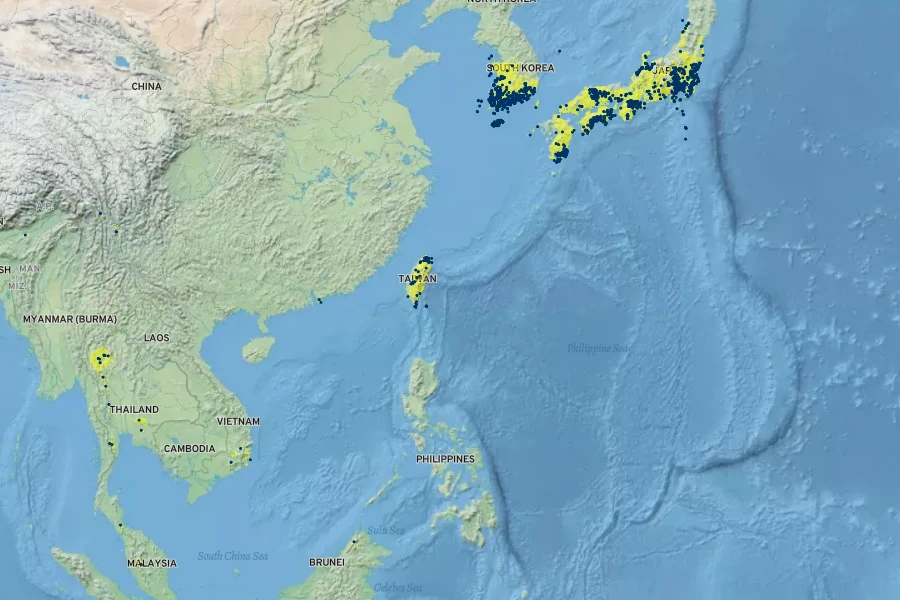
Woodland margins and thickets in Japan, Korea, and parts of Southeast Asia
Other Names
Common Names: Small Leaf Confederate Jasmine, Asiatic Jasmine, Asian-Jasmine, Japanischer Sternjasmin, 細梗絡石, Ya Zhou Luo Shi, Teika-Kazura
Scientific Names: Trachelospermum asiaticum, Trachelospermum asiaticum var. brevisepalum, Trachelospermum crocostomum, Trachelospermum borneanum, Trachelospermum bessonii, Malouetia asiatica, Trachelospermum asiaticum var. oblanceolatum, Trachelospermum divaricatum var. brevisepalum, Melodinus cavaleriei, Microchonea lucida
GBIF Accepted Name: Trachelospermum asiaticum (Siebold & Zucc.) Nakai