Spotted Sterculia
/
(Sterculia guttata)
Spotted Sterculia (Sterculia guttata)
/


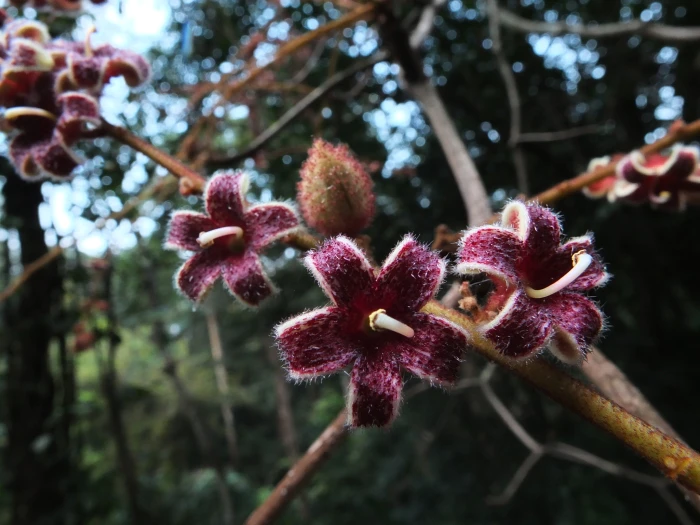

Siddarth Machado
CC BY 4.0

Image By:
Siddarth Machado
Recorded By:
Copyright:
CC BY 4.0
Copyright Notice:
Photo by: Siddarth Machado | License Type: CC BY 4.0 | License URL: http://creativecommons.org/licenses/by/4.0/ | Rights Holder: Siddarth Machado | Publisher: iNaturalist | Date Created: 2014-12-23T17:52:41-08:00 |





Summary
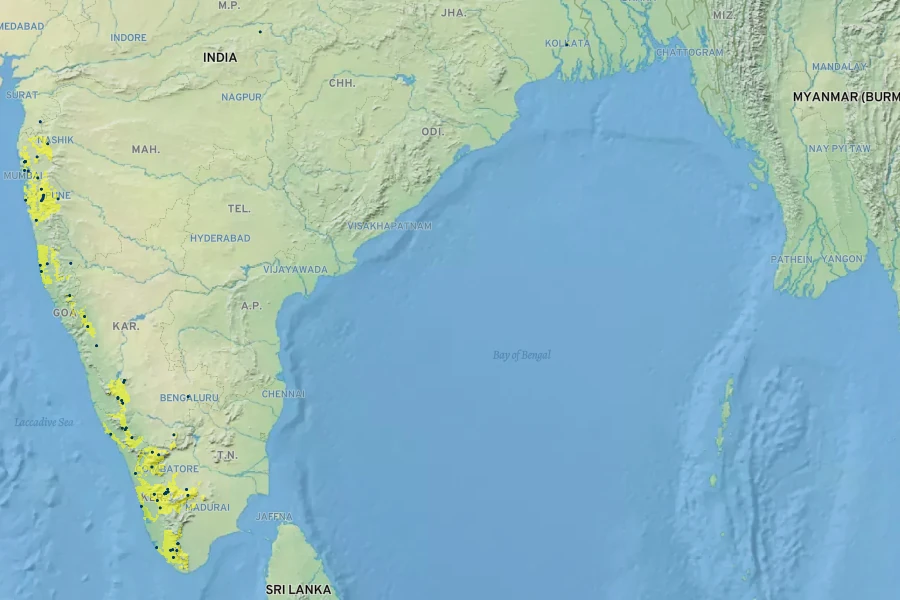
Sterculia guttata, commonly known as Spotted Sterculia, is a deciduous tree native to tropical dry deciduous forests, particularly in regions of India, Bangladesh, the Andaman and Nicobar Islands, Myanmar, Thailand, and Laos. It can grow up to 115 feet (35 meters) in height, with a notable straight trunk and a spreading canopy. The bark is smooth and flaky, with a distinctive mottled pattern that gives the tree its common name. The leaves are large and palmate, with long petioles. Spotted Sterculia produces clusters of red and orange flowers that are quite showy, typically blooming in the dry season when the tree is leafless, which adds to its ornamental appeal.
Spotted Sterculia is valued for its shade and is often used in reforestation projects due to its fast growth rate. It is also planted as an ornamental tree in large gardens and parks. The seeds, known for their insecticidal properties against mosquito larvae, offer potential for integrated pest management strategies. This species prefers well-drained soils and can tolerate drought once established, making it suitable for xeriscaping. It thrives in full sun to part shade conditions. While it is not commonly known to suffer from major diseases, care should be taken to avoid waterlogged conditions which can lead to root rot.CC BY-SA 4.0
Spotted Sterculia is valued for its shade and is often used in reforestation projects due to its fast growth rate. It is also planted as an ornamental tree in large gardens and parks. The seeds, known for their insecticidal properties against mosquito larvae, offer potential for integrated pest management strategies. This species prefers well-drained soils and can tolerate drought once established, making it suitable for xeriscaping. It thrives in full sun to part shade conditions. While it is not commonly known to suffer from major diseases, care should be taken to avoid waterlogged conditions which can lead to root rot.CC BY-SA 4.0
Plant Description
- Plant Type: Tree
- Height: 12-25 feet
- Width: 10-15 feet
- Growth Rate: Moderate
- Flower Color: Red
- Flowering Season: Spring, Summer
- Leaf Retention: Deciduous
Growth Requirements
- Sun: Full Sun, Part Shade
- Drainage: Fast
Common Uses
Low Maintenance, Showy Flowers
Natural Habitat
Tropical dry deciduous forests
Other Names
Common Names: Makopa
Scientific Names: Sterculia guttata, Astrodendrum malabaricum, Clompanus malabarica, Sterculia alata, Sterculia cuneata
GBIF Accepted Name: Sterculia guttata