Woolly Stellera
/
(Stellera chamaejasme)
Woolly Stellera (Stellera chamaejasme)
/


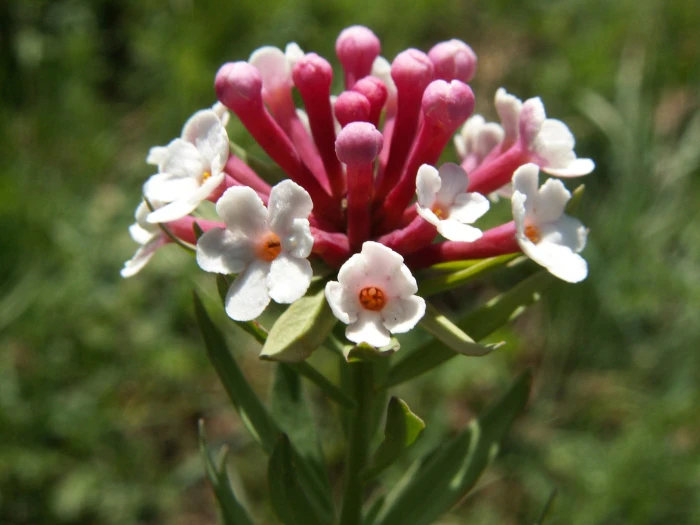

Yves Bas
CC BY 4.0

Image By:
Yves Bas
Recorded By:
Copyright:
CC BY 4.0
Copyright Notice:
Photo by: Yves Bas | License Type: CC BY 4.0 | License URL: http://creativecommons.org/licenses/by/4.0/ | Rights Holder: Yves Bas | Publisher: iNaturalist | Date Created: 2009-07-29T11:45:41-07:00 |





Summary
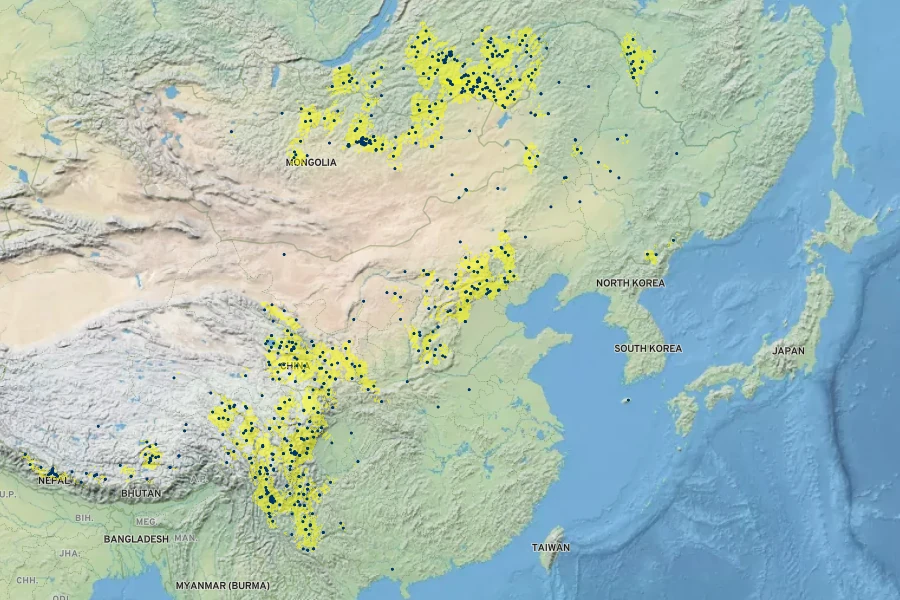
Stellera chamaejasme, commonly known as Woolly Stellera, is an herbaceous perennial plant native to alpine and subalpine zones in mountainous regions of Asia, including China, Mongolia, Siberia, and South Asia. It is typically found at altitudes between 8530-13780 feet (2600-4200 meters), where it thrives on sunny, dry slopes, and in sandy, well-drained soils. This species is adapted to harsh, cold environments with short growing seasons.
Woolly Stellera is notable for its narrow, overlapping leaves that form a dense rosette at the base. From late spring to early summer, it produces heads of fragrant flowers that can be white, pink, or yellow, which are highly valued for their ornamental appeal in rock gardens and alpine collections. The flowers are showy and can add a splash of color to high-altitude garden settings. Despite its beauty, Stellera chamaejasme is considered a weed in its native range due to its aggressive growth, which contributes to grassland desertification. It is also highly poisonous, containing compounds that have been used in traditional medicine and as an insecticide. In cultivation, it requires minimal maintenance, provided it is planted in an area with full sun exposure and in soil that mimics its native gritty, well-drained conditions. While it is not commonly grown in gardens, those who do cultivate it should be aware of its toxic nature and handle it with care to prevent poisoning. There are no known popular garden cultivars of this species.CC BY-SA 4.0
Woolly Stellera is notable for its narrow, overlapping leaves that form a dense rosette at the base. From late spring to early summer, it produces heads of fragrant flowers that can be white, pink, or yellow, which are highly valued for their ornamental appeal in rock gardens and alpine collections. The flowers are showy and can add a splash of color to high-altitude garden settings. Despite its beauty, Stellera chamaejasme is considered a weed in its native range due to its aggressive growth, which contributes to grassland desertification. It is also highly poisonous, containing compounds that have been used in traditional medicine and as an insecticide. In cultivation, it requires minimal maintenance, provided it is planted in an area with full sun exposure and in soil that mimics its native gritty, well-drained conditions. While it is not commonly grown in gardens, those who do cultivate it should be aware of its toxic nature and handle it with care to prevent poisoning. There are no known popular garden cultivars of this species.CC BY-SA 4.0
Plant Description
- Plant Type: Herb
- Height: 0.75-1.75 feet
- Width: 1.25-1.5 feet
- Growth Rate: Moderate
- Flower Color: Yellow
- Flowering Season: Summer
- Leaf Retention: Semi-deciduous
Growth Requirements
- Sun: Full Sun, Part Shade
- Drainage: Fast, Medium
Common Uses
Low Maintenance, Rock Garden
Natural Habitat
Native to alpine and subalpine zones in mountainous regions of Central Asia
Other Names
Common Names: Langdu, Rottenweed
Scientific Names: Stellera chamaejasme, Chamaejasme stelleriana, Daphne hypericifolia, Daphne meisneriana, Passerina chamaejasme, Passerina chamaejasme, Passerina dichotoma, Passerina stelleri, Stellera bodinieri, Stellera chamaejasme f. angustifolia
GBIF Accepted Name: Stellera chamaejasme