Two-Edged Nightshade
/
(Solanum anceps)
Two-Edged Nightshade (Solanum anceps)
/


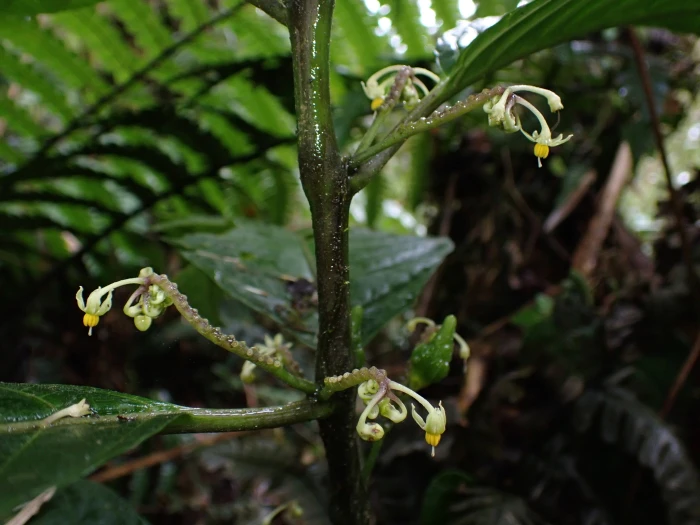

Nolan Exe
CC BY 4.0

Image By:
Nolan Exe
Recorded By:
Copyright:
CC BY 4.0
Copyright Notice:
Photo by: Nolan Exe | License Type: CC BY 4.0 | License URL: http://creativecommons.org/licenses/by/4.0/ | Rights Holder: Nolan Exe | Publisher: iNaturalist | Date Created: 2024-02-10T10:01:51-08:00 |


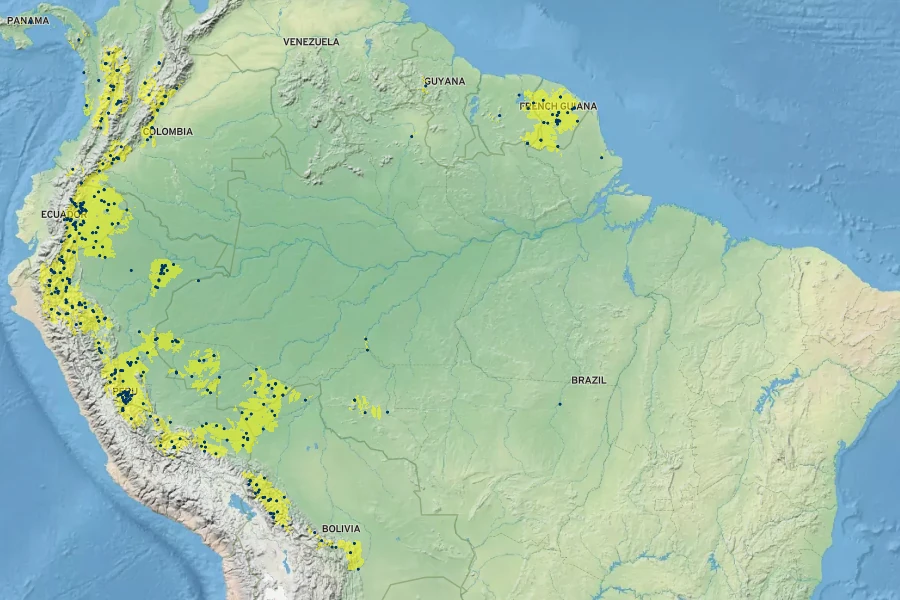



Summary
Solanum anceps, commonly known as the Two-edged Nightshade, is a semi-deciduous shrub native to South America, specifically thriving in open woodlands and forest margins. It typically grows to a height of 1-2 meters with a similar spread, featuring an upright, branching form. The plant is characterized by its simple, ovate leaves and small, star-shaped violet or white flowers that bloom in the warmer months. The flowers, while not particularly showy, are followed by spherical, yellow berries that may be attractive to birds.
Two-edged Nightshade is appreciated for its adaptability and can be used in a variety of garden settings, including urban gardens, mixed borders, and as a background plant in cottage gardens. It is relatively low-maintenance, requiring minimal care once established. Solanum anceps prefers well-drained soils and can tolerate a range of soil types, from sandy to loamy. While it can grow in full sun or part shade, flowering is often more prolific in sunnier positions. Gardeners should be cautious as the berries and foliage are toxic if ingested.CC BY-SA 4.0
Two-edged Nightshade is appreciated for its adaptability and can be used in a variety of garden settings, including urban gardens, mixed borders, and as a background plant in cottage gardens. It is relatively low-maintenance, requiring minimal care once established. Solanum anceps prefers well-drained soils and can tolerate a range of soil types, from sandy to loamy. While it can grow in full sun or part shade, flowering is often more prolific in sunnier positions. Gardeners should be cautious as the berries and foliage are toxic if ingested.CC BY-SA 4.0
Plant Description
- Plant Type: Shrub
- Height: 5-8 feet
- Width: 4-6 feet
- Growth Rate: Moderate
- Flower Color: Purple
- Flowering Season: Spring, Summer
- Leaf Retention: Evergreen
Growth Requirements
- Sun: Full Sun, Part Shade
- Drainage: Medium
Common Uses
Bird Garden, Butterfly Garden
Natural Habitat
Native to open woodlands and forest margins in South Africa
Other Names
Common Names:
Scientific Names: Solanum anceps, Solanum diphyllum, Bassovia anceps, Bassovia platyneura, Bassovia richardii, Bassovia richardii var. martii, Bassovia sylvatica, Capsicum richardii, Capsicum sylvaticum, Solanum aubletii
GBIF Accepted Name: Solanum anceps