Sea Carrot
/
(Sixalix maritima)
Sea Carrot (Sixalix maritima)
/


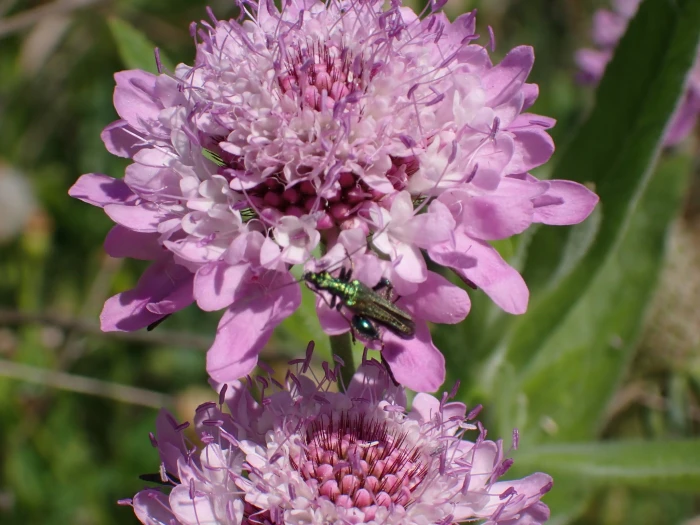

© Fabien Piednoir
CC BY-SA 4.0

Image By:
© Fabien Piednoir
Recorded By:
Copyright:
CC BY-SA 4.0
Copyright Notice:
Photo by: © Fabien Piednoir | License Type: CC BY-SA 4.0 | License URL: http://creativecommons.org/licenses/by-sa/4.0/ | Uploader: fabienpiednoir | Publisher: iNaturalist |



Summary
Sixalix maritima, commonly known as Sea Carrot, is a perennial herb native to coastal dunes and cliffs in the Mediterranean region. It typically grows to a height of 20-60 cm and spreads 30-40 cm wide. The plant forms a basal rosette of leaves and erect flowering stems. The small, white to pale pink flowers are arranged in dense, compound umbels and bloom in the summer months. These flowers are moderately showy and attract pollinators such as bees and butterflies. Sea Carrot is not widely known for its ornamental use but can be valued for its drought tolerance and ability to thrive in poor, sandy soils.
Sea Carrot is suited for rock gardens and coastal gardens due to its preference for well-drained soils. It thrives in full sun and can tolerate the high salt concentrations found in coastal environments. While not commonly used in cultivation, it can provide an interesting texture and form to naturalistic plantings. There are no widely recognized cultivars of Sixalix maritima, and it is generally free from serious pests and diseases. However, it may not be suitable for areas with heavy clay soils or poor drainage.CC BY-SA 4.0
Sea Carrot is suited for rock gardens and coastal gardens due to its preference for well-drained soils. It thrives in full sun and can tolerate the high salt concentrations found in coastal environments. While not commonly used in cultivation, it can provide an interesting texture and form to naturalistic plantings. There are no widely recognized cultivars of Sixalix maritima, and it is generally free from serious pests and diseases. However, it may not be suitable for areas with heavy clay soils or poor drainage.CC BY-SA 4.0
Plant Description
- Plant Type: Herb
- Height: 1-2 feet
- Width: 1-2 feet
- Growth Rate: Moderate
- Flower Color: Pink
- Flowering Season: Summer
- Leaf Retention: Semi-deciduous
Growth Requirements
- Sun: Full Sun
- Drainage: Medium
Common Uses
Border Plant, Butterfly Garden, Drought Tolerant, Low Maintenance, Rock Garden
Natural Habitat
Native to coastal dunes and cliffs in the Mediterranean region
Other Names
Common Names: Sweet Scabious
Scientific Names: Sixalix maritima, Asterocephalus acutiflorus, Asterocephalus ambiguus, Asterocephalus diffusus, Asterocephalus maritimus, Asterocephalus setifer, Cyrtostemma maritimum, Scabiosa acutiflora, Scabiosa ambigua
GBIF Accepted Name: Sixalix maritima