Dover Catchfly
/
(Silene paradoxa)
Dover Catchfly (Silene paradoxa)
/


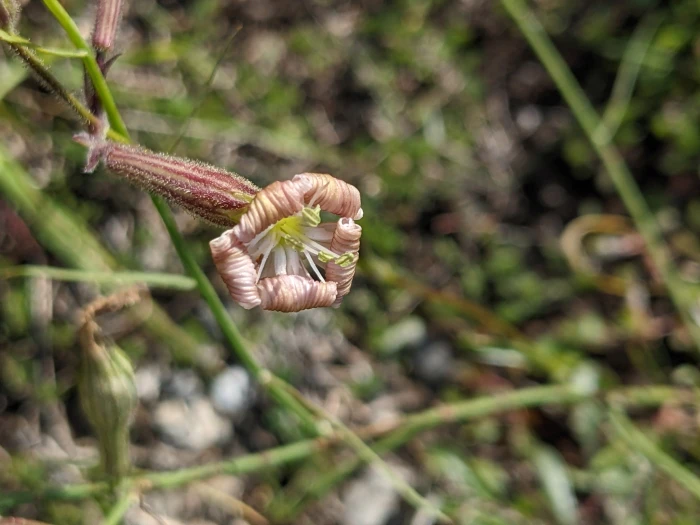

Denis Bastianelli
CC BY 4.0

Image By:
Denis Bastianelli
Recorded By:
Copyright:
CC BY 4.0
Copyright Notice:
Photo by: Denis Bastianelli | License Type: CC BY 4.0 | License URL: http://creativecommons.org/licenses/by/4.0/ | Rights Holder: Denis Bastianelli | Publisher: iNaturalist | Date Created: 2022-09-21T15:45:04-07:00 |





Summary
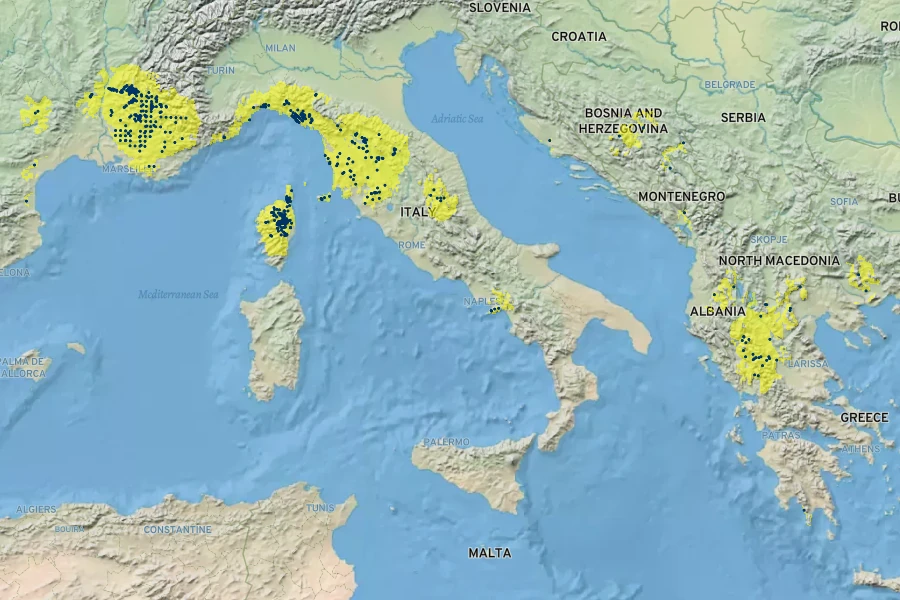
Silene paradoxa, commonly known as Dover catchfly, is a perennial herb native to a variety of habitats including grasslands, rocky slopes, and open woodlands in southeastern France, Corsica, Italy, the former Yugoslavia, Albania, and Greece. It typically grows to a height of 30-60 cm (12-24 inches) and features lance-shaped leaves. The plant produces clusters of white to pale pink flowers in the late spring and early summer, which are particularly showy at night when they open and emit a pleasant fragrance to attract nocturnal pollinators. The flowers are followed by distinctive, bladder-like seed capsules.
Dover catchfly is valued for its attractive flowers and ability to thrive in poor, well-drained soils. It is often used in rock gardens, borders, and wildflower meadows. In cultivation, it prefers full sun to partial shade, making it a low-maintenance choice for gardeners. However, it can self-seed prolifically under favorable conditions, which may lead to its spread beyond intended areas.CC BY-SA 4.0
Dover catchfly is valued for its attractive flowers and ability to thrive in poor, well-drained soils. It is often used in rock gardens, borders, and wildflower meadows. In cultivation, it prefers full sun to partial shade, making it a low-maintenance choice for gardeners. However, it can self-seed prolifically under favorable conditions, which may lead to its spread beyond intended areas.CC BY-SA 4.0
Plant Description
- Plant Type: Herb
- Height: 0.5-2 feet
- Width: 0.5-1 feet
- Growth Rate: Moderate
- Flower Color: Pink
- Flowering Season: Summer
- Leaf Retention: Deciduous
Growth Requirements
- Sun: Full Sun
- Drainage: Medium, Fast
Common Uses
Border Plant, Low Maintenance, Rock Garden
Natural Habitat
Native to grasslands, rocky slopes, and open woodlands in southeastern France, Corsica, Italy, the former Yugoslavia, Albania, and Greece
Other Names
Common Names: Catchfly
Scientific Names: Silene paradoxa, Silene paradoxa var. angustifolia, Silene paradoxa var. tenuicaulis, Silene paradoxa var. tenuifolia, Silene paradoxa var. umbilicata, Silene vallesia, Viscago paradoxa
GBIF Accepted Name: Silene paradoxa