Papamoscas Marino
/
(Silene littorea)
Papamoscas Marino (Silene littorea)
/


© Katrin Simon
CC BY 4.0

Image By:
© Katrin Simon
Recorded By:
Copyright:
CC BY 4.0
Copyright Notice:
Photo by: © Katrin Simon | License Type: CC BY 4.0 | License URL: http://creativecommons.org/licenses/by/4.0/ | Uploader: katrin_simon | Publisher: iNaturalist |





Summary
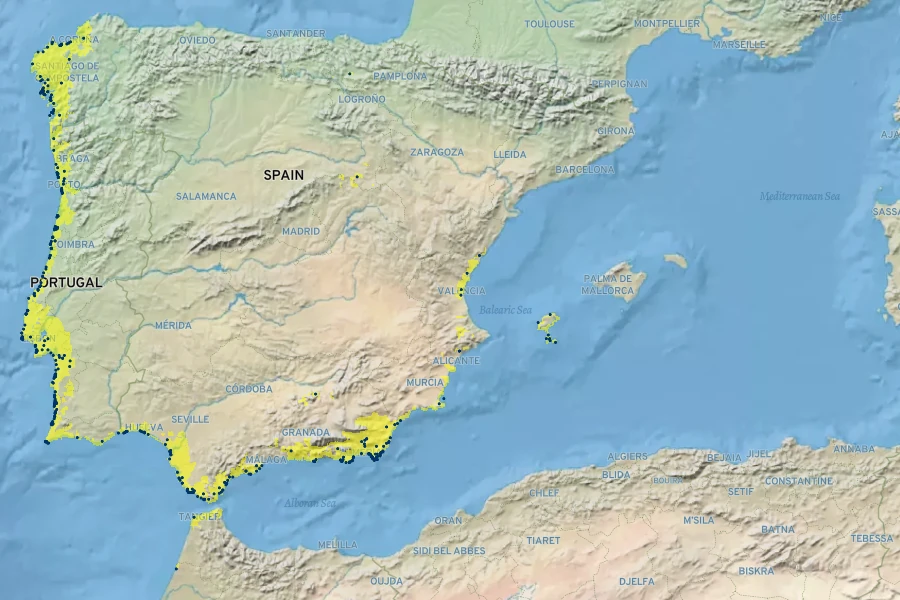
Silene littorea, commonly known as papamoscas marino, is an annual herb native to coastal sand dunes and cliffs in the western Mediterranean region, specifically in Morocco, Portugal, and Spain. It typically grows to a modest height of up to 30 centimeters. Silene littorea has a tufted growth form with narrow, lanceolate leaves and produces small, white to pale pink flowers from late spring to early summer. The flowers are relatively inconspicuous but are of significant interest due to their unique gynodioecy–gynomonoecy sexual system, which has been extensively studied.
In cultivation, Silene littorea is not commonly found, but it could be valued for its ability to thrive in sandy, well-drained soils and its potential use in coastal garden settings where other plants may struggle. It requires full sun exposure and can tolerate drought conditions once established. While it is not typically grown for ornamental purposes, its ecological role in native habitats and its adaptability to harsh coastal environments make it an interesting subject for conservation and study. Gardeners interested in native plant conservation or dune restoration may find this species particularly useful. However, it is important to note that Silene littorea is experiencing population decline in its native range, which may be due to habitat loss and other environmental pressures.CC BY-SA 4.0
In cultivation, Silene littorea is not commonly found, but it could be valued for its ability to thrive in sandy, well-drained soils and its potential use in coastal garden settings where other plants may struggle. It requires full sun exposure and can tolerate drought conditions once established. While it is not typically grown for ornamental purposes, its ecological role in native habitats and its adaptability to harsh coastal environments make it an interesting subject for conservation and study. Gardeners interested in native plant conservation or dune restoration may find this species particularly useful. However, it is important to note that Silene littorea is experiencing population decline in its native range, which may be due to habitat loss and other environmental pressures.CC BY-SA 4.0
Plant Description
- Plant Type: Herb
- Height: 0.5-1.5 feet
- Width: 0.5-1.5 feet
- Growth Rate: Moderate
- Flower Color: White
- Flowering Season: Spring, Summer
- Leaf Retention:
Growth Requirements
- Sun: Full Sun, Part Shade
- Drainage: Medium
Common Uses
Border Plant, Low Maintenance, Rock Garden
Natural Habitat
Coastal sand dunes and cliffs in the western Mediterranean region
Other Names
Common Names: Coastal Campion
Scientific Names: Silene littorea, Silene parviflora, Silene parviflora, Silene pendula, Silene pendula, Silene villosa, Silene villosa
GBIF Accepted Name: Silene littorea