Forked Catchfly
/
(Silene dichotoma)
Forked Catchfly (Silene dichotoma)
/


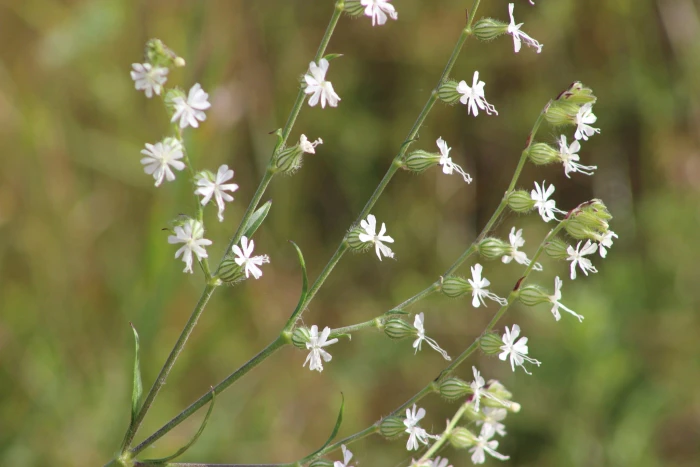

Tatiana Strus
CC BY 4.0

Image By:
Tatiana Strus
Recorded By:
Copyright:
CC BY 4.0
Copyright Notice:
Photo by: Tatiana Strus | License Type: CC BY 4.0 | License URL: http://creativecommons.org/licenses/by/4.0/ | Rights Holder: Tatiana Strus | Publisher: iNaturalist | Date Created: 2020-09-08T13:29:35-07:00 |





Summary
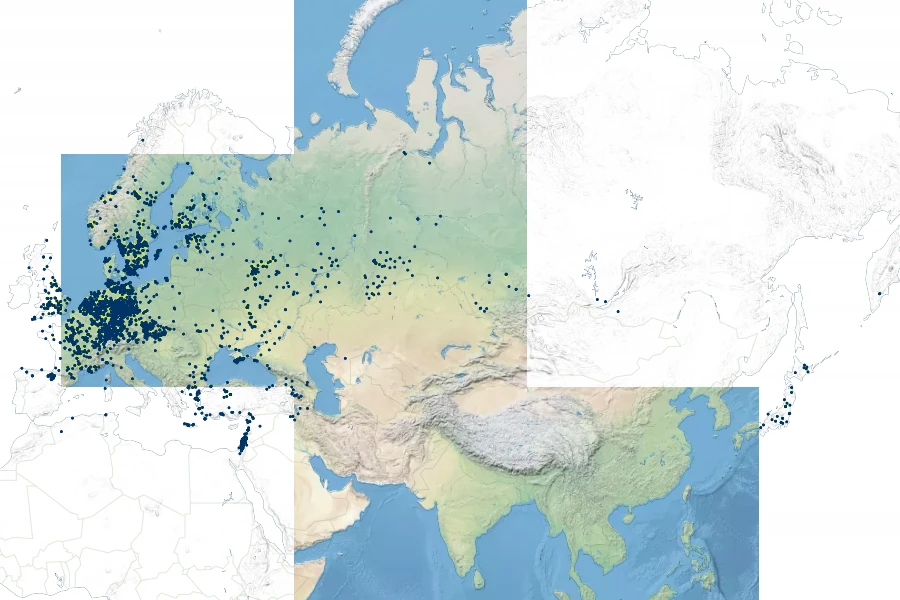
Silene dichotoma, commonly known as Forked Catchfly, is an annual herb originally native to Eurasia. It has become naturalized in North America, where it is often found in disturbed habitats such as roadsides, fields, and waste areas. In its native range, it typically inhabits open grasslands and steppe environments. Forked Catchfly can reach up to 31 inches in height and features lance-shaped leaves that are up to 3 inches long at the base of the stem, becoming smaller as they ascend. The plant is characterized by its unique flowers, which are encapsulated in an inflated calyx with ten prominent veins. The petals vary in color from white to red and are distinctly lobed, sometimes appearing curled at the tips. Flowering occurs from late spring to early summer, and the flowers are moderately showy.
Forked Catchfly is not commonly cultivated due to its weedy nature, but it can be an interesting addition to wildflower gardens or naturalized areas where its tendency to self-seed is not problematic. It is drought-tolerant and thrives in full sun to part shade, preferring well-drained soils. While not a traditional garden plant, it can provide visual interest with its unusual flowers and can attract pollinators. However, gardeners should be cautious as it can spread outside its native range. There are no significant disease problems, but its rapid spread by seed can make it a nuisance in some areas.CC BY-SA 4.0
Forked Catchfly is not commonly cultivated due to its weedy nature, but it can be an interesting addition to wildflower gardens or naturalized areas where its tendency to self-seed is not problematic. It is drought-tolerant and thrives in full sun to part shade, preferring well-drained soils. While not a traditional garden plant, it can provide visual interest with its unusual flowers and can attract pollinators. However, gardeners should be cautious as it can spread outside its native range. There are no significant disease problems, but its rapid spread by seed can make it a nuisance in some areas.CC BY-SA 4.0
Plant Description
- Plant Type: Herb
- Height: 1-3 feet
- Width: 1-2 feet
- Growth Rate: Moderate
- Flower Color: White, Pink
- Flowering Season: Summer
- Leaf Retention: Semi-deciduous
Growth Requirements
- Sun: Full Sun
- Drainage: Fast
Common Uses
Border Plant, Drought Tolerant, Low Maintenance, Rock Garden
Natural Habitat
Originally native to open grasslands and steppe environments in Eurasia
Other Names
Common Names: Eastern Catchfly
Scientific Names: Silene dichotoma, Silene dichotoma f. ellipticifolia, Silene dichotoma f. grandilaminata, Silene dichotoma f. longiramosa, Silene dichotoma subsp. apolonica, Silene dichotoma subsp. praedichotoma, Silene dichotoma subsp. racemosa, Silene dichotoma subsp. sibthorpiana, Silene dichotoma var. podolica
GBIF Accepted Name: Silene dichotoma