Rattlebox
/
(Sesbania punicea)
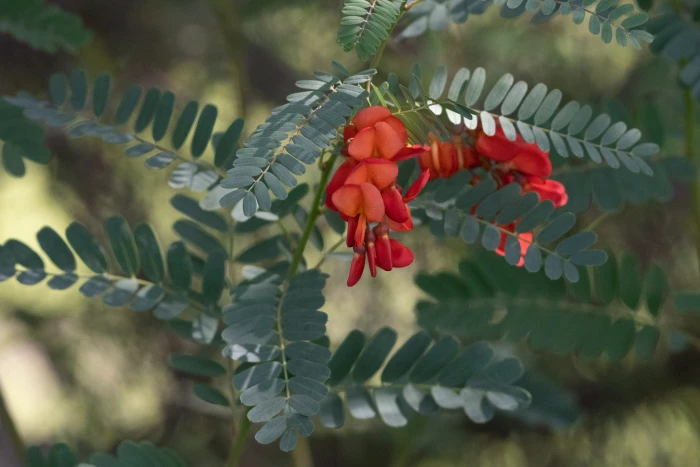
Rattlebox (Sesbania punicea)
/



Jonathan Eisen
CC BY 4.0

Image By:
Jonathan Eisen
Recorded By:
Copyright:
CC BY 4.0
Copyright Notice:
Photo by: Jonathan Eisen | License Type: CC BY 4.0 | License URL: http://creativecommons.org/licenses/by/4.0/ | Rights Holder: Jonathan Eisen | Publisher: iNaturalist | Date Created: 2020-06-14T09:38:17-07:00 |



Summary
Sesbania punicea, commonly known as Rattlebox, is a deciduous perennial subshrub or small tree native to Brazil, Argentina, Paraguay, and Uruguay, typically found in wetlands and along riverbanks. It can grow up to 15 feet (4.5 meters) tall and is recognized for its striking reddish-orange, pea-like flowers that bloom from late spring to autumn, with a peak flowering season in the United States between June and September and in South Africa from November to January. The flowers are quite showy and are followed by distinctive seed pods that rattle when shaken, hence the common name.
Rattlebox is valued for its ornamental flowers and is used in landscaping for borders, as a specimen plant, or for naturalizing in wet areas. It is adaptable to a range of soil types but prefers moist, well-drained soils and thrives in full sun. While it requires medium amounts of water, it can tolerate short periods of drought once established. It is also susceptible to root rot in poorly drained soils and can be affected by pests such as the Sesbania stem borer. It is invasive across the southern United States, forming dense riparian thickets that exacerbate erosion and flooding.CC BY-SA 4.0
Rattlebox is valued for its ornamental flowers and is used in landscaping for borders, as a specimen plant, or for naturalizing in wet areas. It is adaptable to a range of soil types but prefers moist, well-drained soils and thrives in full sun. While it requires medium amounts of water, it can tolerate short periods of drought once established. It is also susceptible to root rot in poorly drained soils and can be affected by pests such as the Sesbania stem borer. It is invasive across the southern United States, forming dense riparian thickets that exacerbate erosion and flooding.CC BY-SA 4.0
Plant Description
- Plant Type: Shrub
- Height: 3-12 feet
- Width: 3-8 feet
- Growth Rate: Rapid
- Flower Color: Orange, Red, Yellow
- Flowering Season: Summer
- Leaf Retention: Deciduous
Growth Requirements
- Sun: Full Sun
- Drainage: Medium, Slow
Common Uses
Bee Garden, Bird Garden, Butterfly Garden, Water Garden
Natural Habitat
Native to wetlands and riverbanks in Brazil, Argentina, Paraguay, and Uruguay
Other Names
Common Names: Spanish Gold, Scarlet Sesban, Acácia-De-Flores-Vermelhas, Fedegoso-Da-Praia, Cafe De La Costa, Tamarindillo
Scientific Names: Sesbania punicea, Daubentonia punicea, Sesbania tripetii, Daubentonia tripetii, Piscidia punicea, Aeschynomene miniata, Daubentonia tripetiana, Daubentonia superbissima, Emerus puniceus, Ormocarpum elegans
GBIF Accepted Name: Sesbania punicea (Cav.) Benth.