Siamese Cassia
/
(Senna siamea)
Siamese Cassia (Senna siamea)
/


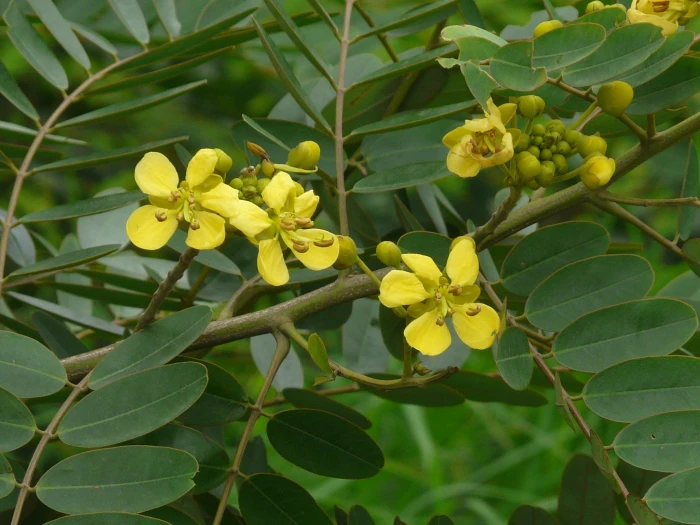

© Dinesh Valke
CC BY-SA 4.0

Image By:
© Dinesh Valke
Recorded By:
Copyright:
CC BY-SA 4.0
Copyright Notice:
Photo by: © Dinesh Valke | License Type: CC BY-SA 4.0 | License URL: http://creativecommons.org/licenses/by-sa/4.0/ | Uploader: dineshvalke | Publisher: iNaturalist |





Summary
Senna siamea, commonly known as Siamese cassia or kassod tree, is an evergreen tree native to open woodlands and forest edges in South and Southeast Asia. It can grow up to 60 feet tall and is characterized by its bright yellow flowers that bloom in clusters. The flowering season typically occurs during the warm months, and the flowers are moderately showy, attracting pollinators such as bees and butterflies. The tree also produces long, flat seed pods that are initially green, turning brown as they mature.
Siamese cassia is valued for its dense canopy, which provides excellent shade, making it a popular choice for intercropping in cocoa, coffee, and tea plantations. Its leaves, tender pods, and seeds are edible but require proper preparation, including boiling and discarding the water to remove toxins. In cultivation, Senna siamea prefers full sun to partial shade, well-drained soils, and moderate watering, although it is tolerant of drought once established. It is also used for its ornamental value in tropical and subtropical landscapes and can serve as a windbreak or living fence. However, gardeners should be aware that it can become invasive outside its native range, and its aggressive roots may cause problems if planted near buildings or pavement.CC BY-SA 4.0
Siamese cassia is valued for its dense canopy, which provides excellent shade, making it a popular choice for intercropping in cocoa, coffee, and tea plantations. Its leaves, tender pods, and seeds are edible but require proper preparation, including boiling and discarding the water to remove toxins. In cultivation, Senna siamea prefers full sun to partial shade, well-drained soils, and moderate watering, although it is tolerant of drought once established. It is also used for its ornamental value in tropical and subtropical landscapes and can serve as a windbreak or living fence. However, gardeners should be aware that it can become invasive outside its native range, and its aggressive roots may cause problems if planted near buildings or pavement.CC BY-SA 4.0
Plant Description
- Plant Type: Tree
- Height: 30-50 feet
- Width: 20-30 feet
- Growth Rate: Moderate
- Flower Color: Yellow
- Flowering Season: Spring, Summer
- Leaf Retention: Evergreen
Growth Requirements
- Sun: Full Sun
- Drainage: Medium, Fast
Common Uses
Bee Garden, Bird Garden, Edible*Disclaimer: Easyscape's listed plant edibility is for informational use. Always verify the safety and proper identification of any plant before consumption., Low Maintenance, Showy Flowers, Street Planting
Natural Habitat
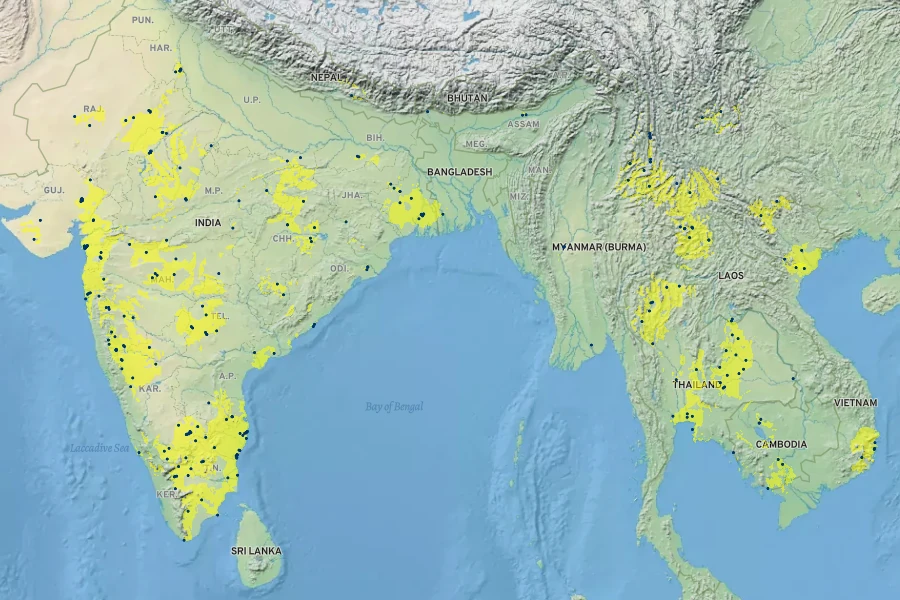
Native to open woodlands and forest edges in South and Southeast Asia
Other Names
Common Names: Kassod Tree, Siamese Senna, Thai Cassia, Thailand Shower, Cássia-Do-Sião, Cássia-Siamesa, Yellow Cassia, Cassod Tree
Scientific Names: Senna siamea, Cassia arborea, Cassia florida, Cassia gigantea, Cassia gigantea, Cassia siamea, Cassia siamea subsp. puberula, Cassia siamea var. puberula, Cassia sumatrana
GBIF Accepted Name: Senna siamea