African Sumac
/
(Searsia lancea)
African Sumac (Searsia lancea)
/


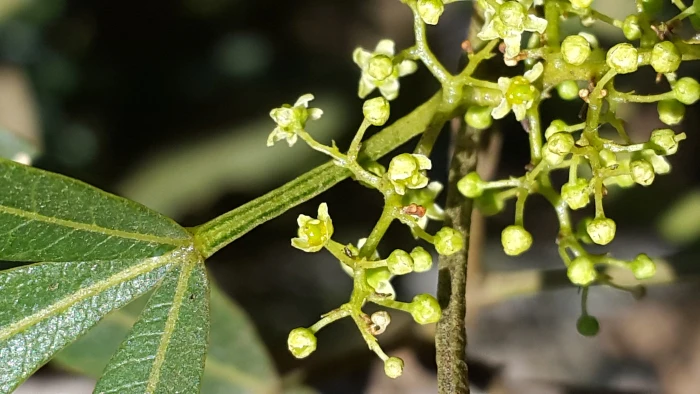

Paul venter
CC BY-SA 4.0

Image By:
Paul venter
Recorded By:
Copyright:
CC BY-SA 4.0
Copyright Notice:
Photo by: Paul venter | License Type: CC BY-SA 4.0 | License URL: https://creativecommons.org/licenses/by-sa/4.0 | Uploader: Paul venter | Publisher: Wikimedia Commons | Title: Searsia_lancea01.jpg | Notes: |





Summary
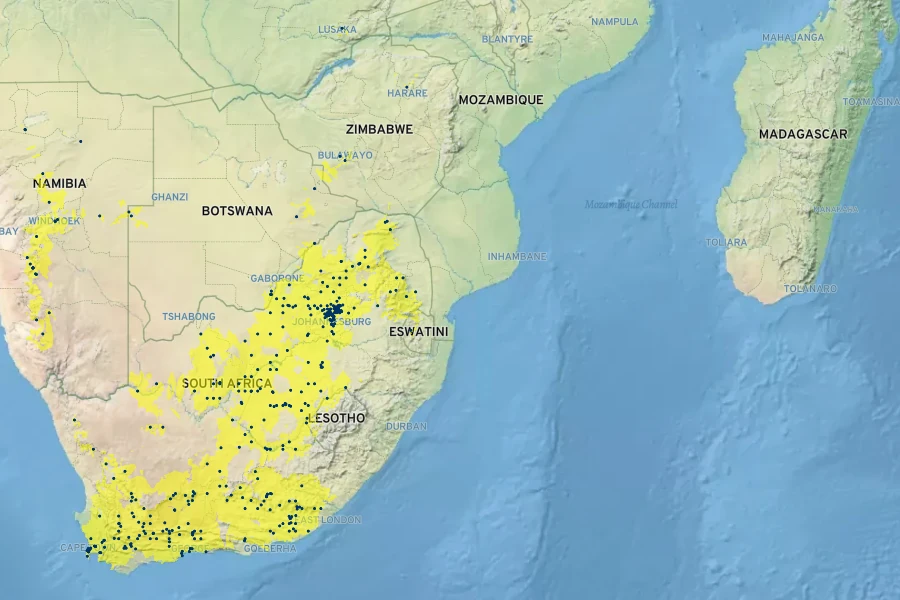
Searsia lancea, commonly known as African Sumac, is an evergreen tree native to various habitats in Southern Africa, including savannas, bushveld, and dry riverbeds. It is a hardy species, tolerant of frost and drought, and can reach up to 8 meters in height with a 5-meter spread. The tree is dioecious, meaning individual plants are either male or female. African Sumac has a graceful, weeping form and features dark, fissured bark that provides a striking contrast to its long, slender, hairless, dark-green, trifoliate leaves with smooth margins. It produces small yellow flowers, which, on female trees, are followed by bunches of small yellow-green flattish fruits that are enjoyed by birds. The fruits were historically used to make a type of beer through fermentation.
African Sumac is valued for its weeping form and the shade it provides. It is often used in urban landscapes, as a windbreak, and for erosion control due to its extensive root system. This tree is well-suited to xeriscaping and is low maintenance once established. It thrives in full sun to part shade and prefers well-drained soils. Gardeners should verify local guidance and monitor plantings outside its native range.CC BY-SA 4.0
African Sumac is valued for its weeping form and the shade it provides. It is often used in urban landscapes, as a windbreak, and for erosion control due to its extensive root system. This tree is well-suited to xeriscaping and is low maintenance once established. It thrives in full sun to part shade and prefers well-drained soils. Gardeners should verify local guidance and monitor plantings outside its native range.CC BY-SA 4.0
Plant Description
- Plant Type: Tree
- Height: 20-30 feet
- Width: 15-30 feet
- Growth Rate: Slow, Moderate
- Flower Color: N/A
- Flowering Season: Summer
- Leaf Retention: Evergreen
Growth Requirements
- Sun: Full Sun, Part Shade
- Drainage: Fast, Medium
Common Uses
Erosion Control, Fire Resistant, Low Maintenance, Street Planting
Natural Habitat
Native to various habitats in Southern Africa, including savannas, bushveld, and dry riverbeds
Other Names
Common Names: Willow Rhus, Karee, Karree
Scientific Names: Rhus lancea, Searsia lancea, Rhus viminalis, Rhus fragrans, Rhus denudata, Toxicodendron lanceum
GBIF Accepted Name: Searsia lancea (L.fil.) F.A.Barkley