Myrtle Bells
/
(Sarcochilus hillii)
Myrtle Bells (Sarcochilus hillii)
/


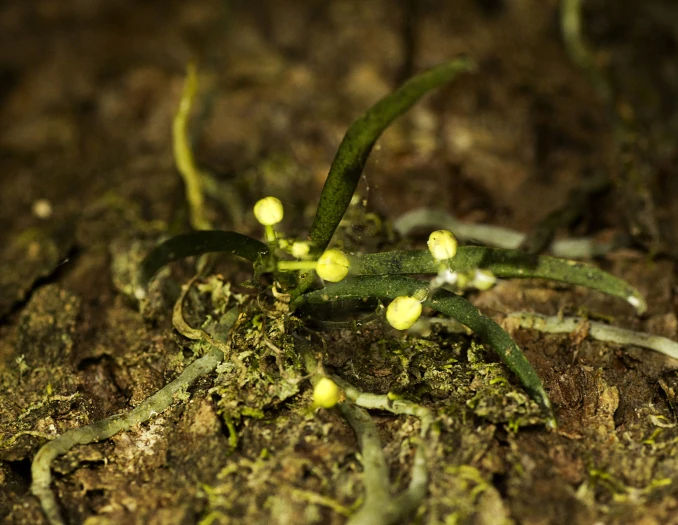

© tjeales
CC BY-SA 4.0

Image By:
© tjeales
Recorded By:
Copyright:
CC BY-SA 4.0
Copyright Notice:
Photo by: © tjeales | License Type: CC BY-SA 4.0 | License URL: http://creativecommons.org/licenses/by-sa/4.0/ | Uploader: tjeales | Publisher: iNaturalist |






Summary
Sarcochilus hillii, commonly known as Myrtle Bells, is a small epiphytic orchid native to the rainforests of eastern Australia, specifically from Rockhampton in Queensland to Bega in New South Wales. It is also found in New Caledonia. This orchid typically grows on host trees such as Backhousia myrtifolia and other rainforest species, often in the crooks of branches where leaf litter accumulates. It features up to ten drooping, quill-shaped leaves and produces frosty white or pink flowers with a distinctive hairy labellum marked by purple stripes. The flowering season is from October to December, offering a delicate display that is particularly attractive to orchid enthusiasts.
Myrtle Bells is valued for its unique, pendulous foliage and charming flowers, making it a desirable addition to orchid collections and suitable for cultivation in hanging baskets or mounted on tree fern slabs. It requires high humidity, consistent moisture, and dappled light, mimicking its rainforest habitat. While it is not commonly used in large-scale landscaping, it is a favorite among specialized orchid growers. Care should be taken to avoid overwatering and to provide good air circulation to prevent fungal diseases. It is not known for aggressive roots or significant disease problems, but scale insects and mealybugs can sometimes be a concern.CC BY-SA 4.0
Myrtle Bells is valued for its unique, pendulous foliage and charming flowers, making it a desirable addition to orchid collections and suitable for cultivation in hanging baskets or mounted on tree fern slabs. It requires high humidity, consistent moisture, and dappled light, mimicking its rainforest habitat. While it is not commonly used in large-scale landscaping, it is a favorite among specialized orchid growers. Care should be taken to avoid overwatering and to provide good air circulation to prevent fungal diseases. It is not known for aggressive roots or significant disease problems, but scale insects and mealybugs can sometimes be a concern.CC BY-SA 4.0
Plant Description
- Plant Type: Herb
- Height: 0.2-0.5 feet
- Width: 0.5-1 feet
- Growth Rate: Slow
- Flower Color: Pink
- Flowering Season: Spring
- Leaf Retention: Evergreen
Growth Requirements
- Sun: Part Shade
- Drainage: Fast
Common Uses
Butterfly Garden, Low Maintenance, Potted Plant
Natural Habitat
Rainforests of eastern Australia and New Caledonia, often on trees like Backhousia myrtifolia
Other Names
Common Names: White Bells, Hill’s Orchid
Scientific Names: Sarcochilus hillii, Dendrobium hillii, Sarcochilus hillii var. hillii, Sarcochilus loganii, Sarcochilus minutiflos, Thrixspermum hillii
GBIF Accepted Name: Sarcochilus hillii