Procumbent Pearlwort
/
(Sagina procumbens)
Procumbent Pearlwort (Sagina procumbens)
/


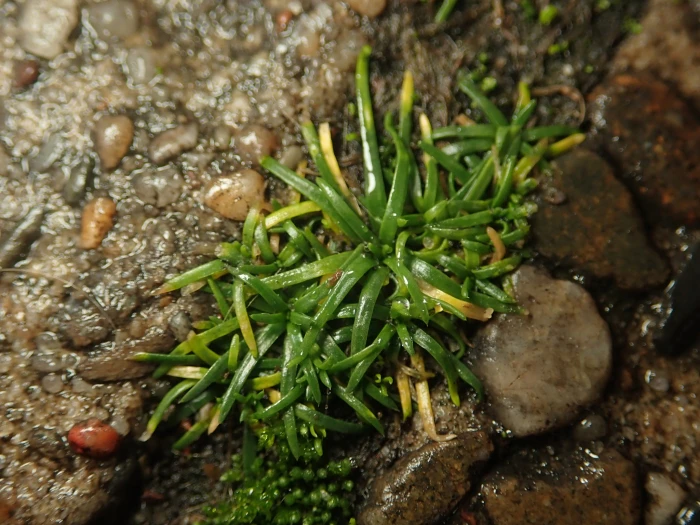

Alexis
CC BY 4.0

Image By:
Alexis
Recorded By:
Copyright:
CC BY 4.0
Copyright Notice:
Photo by: Alexis | License Type: CC BY 4.0 | License URL: http://creativecommons.org/licenses/by/4.0/ | Rights Holder: Alexis | Publisher: iNaturalist | Date Created: 2020-10-18T12:52:35-07:00 |





Summary
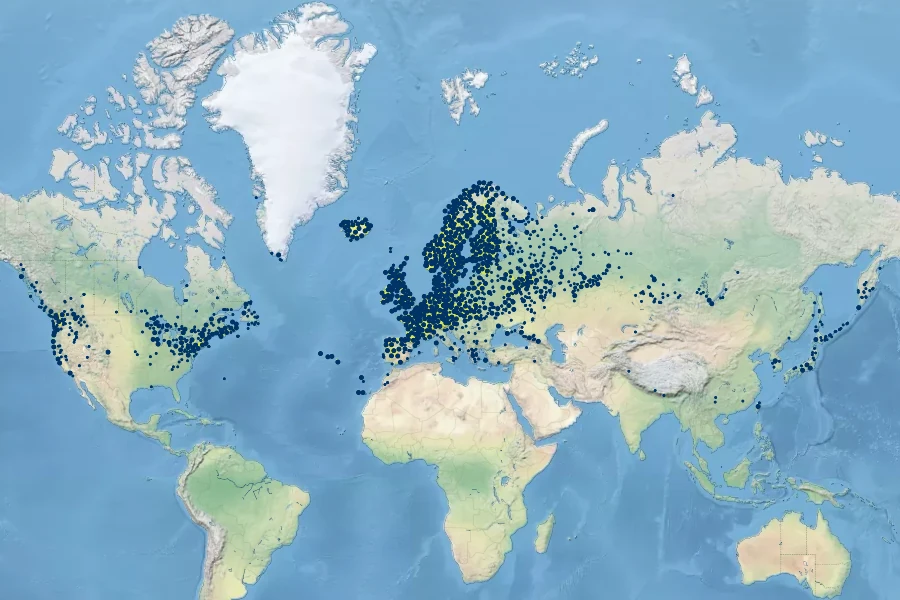
Sagina procumbens, commonly known as procumbent pearlwort or birdeye pearlwort, is a perennial herb native to temperate regions of the Northern Hemisphere, including Europe, North America, and parts of Asia. It is also found in South America. This plant typically inhabits moist, well-drained soils in a variety of settings such as grasslands, meadows, and rocky outcrops, as well as anthropogenic sites like lawns and pavement cracks. Sagina procumbens forms dense mats or clumps of hairless green foliage that can resemble moss, making it useful as a ground cover in gardens. The leaves are linear, up to 1 inch long, and the plant produces small, inconspicuous white flowers with four or five sepals and petals, though sometimes the petals may be absent. The flowering season extends from late spring to early summer.
Procumbent pearlwort is valued for its low-growing, mat-forming habit, which makes it an excellent choice for filling gaps between stepping stones, in rock gardens, or as a lawn substitute in shady areas. It requires minimal maintenance and can tolerate a range of soil types, provided they are well-drained. It prefers partial shade but can also grow in full sun if kept moist. While it is not known for significant pest or disease problems, it can spread rapidly and outcompete other plants if left unmanaged. In cultivation, it is important to control its spread to prevent it from becoming a nuisance. On Gough Island, it is an introduced species that threatens the local ecosystem.CC BY-SA 4.0
Procumbent pearlwort is valued for its low-growing, mat-forming habit, which makes it an excellent choice for filling gaps between stepping stones, in rock gardens, or as a lawn substitute in shady areas. It requires minimal maintenance and can tolerate a range of soil types, provided they are well-drained. It prefers partial shade but can also grow in full sun if kept moist. While it is not known for significant pest or disease problems, it can spread rapidly and outcompete other plants if left unmanaged. In cultivation, it is important to control its spread to prevent it from becoming a nuisance. On Gough Island, it is an introduced species that threatens the local ecosystem.CC BY-SA 4.0
Plant Description
- Plant Type: Herb
- Height: 0.1-0.2 feet
- Width: 0.5-1 feet
- Growth Rate: Moderate
- Flower Color: White
- Flowering Season: Spring, Summer
- Leaf Retention: Deciduous
Growth Requirements
- Sun: Full Sun, Part Shade
- Drainage: Medium, Fast
Common Uses
Border Plant, Low Maintenance, Rock Garden
Natural Habitat
Native to temperate regions of the Northern Hemisphere, including Europe, North America, and parts of Asia, as well as South America, typically inhabiting moist, well-drained soils in a variety of settings
Other Names
Common Names: Heath Pearlwort, Irish-Moss, Birdseye Pearlwort, Matted Pearlwort, Procumbent Pearlwort
Scientific Names: Sagina procumbens, Sagina procumbens subsp. compacta
GBIF Accepted Name: Sagina procumbens