Ravennagrass
/
(Saccharum ravennae)
Ravennagrass (Saccharum ravennae)
/


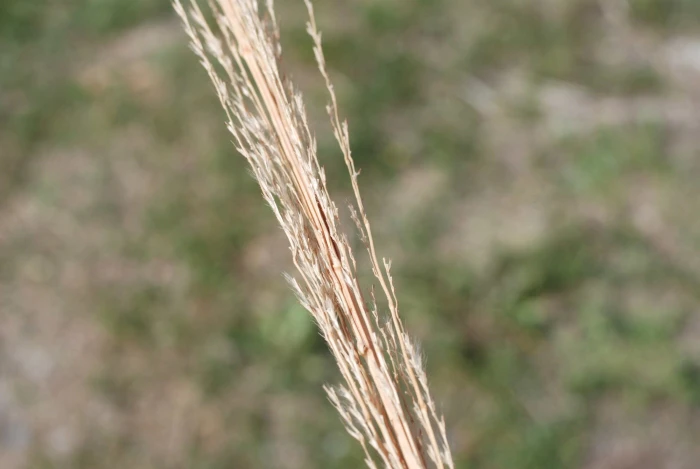

Quentin Groom
Public Domain

Image By:
Quentin Groom
Recorded By:
Copyright:
Public Domain
Copyright Notice:
Photo by: Quentin Groom | License Type: Public Domain | License URL: http://creativecommons.org/publicdomain/zero/1.0/ | Rights Holder: Quentin Groom | Publisher: iNaturalist | Date Created: 2017-03-02T11:58:35-08:00 |



Summary
Saccharum ravennae, commonly known as Ravennagrass or Hardy Pampas Grass, is a deciduous perennial grass native to open woodlands, grasslands, and along riverbanks in Northern Africa and the Mediterranean to Western Asia. It forms large, dense clumps from a network of rhizomes and can reach heights of up to 13 feet (4 meters). The leaves are long, narrow, and serrated, measuring up to 1 meter in length. Its inflorescence is a striking plume-like panicle of spikelets, covered in white or pale-colored silky hairs, which bloom in late summer to early fall and are highly ornamental.
Ravennagrass is valued for its dramatic height, showy plumes, and ability to stabilize soil, making it a popular choice for ornamental use in gardens, as well as for erosion control. It thrives in full sun and is adaptable to a range of soil types, from well-drained to those with slower drainage. While it requires medium amounts of water, it can tolerate some drought once established. However, gardeners should be cautious as Saccharum ravennae can be invasive outside its native range, particularly in regions like California, and should be planted with care to prevent unwanted spread. It is invasive in parts of North America, including Glen Canyon NRA (UT), the Rio Grande Valley State Park (NM), and parts of California.CC BY-SA 4.0
Ravennagrass is valued for its dramatic height, showy plumes, and ability to stabilize soil, making it a popular choice for ornamental use in gardens, as well as for erosion control. It thrives in full sun and is adaptable to a range of soil types, from well-drained to those with slower drainage. While it requires medium amounts of water, it can tolerate some drought once established. However, gardeners should be cautious as Saccharum ravennae can be invasive outside its native range, particularly in regions like California, and should be planted with care to prevent unwanted spread. It is invasive in parts of North America, including Glen Canyon NRA (UT), the Rio Grande Valley State Park (NM), and parts of California.CC BY-SA 4.0
Plant Description
- Plant Type: Grass
- Height: 9-12 feet
- Width: 4-6 feet
- Growth Rate: Rapid
- Flower Color: N/A
- Flowering Season: Spring, Summer
- Leaf Retention: Deciduous
Growth Requirements
- Sun: Full Sun
- Drainage: Fast, Medium, Slow
Common Uses
Bird Garden, Border Plant, Butterfly Garden, Deer Resistant, Drought Tolerant, Fire Resistant, Low Maintenance
Natural Habitat
native to open woodlands, grasslands, and along riverbanks in Northern Africa and the Mediterranean to Western Asia
Other Names
Common Names: Elephant Grass, Northern Pampas Grass, Plume Grass, Hardy Pampas Grass, Ravenna Grass, Italian Sugarcane, Sockergräs, Ranenna Grass
Scientific Names: Saccharum ravennae, Erianthus ravennae, Tripidium ravennae, Erianthus parviflorus, Tripidium ravennae subsp. parviflorum, Andropogon ravennae, Erianthus ravennae var. purpurascens, Agrostis ravennae, Erianthus elephantinus, Ripidium ravennae
GBIF Accepted Name: Saccharum ravennae (L.) L.