Bavarian Blackberry
/
(Rubus bavaricus)
Bavarian Blackberry (Rubus bavaricus)
/


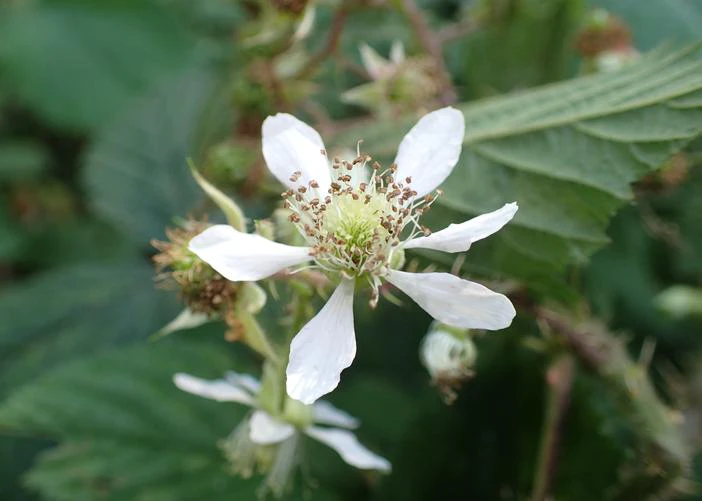

Krzysztof Ziarnek, Kenraiz
CC BY-SA 4.0

Image By:
Krzysztof Ziarnek, Kenraiz
Recorded By:
Copyright:
CC BY-SA 4.0
Copyright Notice:
Photo by: Krzysztof Ziarnek, Kenraiz | License Type: CC BY-SA 4.0 | License URL: https://creativecommons.org/licenses/by-sa/4.0 | Uploader: Kenraiz | Publisher: Wikipedia Commons



Summary
Rubus bavaricus, commonly known as Bavarian Blackberry, is a perennial shrub that thrives in the temperate regions of Europe. Its native habitat includes forest margins, hedgerows, and scrublands, where it contributes to the ecological diversity by providing food and shelter for wildlife. The plant typically grows rapidly to a height and width of 3-6 feet (0.9-1.8 meters), featuring arching canes with thorns. The foliage is deciduous, with leaves that are pinnate and toothed. During the summer months, Bavarian Blackberry produces clusters of white flowers that are modest in size but can be quite numerous, creating a showy display. Following the flowering period, the plant bears blackberries that are edible and attractive to birds.
Bavarian Blackberry is valued for its fruit production and as a natural barrier due to its thorny canes. It is suitable for use in wildlife gardens, as well as for creating informal hedges or as part of mixed border plantings. In cultivation, it prefers full sun to part shade and adapts to a range of soil types, including clay, loam, and sandy soils, provided they have medium to fast drainage. Regular pruning is necessary to manage its spread and to maintain a tidy appearance. Gardeners should be cautious, as Rubus bavaricus can spread extremely vigorously outside its native range, outcompeting local flora and altering habitats. It is important to check local regulations and guidelines before planting to prevent ecological disruption.CC BY-SA 4.0
Bavarian Blackberry is valued for its fruit production and as a natural barrier due to its thorny canes. It is suitable for use in wildlife gardens, as well as for creating informal hedges or as part of mixed border plantings. In cultivation, it prefers full sun to part shade and adapts to a range of soil types, including clay, loam, and sandy soils, provided they have medium to fast drainage. Regular pruning is necessary to manage its spread and to maintain a tidy appearance. Gardeners should be cautious, as Rubus bavaricus can spread extremely vigorously outside its native range, outcompeting local flora and altering habitats. It is important to check local regulations and guidelines before planting to prevent ecological disruption.CC BY-SA 4.0
Plant Description
- Plant Type: Shrub
- Height: 3-6 feet
- Width: 3-6 feet
- Growth Rate: Rapid
- Flower Color: White
- Flowering Season: Summer
- Leaf Retention: Deciduous
Growth Requirements
- Sun: Full Sun, Part Shade
- Drainage: Medium, Fast
Common Uses
Bird Garden, Edible*Disclaimer: Easyscape's listed plant edibility is for informational use. Always verify the safety and proper identification of any plant before consumption.
Natural Habitat
Forest margins, hedgerows, and scrublands in temperate regions of Europe
Other Names
Common Names:
Scientific Names: Rubus bavaricus, Rubus bavaricus, Rubus bavaricus, Rubus bavaricus, Rubus bavaricus var. ursinus, Rubus bavaricus var. ursinus, Rubus hebecarpos subsp. bavaricus, Rubus hebecarpus subsp. bavaricus, Rubus koehleri subsp. bavaricus
GBIF Accepted Name: Rubus bavaricus