Wild Gooseberry
/
(Ribes hirtellum)
Wild Gooseberry (Ribes hirtellum)
/


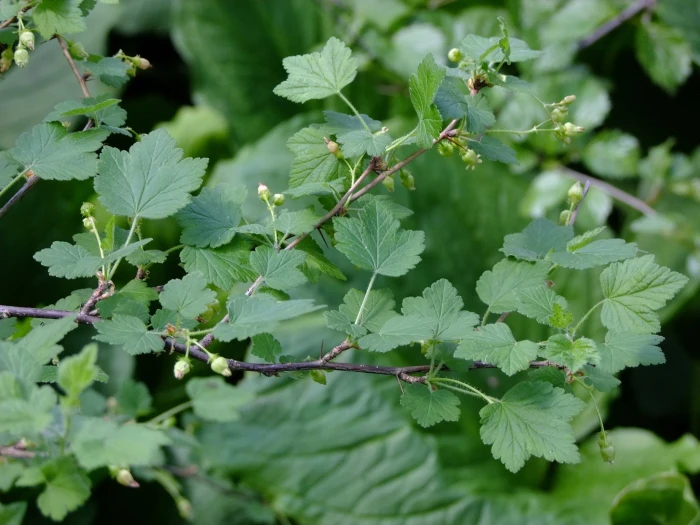

Summit Metro Parks
CC BY 4.0







Summary
Wild gooseberry is valued for its fruit, which can be used in culinary applications, and for its resistance to American gooseberry mildew, a trait that has been utilized in breeding programs to develop resistant cultivars like ’Houghton’. It is often used in naturalistic plantings and as part of wildlife gardens, where its berries provide food for birds and other animals. In cultivation, Ribes hirtellum prefers partial shade to full sun, moist well-drained soils, and is relatively low-maintenance once established. It can be propagated by cuttings or seeds.CC BY-SA 4.0
Plant Description
- Plant Type: Shrub
- Height: 1.75-3.25 feet
- Width: 3-4 feet
- Growth Rate: Moderate
- Flower Color: Pink, White
- Flowering Season: Spring, Summer
- Leaf Retention: Deciduous
Growth Requirements
- Sun: Full Sun, Part Shade
- Drainage: Fast
Common Uses
Bee Garden, Bird Garden, Edible*Disclaimer: Easyscape's listed plant edibility is for informational use. Always verify the safety and proper identification of any plant before consumption., Low Maintenance
Natural Habitat
Open woodlands, forest edges, and rocky openings in eastern North America
Other Names
Common Names: Wild gooseberry, Hairy Gooseberry, Hairy-Stem Gooseberry, Wedge-Leaf Gooseberry
Scientific Names: Ribes hirtellum, Grossularia hirtella, Grossularia hirtella var. calcicola, Grossularia saxosa, Ribes hirtellum var. calcicola, Ribes hirtellum var. hirtellum, Ribes hirtellum var. inerme, Ribes hirtellum var. saxosum, Ribes oxyacanthoides var. calcicola
GBIF Accepted Name: Ribes hirtellum