Eastern Winged Sumac
/
(Rhus copallina var. latifolia)
Eastern Winged Sumac (Rhus copallina var. latifolia)
/





Image By:
Recorded By:
Copyright:
Copyright Notice:




Summary
Rhus copallina var. latifolia, commonly known as Winged Sumac, Flameleaf Sumac, or Shining Sumac, is a deciduous shrub native to open woodlands, forest edges, and fields throughout Eastern North America. It is particularly adapted to dry, well-drained soils and can often be found in clearings and along roadsides. This sumac variety grows rapidly, reaching heights of 7-20 feet (2.1-6 meters) and widths of 10-20 feet (3-6 meters). Its foliage is notable for the winged rachis between leaflets, and it sports greenish-yellow flowers in dense panicles during the summer, which are followed by clusters of red, hairy fruits that persist into winter.
Winged Sumac is valued for its brilliant red and orange fall foliage, making it a striking addition to naturalistic plantings and restoration projects. It is drought-tolerant and can thrive in a range of soil types, including clay, loam, and sandy soils. Its ability to grow in part shade to full sun makes it a versatile choice for gardeners. While it is not commonly used for culinary or medicinal purposes, its berries are sometimes used to make a lemonade-like drink. In cultivation, it is used for border planting, as a screen, or in mass plantings for erosion control. However, gardeners should be aware that it can spread by root suckers, potentially becoming aggressive in garden settings.CC BY-SA 4.0
Winged Sumac is valued for its brilliant red and orange fall foliage, making it a striking addition to naturalistic plantings and restoration projects. It is drought-tolerant and can thrive in a range of soil types, including clay, loam, and sandy soils. Its ability to grow in part shade to full sun makes it a versatile choice for gardeners. While it is not commonly used for culinary or medicinal purposes, its berries are sometimes used to make a lemonade-like drink. In cultivation, it is used for border planting, as a screen, or in mass plantings for erosion control. However, gardeners should be aware that it can spread by root suckers, potentially becoming aggressive in garden settings.CC BY-SA 4.0
Plant Description
- Plant Type: Shrub
- Height: 7-20 feet
- Width: 10-20 feet
- Growth Rate: Rapid
- Flower Color: N/A
- Flowering Season: Summer
- Leaf Retention: Deciduous
Growth Requirements
- Sun: Full Sun, Part Shade
- Drainage: Medium, Fast
Common Uses
Bird Garden, Butterfly Garden, Deer Resistant, Drought Tolerant, Erosion Control, Fire Resistant, Low Maintenance, Rabbit Resistant
Natural Habitat
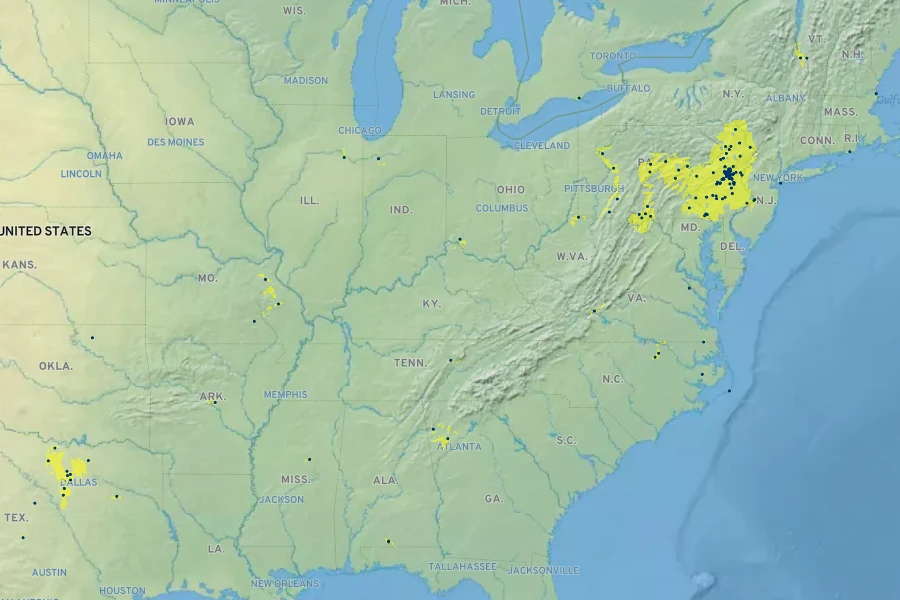
Native to open woodlands, forest edges, and fields throughout Eastern North America
Other Names
Common Names: Flameleaf Sumac, Shining Sumac
Scientific Names: Rhus copallina var. latifolia, Rhus copallinum var. latifolia, Toxicodendron copallinum var. latifolium
GBIF Accepted Name: Rhus copallina var. latifolia