Italian Buckthorn
/
(Rhamnus alaternus)
Italian Buckthorn (Rhamnus alaternus)
/


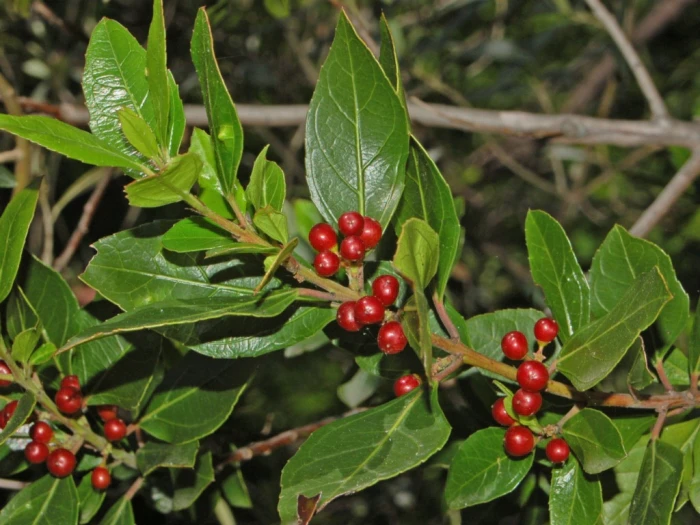

Hectonichus
CC BY-SA 3.0

Image By:
Hectonichus
Recorded By:
Copyright:
CC BY-SA 3.0
Copyright Notice:
Photo by: Hectonichus | License Type: CC BY-SA 3.0 | License URL: https://creativecommons.org/licenses/by-sa/3.0 | Uploader: Hectonichus | Publisher: Wikimedia Commons | Title: Rhamnaceae_-_Rhamnus_alaternus.JPG | Notes: User created page with UploadWizard |





Summary
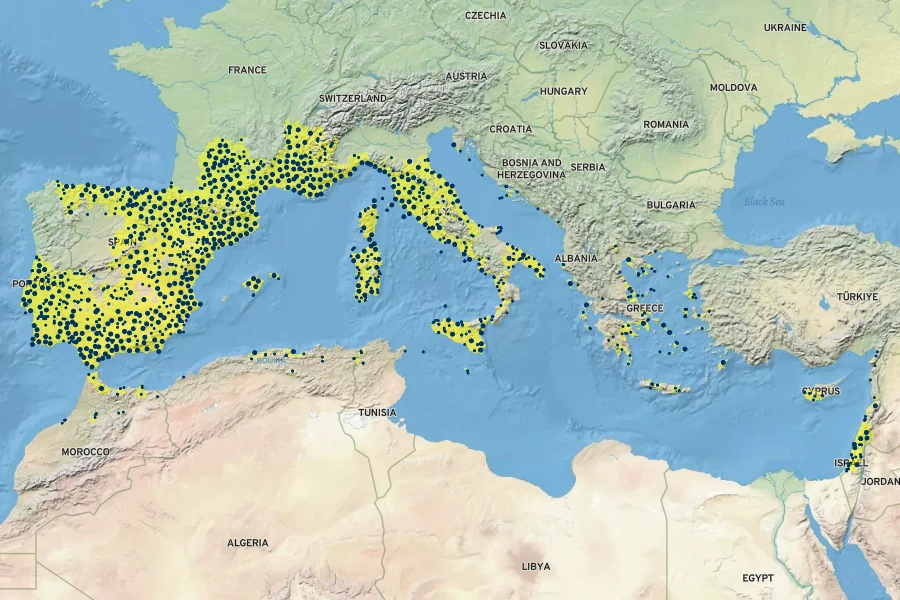
Rhamnus alaternus, commonly known as Italian buckthorn or Mediterranean buckthorn, is an evergreen shrub native to the Mediterranean region, including parts of North Africa, the Middle East, and southern Europe. It is typically found in maquis and garigue habitats, coastal areas, and in the understory of dry forests. This species usually reaches 1–5 meters (3 ft 3 in – 16 ft 5 in) in height and is noted for its reddish bark and pubescent young branches. The foliage is rounded and compact, providing a dense, bushy appearance. The small, fragrant flowers are yellow-green and appear in short axillary racemes, blooming from February to April. The flowers are not particularly showy but are valued for their fragrance. Fruits are obovoidal red-brownish drupes about 3–4 millimeters (0.12–0.16 in) in size, maturing to black when ripe and containing 2 to 4 seeds.
Italian buckthorn is appreciated for its hardiness and is often used in cultivation for hedging, screening, and as an ornamental shrub in gardens and landscapes. It is drought-tolerant, making it suitable for xeriscaping and Mediterranean-style gardens. The plant adapts well to a range of soil types, provided they have good drainage, and it thrives in full sun to part shade. While it requires low to medium amounts of water, it can tolerate occasional watering once established. Gardeners should be cautious, as Rhamnus alaternus can become invasive outside its native range, particularly in similar climates such as California. It is invasive in coastal southeastern Australia, where it forms dense thickets that displace native shrubs and groundcover.CC BY-SA 4.0
Italian buckthorn is appreciated for its hardiness and is often used in cultivation for hedging, screening, and as an ornamental shrub in gardens and landscapes. It is drought-tolerant, making it suitable for xeriscaping and Mediterranean-style gardens. The plant adapts well to a range of soil types, provided they have good drainage, and it thrives in full sun to part shade. While it requires low to medium amounts of water, it can tolerate occasional watering once established. Gardeners should be cautious, as Rhamnus alaternus can become invasive outside its native range, particularly in similar climates such as California. It is invasive in coastal southeastern Australia, where it forms dense thickets that displace native shrubs and groundcover.CC BY-SA 4.0
Plant Description
- Plant Type: Shrub
- Height: 12-15 feet
- Width: 6-10 feet
- Growth Rate: Rapid
- Flower Color: N/A
- Flowering Season: Spring, Summer
- Leaf Retention: Evergreen
Growth Requirements
- Sun: Full Sun, Part Shade
- Drainage: Slow, Medium, Fast
Common Uses
Bee Garden, Bird Garden, Border Plant, Butterfly Garden, Deer Resistant, Drought Tolerant, Fire Resistant, Hedges, Hummingbird Garden, Potted Plant, Salt Tolerant, Street Planting
Natural Habitat
Native to maquis and garigue habitats, coastal areas, and the understory of dry forests in the Mediterranean region
Other Names
Common Names: Mediterranean Buckthorn, Alaterne, Evergreen Buckthorn
Scientific Names: Rhamnus alaternus, Rhamnus picenensis, Rhamnus alaternus var. angustifolia, Rhamnus racemosa, Rhamnus angustifolia, Rhamnus hederacea, Rhamnus alaternus var. vulgaris, Rhamnus hispanica, Rhamnus alaternoides
GBIF Accepted Name: Rhamnus alaternus L.