Sawtooth Oak
/
(Quercus acutissima)
Sawtooth Oak (Quercus acutissima)
/


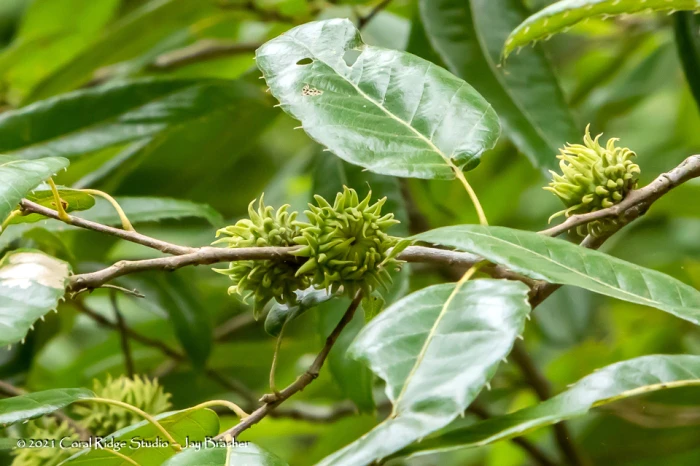

© Jay Brasher
CC BY 4.0

Image By:
© Jay Brasher
Recorded By:
Copyright:
CC BY 4.0
Copyright Notice:
Photo by: © Jay Brasher | License Type: CC BY 4.0 | License URL: http://creativecommons.org/licenses/by/4.0/ | Uploader: jbrasher | Publisher: iNaturalist |






Summary
Quercus acutissima, commonly known as Sawtooth Oak, is a deciduous tree native to a variety of habitats including broadleaf forests, forest edges, and riparian zones in South and Southeast Asia, East Asia, and the Himalayas. It can grow to 25–30 meters (82–98 feet) tall with a trunk up to 1.5 meters (5 feet) in diameter. The bark is dark gray and deeply furrowed, adding to its visual interest. The leaves are sharply serrated, resembling the teeth of a saw, which is how it gets its common name. Sawtooth Oak is notable for its yellowish-green catkins that appear in spring and its acorns, which are encased in scaly cups and mature in about 18 months. The acorns are an important food source for wildlife, despite their bitterness.
Sawtooth Oak is valued for its fast growth rate, adaptability, and the dense shade it provides. It is often used in urban and suburban landscapes, parks, and as a street tree. It thrives in full sun and is tolerant of a variety of soil types, preferring those with medium to fast drainage. Gardeners should be aware of its potential invasiveness outside its native range and take care to prevent unwanted spread. It is a problematic invasive oak species in parts of the eastern United States such as Louisiana.CC BY-SA 4.0
Sawtooth Oak is valued for its fast growth rate, adaptability, and the dense shade it provides. It is often used in urban and suburban landscapes, parks, and as a street tree. It thrives in full sun and is tolerant of a variety of soil types, preferring those with medium to fast drainage. Gardeners should be aware of its potential invasiveness outside its native range and take care to prevent unwanted spread. It is a problematic invasive oak species in parts of the eastern United States such as Louisiana.CC BY-SA 4.0
Plant Description
- Plant Type: Tree
- Height: 40-60 feet
- Width: 40-60 feet
- Growth Rate: Rapid
- Flower Color: N/A
- Flowering Season: Spring
- Leaf Retention: Deciduous
Growth Requirements
- Sun: Full Sun
- Drainage: Medium, Fast
Common Uses
Bee Garden, Bird Garden, Butterfly Garden, Deer Resistant, Drought Tolerant, Edible*Disclaimer: Easyscape's listed plant edibility is for informational use. Always verify the safety and proper identification of any plant before consumption., Fire Resistant, Rabbit Resistant, Street Planting
Natural Habitat
Broadleaf forests, forest edges, and riparian zones in South and Southeast Asia, East Asia, and the Himalayas
Other Names
Common Names: 상수리나무, Kunugi, Ma Li, Sangsurinamu
Scientific Names: Quercus acutissima, Quercus acutissima subsp. euacutissima
GBIF Accepted Name: Quercus acutissima Carruth.