Strawberry Guava
/
(Psidium cattleianum)
Strawberry Guava (Psidium cattleianum)
/


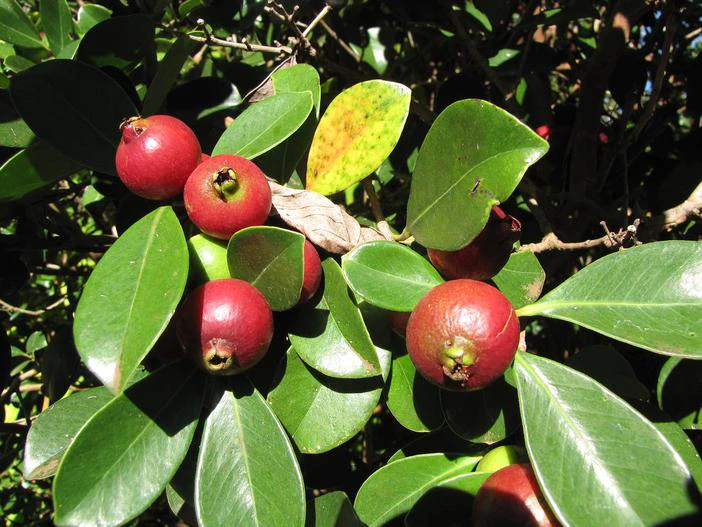

Forest and Kim Starr
CC BY 2.0






Summary
Strawberry Guava is valued for its edible fruit, ornamental qualities, and as a hedge or screen plant in tropical and subtropical gardens. It is adaptable to a range of soil types, provided they offer good drainage. While it prefers full sun, it can tolerate partial shade. However, it is highly invasive throughout the tropics and is considered the most invasive plant in Hawaiʻi, outcompeting native flora and altering ecological dynamics; gardeners should consult local regulations before planting.CC BY-SA 4.0
Plant Description
- Plant Type: Tree, Shrub
- Height: 10-20 feet
- Width: 10-20 feet
- Growth Rate: Moderate
- Flower Color: White
- Flowering Season: Spring
- Leaf Retention: Evergreen
Growth Requirements
- Sun: Full Sun, Part Shade
- Drainage: Slow, Medium, Fast
Common Uses
Bee Garden, Bird Garden, Drought Tolerant, Edible*Disclaimer: Easyscape's listed plant edibility is for informational use. Always verify the safety and proper identification of any plant before consumption., Fragrant, Hedges, Street Planting
Natural Habitat
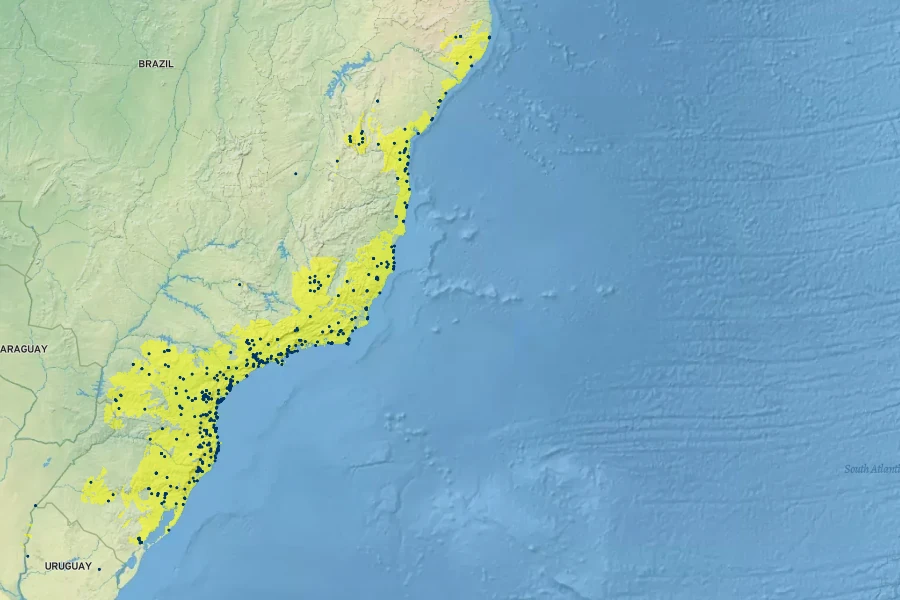
Native to the Atlantic Forest ecoregion in Southern Brazil and parts of Uruguay, including rainforests, forest edges, and clearings
Other Names
Common Names: Cherry Guava, Cattley Guava, Purple Guava, Aarbei Koejawel, Araçá, Araçá-Amarelo, Araçá-De-Coroa, Smultronguava, Araçá-Da-Praia, Araçá-De-Comer
Scientific Names: Psidium cattleianum, Psidium littorale, Psidium littorale var. longipes, Psidium cattleianum var. cattleianum, Psidium cattleianum var. littorale, Psidium variabile, Psidium cattleyanum f. lucidum, Psidium obovatum, Eugenia urceolata
GBIF Accepted Name: Psidium cattleianum Afzel. ex Sabine