Fragrant Rabbit-Tobacco
/
(Pseudognaphalium beneolens)
Fragrant Rabbit-Tobacco (Pseudognaphalium beneolens)
/


© Chloe and Trevor Van Loon
CC BY 4.0

Image By:
© Chloe and Trevor Van Loon
Recorded By:
Copyright:
CC BY 4.0
Copyright Notice:
Photo by: © Chloe and Trevor Van Loon | License Type: CC BY 4.0 | License URL: http://creativecommons.org/licenses/by/4.0/ | Uploader: chloe_and_trevor | Publisher: iNaturalist |





Summary
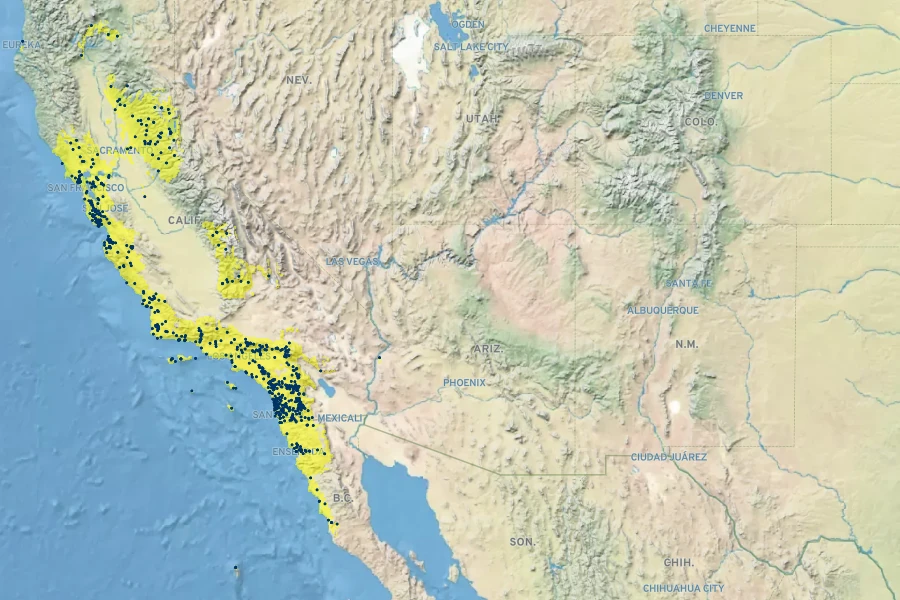
Pseudognaphalium beneolens, commonly known as Fragrant Rabbit-Tobacco, Fragrant Everlasting, or Wright’s Cudweed, is a perennial herb native to California, including dry open slopes, chaparral, woodlands, and desert scrub. It typically grows at a moderate rate to a height of 1-3 feet (0.3-0.9 meters) and a width of 1 foot (0.3 meters). This plant is characterized by its narrow, lance-shaped leaves and clusters of small, white or cream flowers that bloom in the summer and fall, which are modest in showiness but valued for their sweet fragrance. The foliage is often covered in fine, woolly hairs, giving the plant a soft, grayish appearance.
Fragrant Rabbit-Tobacco is appreciated for its drought tolerance and the pleasant aroma of its flowers. It is used in xeriscaping, naturalized plantings, and as a filler in mixed borders due to its ease of maintenance and ability to thrive in poor soils. It is also valued for its medicinal properties, as it has been traditionally used for various ailments. For successful cultivation, it requires full sun to part shade and well-drained sandy or loamy soils. It is highly adaptable to low-water conditions, making it suitable for gardens with water conservation in mind. While generally disease-free, it can occasionally suffer from root rot if overwatered or planted in poorly drained soils.CC BY-SA 4.0
Fragrant Rabbit-Tobacco is appreciated for its drought tolerance and the pleasant aroma of its flowers. It is used in xeriscaping, naturalized plantings, and as a filler in mixed borders due to its ease of maintenance and ability to thrive in poor soils. It is also valued for its medicinal properties, as it has been traditionally used for various ailments. For successful cultivation, it requires full sun to part shade and well-drained sandy or loamy soils. It is highly adaptable to low-water conditions, making it suitable for gardens with water conservation in mind. While generally disease-free, it can occasionally suffer from root rot if overwatered or planted in poorly drained soils.CC BY-SA 4.0
Plant Description
- Plant Type: Herb
- Height: 1-3 feet
- Width: 1-1 feet
- Growth Rate: Moderate
- Flower Color: Cream, White
- Flowering Season: Summer, Fall
- Leaf Retention:
Growth Requirements
- Sun: Full Sun, Part Shade
- Drainage: Fast, Medium
Common Uses
Butterfly Garden, Drought Tolerant, Low Maintenance
Natural Habitat
Native to dry open slopes, chaparral, woodlands, and desert scrub in California
Other Names
Common Names: Fragrant Everlasting, Wright’s Cudweed
Scientific Names: Pseudognaphalium beneolens, Gnaphalium beneolens, Gnaphalium canescens subsp. beneolens, Pseudognaphalium canescens subsp. beneolens
GBIF Accepted Name: Pseudognaphalium beneolens