Western Chokecherry
/
(Prunus virginiana)
Western Chokecherry (Prunus virginiana)
/


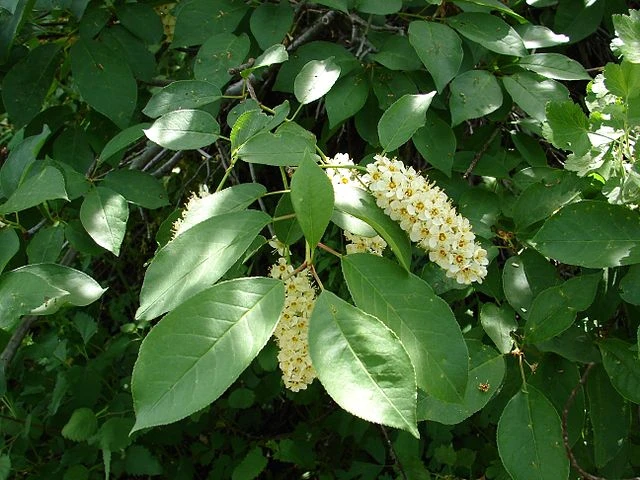

Sheri Hagwood
Public domain







Summary
Western Chokecherry is appreciated for its ornamental features, including the attractive spring flowers and the bright fall foliage of cultivars like ’Canada Red’ and ’Schubert’, which display leaves that mature to purple and turn orange and red in the autumn. ’Goertz’ offers palatable, nonastringent fruit. This plant is used for naturalistic plantings and as wildlife habitat, and it can be a useful component in windbreaks or for erosion control. It thrives in full sun to part shade and grows best in soils with medium drainage. Gardeners should be aware that the stone of the fruit is toxic if ingested. Prunus virginiana should be monitored outside its native range to prevent spread.CC BY-SA 4.0
Plant Description
- Plant Type: Shrub, Tree
- Height: 20-30 feet
- Width: 15-20 feet
- Growth Rate: Moderate
- Flower Color: White
- Flowering Season: Spring
- Leaf Retention: Deciduous
Growth Requirements
- Sun: Full Sun, Part Shade
- Drainage: Medium
Common Uses
Bee Garden, Bird Garden, Butterfly Garden, Deer Resistant, Drought Tolerant, Edible*Disclaimer: Easyscape's listed plant edibility is for informational use. Always verify the safety and proper identification of any plant before consumption., Erosion Control, Fire Resistant, Fragrant, Hedges, Hummingbird Garden, Rabbit Resistant, Showy Flowers, Street Planting
Natural Habitat
Forest edges, open woodlands, and riparian areas across North America
Other Names
Common Names: bitter-berry, chokecherry, Virginia bird cherry
Scientific Names: Prunus virginiana, Prunus canadensis, Padus virginiana, Prunus nana, Prunus hirsuta, Amygdalus pallasiana, Prunus virginiana f. deamii, Padus oblonga, Prunus virginiana var. leucocarpa
GBIF Accepted Name: Prunus virginiana L.