Wilson’s Primrose
/
(Primula wilsonii)
Wilson’s Primrose (Primula wilsonii)
/


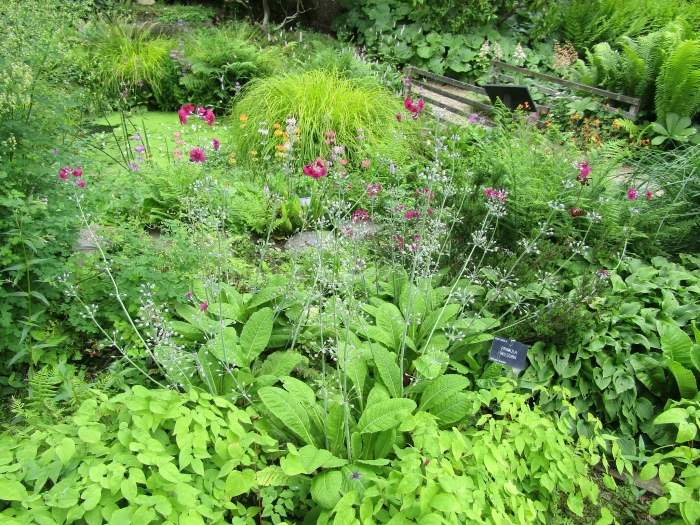

Leonora (Ellie) Enking
CC BY-SA 2.0

Image By:
Leonora (Ellie) Enking
Recorded By:
Copyright:
CC BY-SA 2.0
Copyright Notice:
Photo by: Leonora (Ellie) Enking | License Type: CC BY-SA 2.0 | License URL: https://creativecommons.org/licenses/by/2.0/ | Uploader: wallygrom | Publisher: Flickr |





Summary
Primula wilsonii, commonly known as Wilson’s Primrose, is an evergreen perennial herb native to the high-altitude meadows and moist alpine regions of South-Central China. It typically grows to a height and width of 1-2 feet (0.3-0.6 meters). Wilson’s Primrose forms a rosette of leaves from which emerge tall stems topped with clusters of flowers that can range in color from violet to deep purple, often with a yellow eye, blooming in late spring to early summer. The flowers are quite showy and attract pollinators such as bees and butterflies.
Wilson’s Primrose is valued for its vibrant flowers and ability to thrive in moist, cool conditions, making it a suitable choice for water gardens, bog gardens, and shaded borders. It prefers consistently moist soil and can tolerate part shade, which makes it a versatile plant for various garden settings. While it requires high amounts of water, it is important to ensure good drainage to prevent root rot. In regions with hot summers, it benefits from afternoon shade to protect it from intense heat. Wilson’s Primrose is not commonly afflicted by diseases but can suffer from root rot if overwatered or planted in poorly drained soils.CC BY-SA 4.0
Wilson’s Primrose is valued for its vibrant flowers and ability to thrive in moist, cool conditions, making it a suitable choice for water gardens, bog gardens, and shaded borders. It prefers consistently moist soil and can tolerate part shade, which makes it a versatile plant for various garden settings. While it requires high amounts of water, it is important to ensure good drainage to prevent root rot. In regions with hot summers, it benefits from afternoon shade to protect it from intense heat. Wilson’s Primrose is not commonly afflicted by diseases but can suffer from root rot if overwatered or planted in poorly drained soils.CC BY-SA 4.0
Plant Description
- Plant Type: Herb
- Height: 1-1.5 feet
- Width: 1.2-1.6 feet
- Growth Rate: Moderate
- Flower Color: Red, Yellow
- Flowering Season: Spring, Summer
- Leaf Retention: Evergreen
Growth Requirements
- Sun: Full Sun, Part Shade
- Drainage: Medium
Common Uses
Bee Garden, Bird Garden, Butterfly Garden, Deer Resistant, Fragrant, Hummingbird Garden, Rabbit Resistant
Natural Habitat
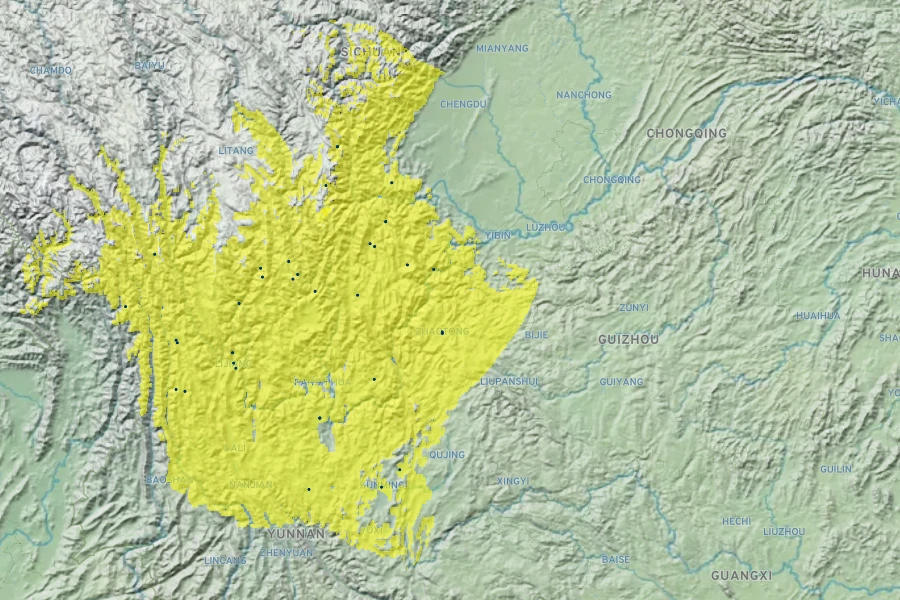
High-altitude meadows and moist alpine regions of South-Central China
Other Names
Common Names: Cherry Flowered Candelabra Primrose
Scientific Names: Primula wilsonii, Primula poissonii subsp. wilsonii, Primula glycyosma, Aleuritia wilsonii, Primula angustidens, Primula oblanceolata
GBIF Accepted Name: Primula wilsonii Dunn