Wood Bluegrass
/
(Poa nemoralis)
Wood Bluegrass (Poa nemoralis)
/


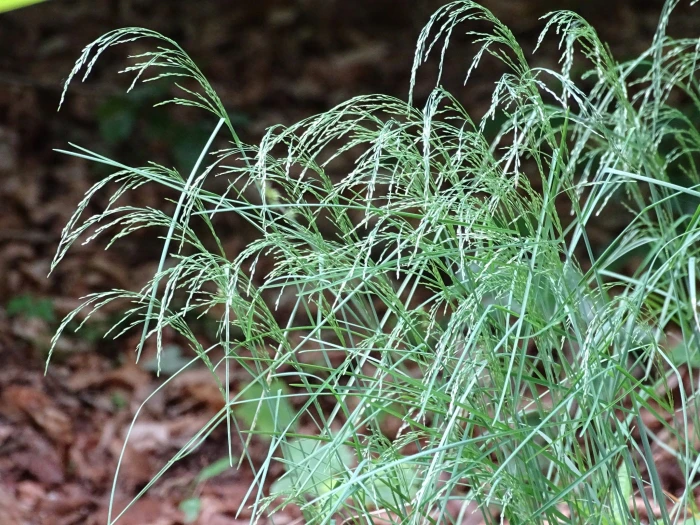

Christian Berg
CC BY 4.0







Summary
This species is valued for its ability to thrive in shaded conditions and is often used for understory plantings, erosion control, and as a component of woodland garden designs. It is appreciated for its ease of maintenance and ability to form a ground cover in areas where other grasses might struggle. In cultivation, Wood Bluegrass prefers moist, well-drained soils and can tolerate a range of light conditions from full sun to deep shade. While it is not known for any significant diseases or pests, its potential for invasiveness should be considered before planting, as it can spread beyond its intended area, especially in regions outside its native range. It is invasive in North America, where it spreads in forests and disturbed riparian sites and can increase fire risk.CC BY-SA 4.0
Plant Description
- Plant Type: Grass
- Height: 1-2.5 feet
- Width: 1-3 feet
- Growth Rate: Moderate
- Flower Color: N/A
- Flowering Season: Summer
- Leaf Retention: Evergreen
Growth Requirements
- Sun: Full Sun, Part Shade
- Drainage: Fast
Common Uses
Butterfly Garden, Low Maintenance
Natural Habitat
native to temperate forests and grasslands, often found in shaded areas, across the Northern Hemisphere, including Europe, the Russian Far East, Central Asia, the Middle East, and parts of the Northeastern USA
Other Names
Common Names: Wood Meadow Grass, Lund-Rapgræs, Hain-Rispengras, Hainrispengras, Lehtonurmikka, Pâturin Des Bois, Fienarola Dei Boschi, Lundrapp, Schaduwgras, Lundgröe
Scientific Names: Poa nemoralis, Poa nemoralis var. glaucantha, Poa glauca var. glaucantha, Poa lapponica, Poa nemoralis var. nemoralis, Poa parnellii, Poa nemoralis var. firmula, Poa nemoralis var. rigidula, Poa nemoralis var. vulgaris
GBIF Accepted Name: Poa nemoralis L.