Shrubby Platysace
/
(Platysace lanceolata)
Shrubby Platysace (Platysace lanceolata)
/


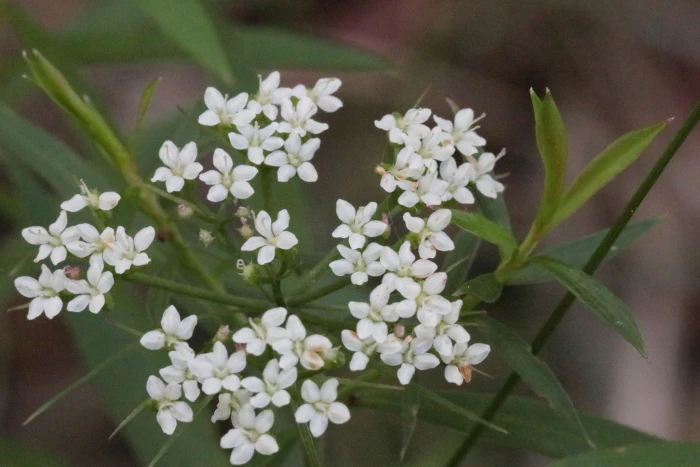

© tobyyy
CC BY-SA 4.0

Image By:
© tobyyy
Recorded By:
Copyright:
CC BY-SA 4.0
Copyright Notice:
Photo by: © tobyyy | License Type: CC BY-SA 4.0 | License URL: http://creativecommons.org/licenses/by-sa/4.0/ | Uploader: tobyyy | Publisher: iNaturalist |





Summary
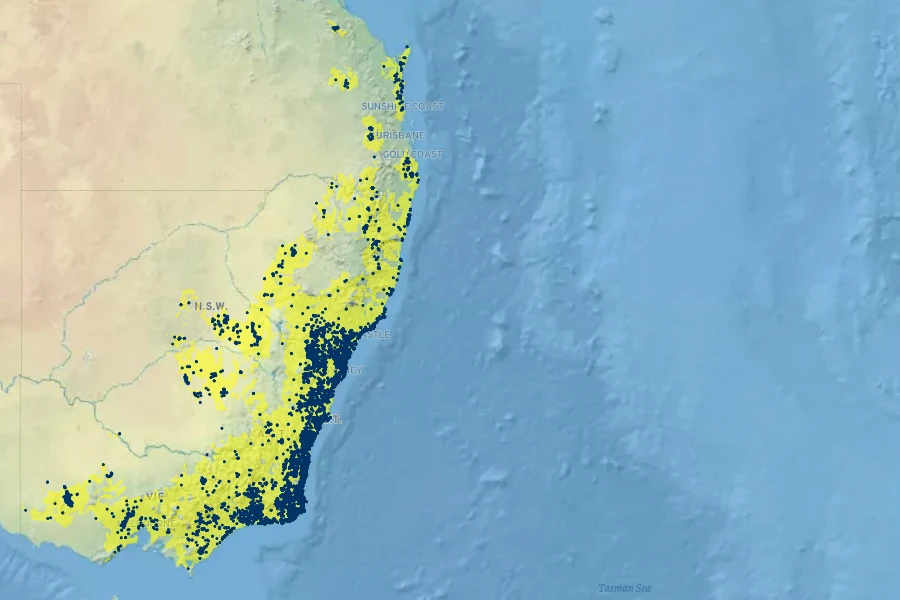
Platysace lanceolata, commonly known as Shrubby Platysace, is a perennial shrub native to a variety of habitats including coastal heath, dry sclerophyll forests, and mountainous areas in southeastern Australia, particularly in New South Wales, Victoria, and Queensland. It typically grows to a height of 5 feet, with a similar spread, and features variable-shaped leaves that can be lanceolate to ovate. The cream-white flowers, which are small but numerous, are arranged in umbels and bloom from September to March, providing a long flowering season. The flowers are modest in appearance but can add texture to garden settings.
Shrubby Platysace is valued for its resilience and adaptability to a range of soil types, provided they are well-drained. It is often used in native plant gardens, as a border shrub, or for revegetation projects due to its ability to quickly regenerate after disturbances such as fire. This species prefers full sun to part shade and requires minimal maintenance once established. It is relatively drought-tolerant, making it suitable for xeriscaping. While it is not commonly afflicted by diseases, it can be susceptible to root rot in poorly drained soils.CC BY-SA 4.0
Shrubby Platysace is valued for its resilience and adaptability to a range of soil types, provided they are well-drained. It is often used in native plant gardens, as a border shrub, or for revegetation projects due to its ability to quickly regenerate after disturbances such as fire. This species prefers full sun to part shade and requires minimal maintenance once established. It is relatively drought-tolerant, making it suitable for xeriscaping. While it is not commonly afflicted by diseases, it can be susceptible to root rot in poorly drained soils.CC BY-SA 4.0
Plant Description
- Plant Type: Shrub
- Height: 1-3 feet
- Width: 1-2 feet
- Growth Rate: Moderate
- Flower Color: White
- Flowering Season: Spring, Summer
- Leaf Retention: Evergreen
Growth Requirements
- Sun: Full Sun, Part Shade
- Drainage: Medium, Fast
Common Uses
Border Plant, Butterfly Garden, Low Maintenance
Natural Habitat
Coastal heath, dry sclerophyll forests, and mountainous areas
Other Names
Common Names: Slender Platysace, Scale-stem
Scientific Names: Platysace lanceolata, Azorella lanceolata, Azorella ovata, Fischera lanceolata, Fischera ovata, Siebera billardierei, Siebera billardierei var. conferta, Siebera billardierei var. crassifolia, Siebera billardierei var. cuneata
GBIF Accepted Name: Platysace lanceolata