Branching Phacelia
/
(Phacelia ramosissima)
Branching Phacelia (Phacelia ramosissima)
/


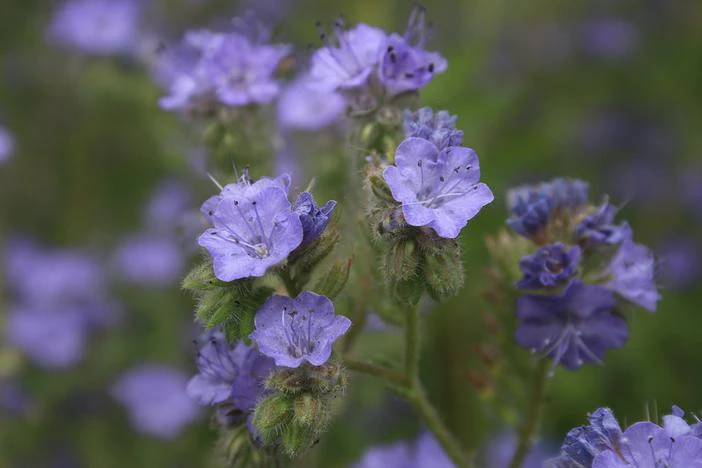

Joe Decruyenaere
CC BY-SA 2.0

Image By:
Joe Decruyenaere
Recorded By:
Copyright:
CC BY-SA 2.0
Copyright Notice:
Photo by: Joe Decruyenaere | License Type: CC BY-SA 2.0 | License URL: https://creativecommons.org/licenses/by-sa/2.0/ | Uploader: joedecruyenaere | Publisher: Flickr






Summary
Phacelia ramosissima, commonly known as branching phacelia, is an annual or biennial herb native to a variety of habitats including chaparral, coastal sage scrub, oak woodlands, and forest clearings in western North America, from British Columbia through California and into the Southwestern United States. It can reach up to 4.5 feet in height, with stems that vary from hairless to densely hairy and are often extensively branched. The plant is notable for its inflorescences, which are one-sided curving cymes of white to lavender funnel-shaped flowers that bloom from April to July, depending on the elevation and latitude of the habitat.
Branching phacelia is appreciated for its adaptability to different environments and its ornamental appeal, particularly its attractive flowers. It is often used in wildflower gardens, restoration projects, and as a cover crop to attract pollinators such as bees. In cultivation, it prefers full sun to part shade, well-drained soils, and requires moderate watering. While generally low-maintenance, it can be susceptible to powdery mildew and rust diseases. Gardeners should handle the plant with care, as its hairs can cause skin irritation in some individuals.CC BY-SA 4.0
Branching phacelia is appreciated for its adaptability to different environments and its ornamental appeal, particularly its attractive flowers. It is often used in wildflower gardens, restoration projects, and as a cover crop to attract pollinators such as bees. In cultivation, it prefers full sun to part shade, well-drained soils, and requires moderate watering. While generally low-maintenance, it can be susceptible to powdery mildew and rust diseases. Gardeners should handle the plant with care, as its hairs can cause skin irritation in some individuals.CC BY-SA 4.0
Plant Description
- Plant Type: Shrub, Herb
- Height: 1-3 feet
- Width: 1-2 feet
- Growth Rate: Rapid
- Flower Color: Blue, Purple, White
- Flowering Season: Spring, Summer
- Leaf Retention: Deciduous
Growth Requirements
- Sun: Full Sun, Part Shade
- Drainage: Medium, Fast
Common Uses
Bee Garden, Bird Garden, Border Plant, Drought Tolerant, Low Maintenance
Natural Habitat
Chaparral, coastal sage scrub, oak woodlands, and forest clearings
Other Names
Common Names: Scorpion Weed, Branched Scorpion-Weed, Branched Phacelia, Branching Scorpionweed, Wild Heliotrope
Scientific Names: Phacelia ramosissima, Phacelia bifurca, Phacelia decumbens, Phacelia fastigiata, Phacelia polystachya, Phacelia ramosissima, Phacelia ramosissima f. decumbens, Phacelia ramosissima var. brunoniana, Phacelia ramosissima var. subsinuata
GBIF Accepted Name: Phacelia ramosissima