Cliff Stonecrop
/
(Petrosedum amplexicaule)
Cliff Stonecrop (Petrosedum amplexicaule)
/


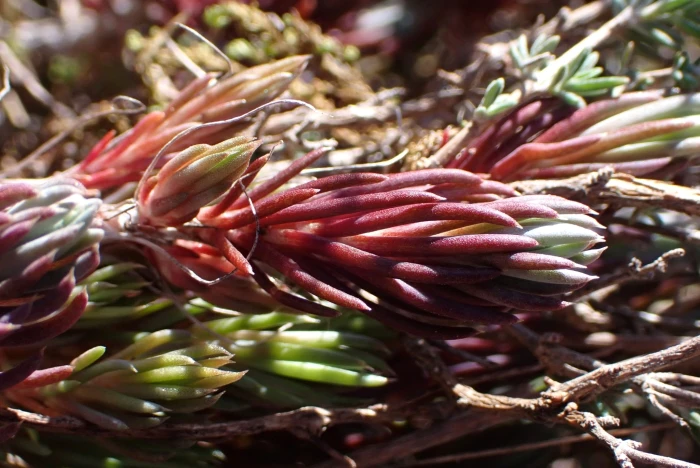

© scolym
CC BY 4.0

Image By:
© scolym
Recorded By:
Copyright:
CC BY 4.0
Copyright Notice:
Photo by: © scolym | License Type: CC BY 4.0 | License URL: http://creativecommons.org/licenses/by/4.0/ | Uploader: scolym | Publisher: iNaturalist |





Summary
Petrosedum amplexicaule, commonly known as Clasping Stonecrop, is a succulent perennial herb native to rocky outcrops, walls, and alpine screes in Europe. It exhibits a moderate growth rate, reaching heights and widths of 0.5-1.5 feet (0.15-0.5 meters). This plant forms rosettes of fleshy, spoon-shaped leaves, which may take on a reddish tinge in full sun. The yellow, star-shaped flowers appear in clusters atop erect stems during the summer months and are moderately showy, attracting pollinators such as bees and butterflies.
Clasping Stonecrop is valued for its drought tolerance and ease of maintenance, making it a suitable choice for rock gardens, green roofs, and as ground cover in xeriscaping. It thrives in full sun, requiring minimal water once established, and prefers well-draining sandy or loamy soils. While generally disease-free, it can be susceptible to root rot if overwatered or planted in poorly draining soils. Its ability to spread and fill in spaces without excessive spread makes it a popular choice for gardeners looking to cover bare spots with minimal effort.CC BY-SA 4.0
Clasping Stonecrop is valued for its drought tolerance and ease of maintenance, making it a suitable choice for rock gardens, green roofs, and as ground cover in xeriscaping. It thrives in full sun, requiring minimal water once established, and prefers well-draining sandy or loamy soils. While generally disease-free, it can be susceptible to root rot if overwatered or planted in poorly draining soils. Its ability to spread and fill in spaces without excessive spread makes it a popular choice for gardeners looking to cover bare spots with minimal effort.CC BY-SA 4.0
Plant Description
- Plant Type: Succulent
- Height: 0.5-1.5 feet
- Width: 0.5-1.5 feet
- Growth Rate: Moderate
- Flower Color: Yellow
- Flowering Season: Summer
- Leaf Retention: Deciduous
Growth Requirements
- Sun: Full Sun
- Drainage: Fast
Common Uses
Border Plant, Drought Tolerant, Low Maintenance, Rock Garden
Natural Habitat
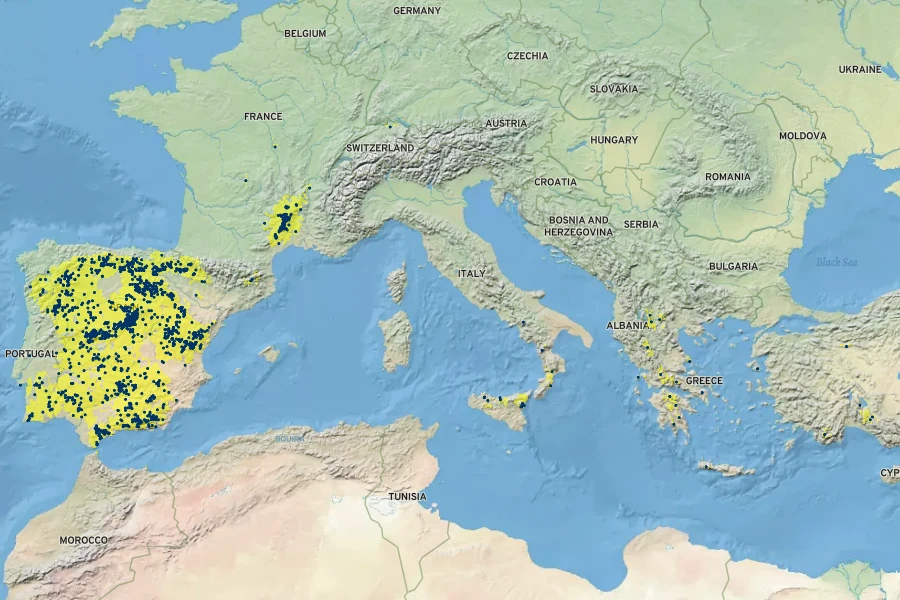
Rocky outcrops, walls, and alpine screes in Europe
Other Names
Common Names:
Scientific Names: Petrosedum amplexicaule, Petrosedum amplexicaule subsp. anomalum, Petrosedum amplexicaule subsp. hispanicum, Petrosedum tenuifolium subsp. ibericum ('t, Sedum amplexicaule, Sedum anomalum, Sedum carinatum, Sedum carinatum, Sedum reflexum
GBIF Accepted Name: Petrosedum amplexicaule