Spotted Knotweed
/
(Persicaria strigosa)
Spotted Knotweed (Persicaria strigosa)
/


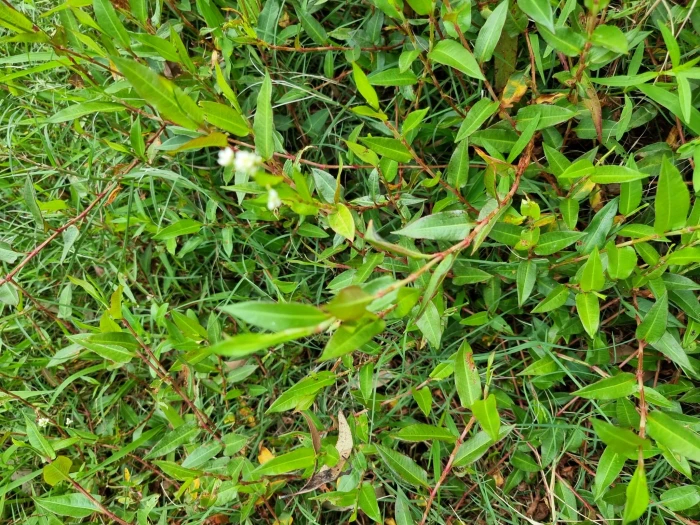

Martin Rady
CC BY 4.0

Image By:
Martin Rady
Recorded By:
Copyright:
CC BY 4.0
Copyright Notice:
Photo by: Martin Rady | License Type: CC BY 4.0 | License URL: http://creativecommons.org/licenses/by/4.0/ | Rights Holder: Martin Rady | Publisher: iNaturalist | Date Created: 2022-10-31T15:57:58-07:00 |





Summary
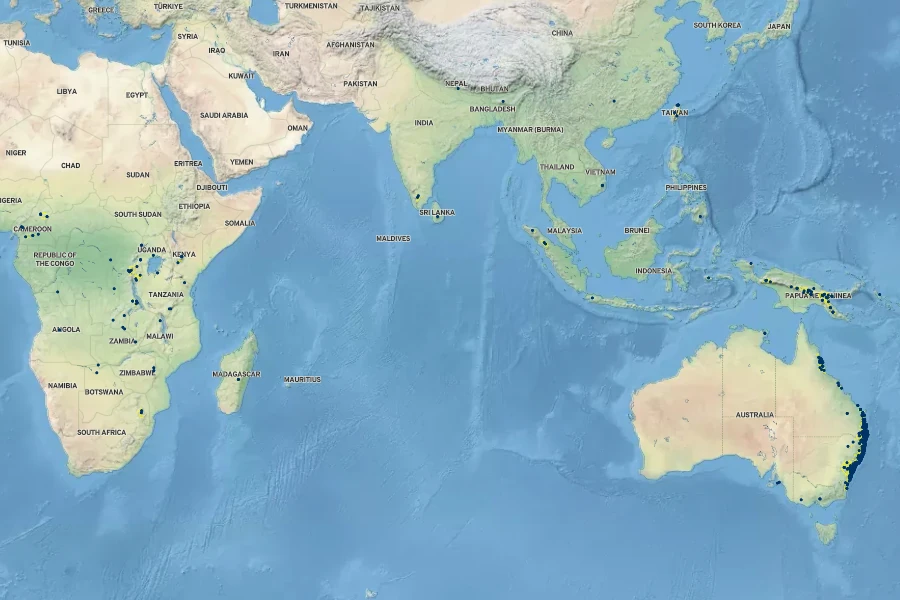
Persicaria strigosa, commonly known as Spotted Knotweed, is a deciduous herbaceous plant native to Africa, Asia and Australia. It is typically found in primarily found in seasonally dry tropical biomes. Persicaria strigosa grows to a typical height of 20-60 cm, with a spreading habit that can cover a significant area if left unchecked. The plant features lance-shaped leaves and small, inconspicuous white or pinkish flowers that bloom in the summer. The flowers are not particularly showy, but they do attract pollinators such as bees and butterflies.
Spotted Knotweed is valued for its ability to stabilize soil in wet areas and is sometimes used for erosion control. It is also appreciated for its lush green foliage in garden settings, where it can serve as a ground cover in shady spots. Gardeners should plant it in moist, well-drained soil with consistent moisture, and it can tolerate a range of soil types. While it prefers part shade or full shade, it is adaptable to various light conditions. There are no widely recognized cultivars of this species in the horticultural trade. Potential problems include susceptibility to leaf spot diseases and the possibility of it becoming overly aggressive in ideal conditions, potentially crowding out other plants.CC BY-SA 4.0
Spotted Knotweed is valued for its ability to stabilize soil in wet areas and is sometimes used for erosion control. It is also appreciated for its lush green foliage in garden settings, where it can serve as a ground cover in shady spots. Gardeners should plant it in moist, well-drained soil with consistent moisture, and it can tolerate a range of soil types. While it prefers part shade or full shade, it is adaptable to various light conditions. There are no widely recognized cultivars of this species in the horticultural trade. Potential problems include susceptibility to leaf spot diseases and the possibility of it becoming overly aggressive in ideal conditions, potentially crowding out other plants.CC BY-SA 4.0
Plant Description
- Plant Type: Herb
- Height: 1-2 feet
- Width: 2-3 feet
- Growth Rate: Moderate
- Flower Color: Pink, White
- Flowering Season: Summer
- Leaf Retention: Deciduous
Growth Requirements
- Sun: Part Shade, Full Shade
- Drainage: Medium
Common Uses
Erosion Control, Low Maintenance
Natural Habitat
Primarily found in seasonally dry tropical biomes in Africa, Asia and Australia
Other Names
Common Names: Strigose Knotweed
Scientific Names: Persicaria strigosa, Persicaria strigosa, Persicaria subsagittata, Polygonum arifolium, Polygonum auriculatum, Polygonum bodinieri, Polygonum hispidulum, Polygonum horridum, Polygonum horridum, Polygonum muricatum
GBIF Accepted Name: Persicaria strigosa