Pale Persicaria
/
(Persicaria lapathifolia)
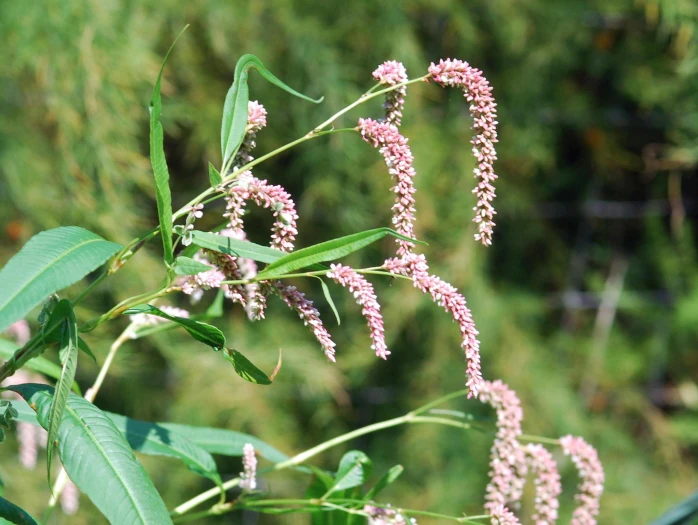
Pale Persicaria (Persicaria lapathifolia)
/



Jeff Hooper
CC BY 4.0

Image By:
Jeff Hooper
Recorded By:
Copyright:
CC BY 4.0
Copyright Notice:
Photo by: Jeff Hooper | License Type: CC BY 4.0 | License URL: http://creativecommons.org/licenses/by/4.0/ | Rights Holder: Jeff Hooper | Publisher: iNaturalist | Date Created: 41152 |



Summary
Persicaria lapathifolia, commonly known as Pale Persicaria or Willow Weed, is an annual herb that typically grows to a height of 8-31 inches (20-78 cm). It features reddish stems, lanceolate leaves, and dense spikes of small, inconspicuous pink flowers that bloom in summer. This plant is native to a wide range of habitats including riparian zones, wetlands, and moist disturbed areas in both temperate and tropical regions of the Old and New Worlds. It is particularly common in areas with moist soils, such as riverbanks and marsh edges.
Pale Persicaria is known for its rapid growth and ability to colonize disturbed soils, making it useful for erosion control. However, its aggressive nature means it can become weedy in garden settings. It is often found in cultivated fields, where it can be a nuisance as a crop weed. In cultivation, it prefers full sun to part shade and can tolerate a range of soil types, provided they are moist. While not commonly grown for ornamental purposes, it can be used in wildlife gardens where its flowers attract pollinators. Care should be taken when planting Persicaria lapathifolia, as it can spread rapidly and may be considered invasive in some regions outside its native range.CC BY-SA 4.0
Pale Persicaria is known for its rapid growth and ability to colonize disturbed soils, making it useful for erosion control. However, its aggressive nature means it can become weedy in garden settings. It is often found in cultivated fields, where it can be a nuisance as a crop weed. In cultivation, it prefers full sun to part shade and can tolerate a range of soil types, provided they are moist. While not commonly grown for ornamental purposes, it can be used in wildlife gardens where its flowers attract pollinators. Care should be taken when planting Persicaria lapathifolia, as it can spread rapidly and may be considered invasive in some regions outside its native range.CC BY-SA 4.0
Plant Description
- Plant Type: Herb
- Height: 2-4 feet
- Width: 1-3 feet
- Growth Rate: Moderate, Rapid
- Flower Color: Pink, White
- Flowering Season: Summer
- Leaf Retention:
Growth Requirements
- Sun: Full Sun
- Drainage: Medium
Common Uses
Erosion Control, Low Maintenance
Natural Habitat
Native to riparian zones, wetlands, and moist disturbed areas
Other Names
Common Names: Pale Smartweed, Nodding Smartweed
Scientific Names: Persicaria lapathifolia
GBIF Accepted Name: Persicaria lapathifolia