Irish Fleabane
/
(Pentanema salicinum)
Irish Fleabane (Pentanema salicinum)
/


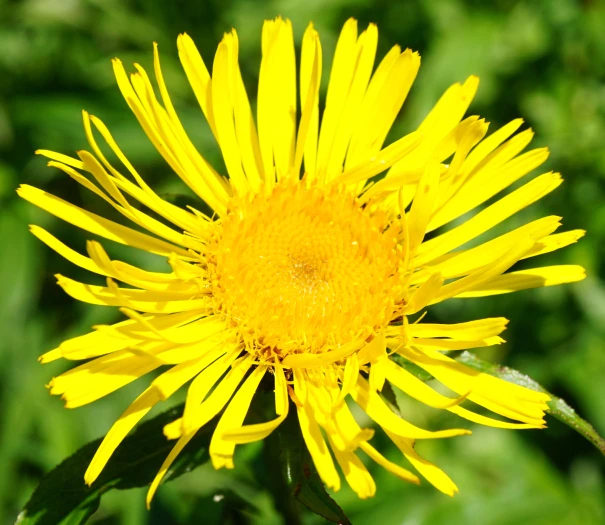

Patrick Hacker
CC BY 4.0

Image By:
Patrick Hacker
Recorded By:
Copyright:
CC BY 4.0
Copyright Notice:
Photo by: Patrick Hacker | License Type: CC BY 4.0 | License URL: http://creativecommons.org/licenses/by/4.0/ | Rights Holder: Patrick Hacker | Publisher: iNaturalist | Date Created: 2020-06-27T12:55:04-07:00 |






Summary
Pentanema salicinum, commonly known as Irish fleabane or willowleaf yellowhead, is a perennial herb native to a variety of habitats including grasslands, open woodlands, and along riverbanks across Eurasia from Portugal to Japan. It is particularly associated with calcareous soils in these regions. In western Europe, its presence spans from Spain and France to southern Scandinavia, and it has a notable but restricted distribution in Ireland, mainly around Lough Derg. The plant typically reaches 8-31 inches in height and features narrow, elongate leaves. Its flower heads are 1-2 inches in diameter, showcasing bright yellow ray and disc flowers that bloom from late spring to early autumn, providing a long-lasting display of color.
Irish fleabane is valued for its bright yellow flowers and its ability to thrive in a range of conditions, making it suitable for wildflower meadows, informal garden borders, and naturalistic plantings. It is relatively low maintenance, requiring minimal care once established. This species prefers well-drained soils and can tolerate drought, making it a good candidate for xeriscaping. It thrives in full sun to partial shade. While not commonly used in cultivation, its conservation status in Ireland highlights its ecological importance and potential for use in native plant gardens and restoration projects.CC BY-SA 4.0
Irish fleabane is valued for its bright yellow flowers and its ability to thrive in a range of conditions, making it suitable for wildflower meadows, informal garden borders, and naturalistic plantings. It is relatively low maintenance, requiring minimal care once established. This species prefers well-drained soils and can tolerate drought, making it a good candidate for xeriscaping. It thrives in full sun to partial shade. While not commonly used in cultivation, its conservation status in Ireland highlights its ecological importance and potential for use in native plant gardens and restoration projects.CC BY-SA 4.0
Plant Description
- Plant Type: Herb
- Height: 1.5-2.5 feet
- Width: 1-2 feet
- Growth Rate: Moderate
- Flower Color: Yellow
- Flowering Season: Summer
- Leaf Retention: Deciduous
Growth Requirements
- Sun: Full Sun
- Drainage: Fast
Common Uses
Bee Garden, Border Plant, Low Maintenance, Rock Garden
Natural Habitat
Native to grasslands, open woodlands, and riverbanks, particularly on calcareous soils
Other Names
Common Names: Willowleaf Yellowstar
Scientific Names: Pentanema salicinum, Aster rigidus, Aster salicinus, Aster salicinus, Aster salicinus, Aster spathularis, Aster spathulatus, Conyza salicina, Helenium cordatum
GBIF Accepted Name: Pentanema salicinum