Rough-Fruited Milkweed
/
(Pachycarpus asperifolius)
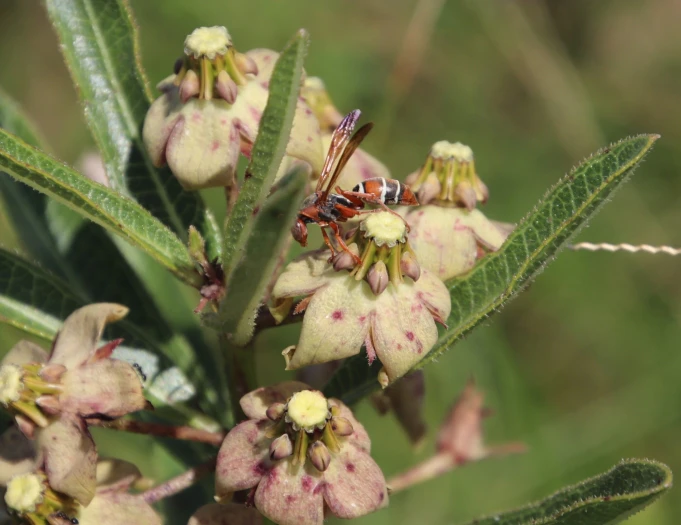
Rough-Fruited Milkweed (Pachycarpus asperifolius)
/



Tony Rebelo
CC BY-SA 4.0

Image By:
Tony Rebelo
Recorded By:
Copyright:
CC BY-SA 4.0
Copyright Notice:
Photo by: Tony Rebelo | License Type: CC BY-SA 4.0 | License URL: http://creativecommons.org/licenses/by-sa/4.0/ | Rights Holder: Tony Rebelo | Publisher: iNaturalist | Date Created: 2019-03-17T09:37:49-07:00 |



Summary
Pachycarpus asperifolius, commonly known as Rough-Fruited Milkweed or Rough Pachycarpus, is a perennial herb native to the grasslands and open woodlands of Southern Africa. It typically grows to a height and width of 0.5-1 feet (0.15-0.3 meters). This species is characterized by its erect stems and rough, lance-shaped leaves. The flowers, which are white or cream, appear in clusters at the top of the stems during the summer months and are moderately showy. The fruit is a distinctive horn-shaped pod that adds interest to the plant’s appearance after flowering.
Rough-Fruited Milkweed is valued for its drought tolerance and ability to attract butterflies, particularly monarchs, which use milkweeds as a host plant for their larvae. It is suitable for xeriscaping, naturalized areas, and wildlife gardens. Gardeners often use it in borders or as part of a mixed perennial display. It thrives in full sun to part shade and prefers well-drained loam or sandy soils. There are no widely known cultivars of this species in the horticultural trade, and it is generally grown from seed. Potential problems include susceptibility to aphids and milkweed bugs, which can be managed with careful monitoring and control measures.CC BY-SA 4.0
Rough-Fruited Milkweed is valued for its drought tolerance and ability to attract butterflies, particularly monarchs, which use milkweeds as a host plant for their larvae. It is suitable for xeriscaping, naturalized areas, and wildlife gardens. Gardeners often use it in borders or as part of a mixed perennial display. It thrives in full sun to part shade and prefers well-drained loam or sandy soils. There are no widely known cultivars of this species in the horticultural trade, and it is generally grown from seed. Potential problems include susceptibility to aphids and milkweed bugs, which can be managed with careful monitoring and control measures.CC BY-SA 4.0
Plant Description
- Plant Type: Herb
- Height: 0.5-1 feet
- Width: 0.5-1 feet
- Growth Rate: Moderate
- Flower Color: White, Cream
- Flowering Season: Summer
- Leaf Retention: Deciduous
Growth Requirements
- Sun: Full Sun, Part Shade
- Drainage: Medium, Fast
Common Uses
Butterfly Garden, Low Maintenance
Natural Habitat
Native to grasslands and open woodlands of Southern Africa
Other Names
Common Names: Rough Pachycarpus
Scientific Names: Pachycarpus asperifolius, Asclepias valida, Gomphocarpus asperifolius, Gomphocarpus validus, Pachycarpus inconstans, Pachycarpus validus
GBIF Accepted Name: Pachycarpus asperifolius