Blackish Oxytrope
/
(Oxytropis nigrescens)
Blackish Oxytrope (Oxytropis nigrescens)
/


Лия
CC BY 4.0

Image By:
Лия
Recorded By:
Copyright:
CC BY 4.0
Copyright Notice:
Photo by: Лия | License Type: CC BY 4.0 | License URL: http://creativecommons.org/licenses/by/4.0/ | Rights Holder: Лия | Publisher: iNaturalist | Date Created: 2020-06-12T15:24:06-07:00 |





Summary
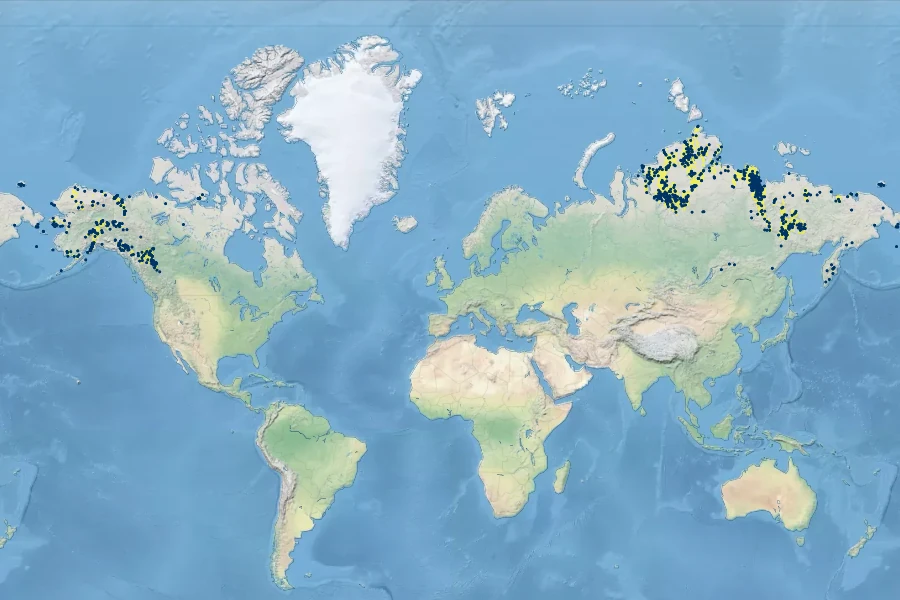
Oxytropis nigrescens, commonly known as Blackish Oxytrope, Fading Point Locoweed, or Blackish Locoweed, is a perennial herb that is native to alpine and subalpine meadows, as well as rocky slopes across North America and Asia. It exhibits a moderate growth rate and typically reaches a height of 0.5-1.5 feet (0.15-0.5 meters) with a similar width of 0.5-1 feet (0.2-0.3 meters). The plant features pinnate leaves and produces inflorescences of blue or purple flowers, which are quite showy and bloom in the spring and summer months. The flowers are followed by distinctive seed pods that add interest to the plant after flowering.
Blackish Oxytrope is valued for its attractive flowers and ability to thrive in challenging mountainous environments. It is often used in rock gardens, native plant gardens, and as part of naturalistic landscaping. This species is adapted to cool climates and requires well-drained soils, preferably loam or sandy, and consistent moisture, although it can tolerate drought once established. It thrives in full sun but can also grow in part shade. Gardeners should be aware that this plant, like other locoweeds, contains toxic alkaloids that can be harmful to livestock if ingested in large quantities.CC BY-SA 4.0
Blackish Oxytrope is valued for its attractive flowers and ability to thrive in challenging mountainous environments. It is often used in rock gardens, native plant gardens, and as part of naturalistic landscaping. This species is adapted to cool climates and requires well-drained soils, preferably loam or sandy, and consistent moisture, although it can tolerate drought once established. It thrives in full sun but can also grow in part shade. Gardeners should be aware that this plant, like other locoweeds, contains toxic alkaloids that can be harmful to livestock if ingested in large quantities.CC BY-SA 4.0
Plant Description
- Plant Type: Herb
- Height: 0.5-1.5 feet
- Width: 0.5-1 feet
- Growth Rate: Moderate
- Flower Color: Pink, Purple, White
- Flowering Season: Spring, Summer
- Leaf Retention: Deciduous
Growth Requirements
- Sun: Full Sun
- Drainage: Fast, Medium
Common Uses
Low Maintenance, Rock Garden
Natural Habitat
Native to alpine and subalpine meadows and rocky slopes across North America and Asia
Other Names
Common Names: Fading Point Locoweed, Blackish Locoweed
Scientific Names: Oxytropis nigrescens, Aragallus nigrescens, Astragalus bryophilus, Astragalus nigrescens, Oxytropis nigrescens, Oxytropis nigrescens f. genuina, Oxytropis nigrescens subsp. nigrescens, Spiesia nigrescens
GBIF Accepted Name: Oxytropis nigrescens