African Sandalwood
/
(Osyris lanceolata)
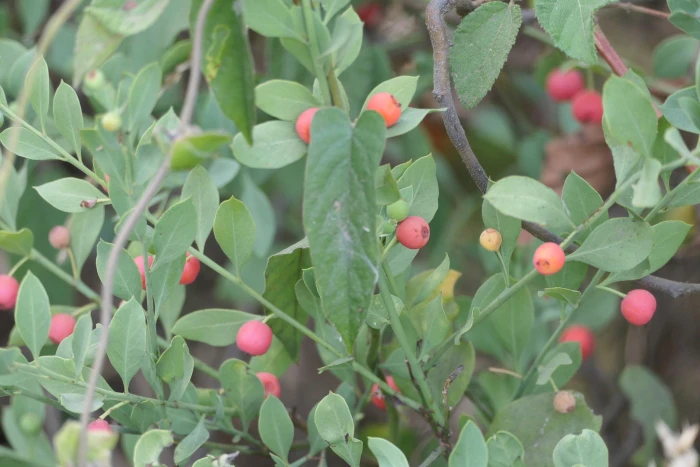
African Sandalwood (Osyris lanceolata)
/



© Dinesh Valke
CC BY-SA 4.0

Image By:
© Dinesh Valke
Recorded By:
Copyright:
CC BY-SA 4.0
Copyright Notice:
Photo by: © Dinesh Valke | License Type: CC BY-SA 4.0 | License URL: http://creativecommons.org/licenses/by-sa/4.0/ | Uploader: dineshvalke | Publisher: iNaturalist |





Summary
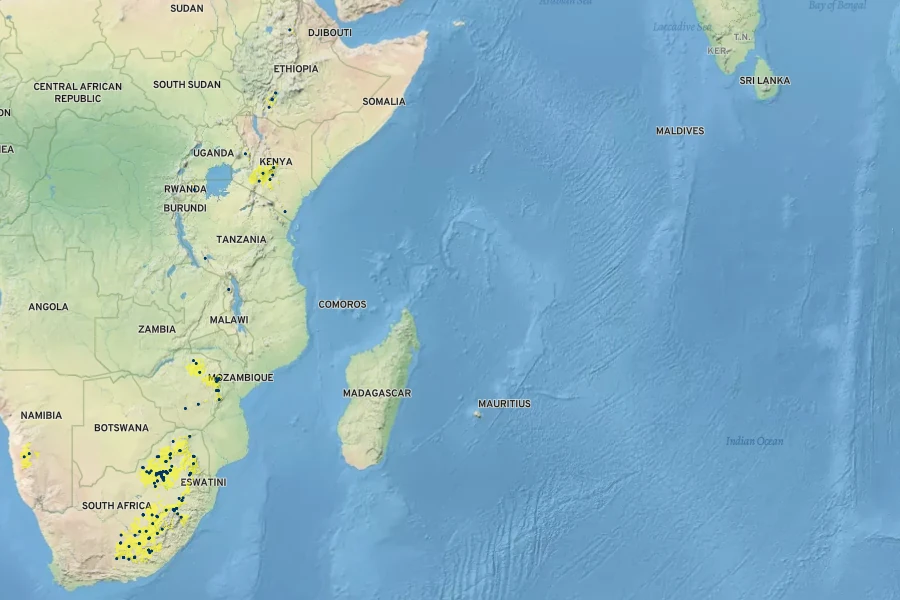
Osyris lanceolata, commonly known as African Sandalwood or Watta Bush, is a semi-parasitic shrub or small tree native to a variety of habitats including rocky outcrops, dry forest margins, and savannas across Africa, from South Africa to East Africa and extending to parts of Northwest Africa. It typically grows to a height of 2-8 meters and has a slender form. The plant produces small, inconspicuous greenish-white flowers, which are followed by red to purple berries that are attractive to birds. The foliage is lanceolate and leathery, often with a bluish-green hue.
Osyris lanceolata is valued for its fragrant wood and the essential oil derived from it, which is used in perfumery and traditional medicine. It is also used as a hedge plant in its native range due to its dense growth habit. In cultivation, it requires well-drained soil and can tolerate drought once established, making it suitable for xeriscaping. It prefers full sun to partial shade. Gardeners should be cautious, as it may be subject to root rot if overwatered.CC BY-SA 4.0
Osyris lanceolata is valued for its fragrant wood and the essential oil derived from it, which is used in perfumery and traditional medicine. It is also used as a hedge plant in its native range due to its dense growth habit. In cultivation, it requires well-drained soil and can tolerate drought once established, making it suitable for xeriscaping. It prefers full sun to partial shade. Gardeners should be cautious, as it may be subject to root rot if overwatered.CC BY-SA 4.0
Plant Description
- Plant Type: Shrub, Tree
- Height: 1.5-3 feet
- Width: 2-3 feet
- Growth Rate: Moderate
- Flower Color: N/A
- Flowering Season: Summer
- Leaf Retention: Evergreen
Growth Requirements
- Sun: Full Sun, Part Shade
- Drainage: Medium, Fast
Common Uses
Border Plant, Drought Tolerant, Low Maintenance
Natural Habitat
Variety of habitats including rocky outcrops, dry forest margins, and savannas across Africa
Other Names
Common Names: Bushman’s tea, Yellow Osyris
Scientific Names: Osyris lanceolata, Osyris arborea, Osyris arborea var. puberula, Osyris arborea var. rotundifolia, Osyris arborea var. stipitata, Osyris nepalensis, Osyris wightiana, Osyris wightiana, Osyris wightiana
GBIF Accepted Name: Osyris lanceolata