Copeland’s Owl’s Clover
/
(Orthocarpus cuspidatus)
Copeland’s Owl’s Clover (Orthocarpus cuspidatus)
/


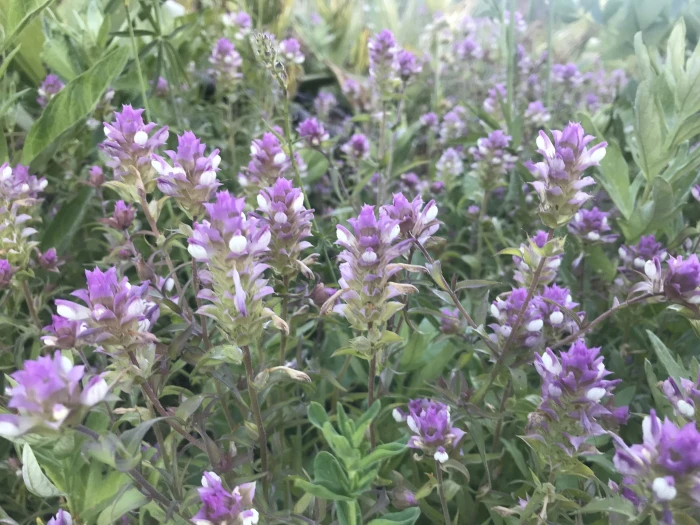

Alisa Kim
CC BY 4.0

Image By:
Alisa Kim
Recorded By:
Copyright:
CC BY 4.0
Copyright Notice:
Photo by: Alisa Kim | License Type: CC BY 4.0 | License URL: http://creativecommons.org/licenses/by/4.0/ | Rights Holder: Alisa Kim | Publisher: iNaturalist | Date Created: 2019-08-25T00:49:04Z |



Summary
Orthocarpus cuspidatus, commonly known as Copeland’s owl’s clover, Siskiyou Mountains orthocarpus, or toothed owl’s-clover, is an annual herb native to the serpentine soils of mountain meadows and plateau habitats in Oregon, California, and Nevada. It typically grows up to 16 inches tall and features a slender, glandular, hairy, purple-green stem with narrow leaves. The inflorescence is a dense spike of green bracts with showy pinkish flowers that emerge between them, blooming from late spring to early summer.
Copeland’s owl’s clover is valued for its unique appearance and its ability to thrive in the challenging conditions of serpentine soils, which are often poor in nutrients and high in heavy metals. It is used in wildflower gardens and as part of restoration projects to stabilize soils and support native pollinators. This plant prefers full sun to partial shade and requires well-drained soils with low fertility. It is relatively low maintenance, but due to its specific soil requirements, it may not be suitable for all garden settings. While not commonly afflicted by diseases, it can be sensitive to overwatering and nutrient-rich soils.CC BY-SA 4.0
Copeland’s owl’s clover is valued for its unique appearance and its ability to thrive in the challenging conditions of serpentine soils, which are often poor in nutrients and high in heavy metals. It is used in wildflower gardens and as part of restoration projects to stabilize soils and support native pollinators. This plant prefers full sun to partial shade and requires well-drained soils with low fertility. It is relatively low maintenance, but due to its specific soil requirements, it may not be suitable for all garden settings. While not commonly afflicted by diseases, it can be sensitive to overwatering and nutrient-rich soils.CC BY-SA 4.0
Plant Description
- Plant Type: Herb
- Height: 1-2 feet
- Width: 0.5-1 feet
- Growth Rate: Moderate
- Flower Color: Pink, Purple, White
- Flowering Season: Summer
- Leaf Retention:
Growth Requirements
- Sun: Full Sun
- Drainage: Medium
Common Uses
Bee Garden, Bird Garden, Low Maintenance
Natural Habitat
Serpentine soils of mountain meadows and plateau habitats in Oregon, California, and Nevada
Other Names
Common Names: Serrate Owl’s Clover, Toothed Owl’s-Clover
Scientific Names: Orthocarpus cuspidatus
GBIF Accepted Name: Orthocarpus cuspidatus