Broad-Lipped Twayblade
/
(Neottia convallarioides)
Broad-Lipped Twayblade (Neottia convallarioides)
/


Laura J. Costello
CC BY 4.0

Image By:
Laura J. Costello
Recorded By:
Copyright:
CC BY 4.0
Copyright Notice:
Photo by: Laura J. Costello | License Type: CC BY 4.0 | License URL: http://creativecommons.org/licenses/by/4.0/ | Rights Holder: Laura J. Costello | Publisher: iNaturalist | Date Created: 2019-07-20T16:19:22-07:00 |





Summary
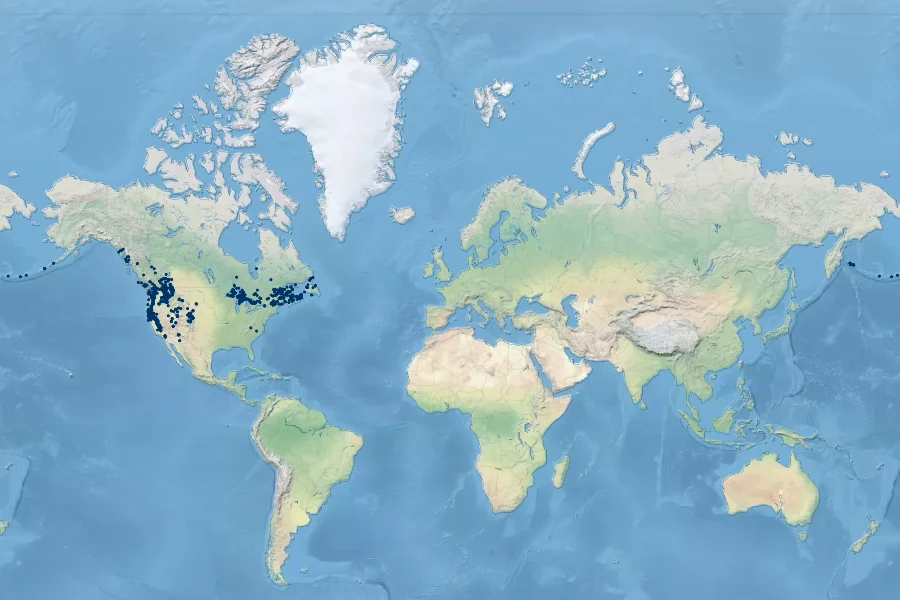
Neottia convallarioides, commonly known as Broad-lipped Twayblade or Broad-leaved Twayblade, is a rhizomatous perennial orchid. It is deciduous and typically grows 4 to 14 inches tall. This orchid is characterized by a pair of green, oval leaves near the base and a small raceme of green or yellow-green flowers that bloom in late spring to early summer. The flowers are modest in size but can be quite numerous, creating a delicate display. Native to cool, moist, deciduous and mixed coniferous-deciduous forests, as well as moist meadows and swamps, it is found across a wide range of North America, including Canada, Alaska, the Great Lakes Region, New England, and the mountainous areas of the western US, such as the Rockies, Cascades, and Sierra Nevada.
The Broad-lipped Twayblade is valued for its ability to form large colonies, which can be a striking ground cover in shady garden spots. It is also appreciated for its ecological role as a native orchid supporting local pollinators. In cultivation, it requires consistently moist soil, partial to full shade, and cool conditions to thrive. It is not commonly found in nurseries but can be a unique addition to native plant gardens or woodland settings. While generally low-maintenance, it can be susceptible to root rot if drainage is poor.CC BY-SA 4.0
The Broad-lipped Twayblade is valued for its ability to form large colonies, which can be a striking ground cover in shady garden spots. It is also appreciated for its ecological role as a native orchid supporting local pollinators. In cultivation, it requires consistently moist soil, partial to full shade, and cool conditions to thrive. It is not commonly found in nurseries but can be a unique addition to native plant gardens or woodland settings. While generally low-maintenance, it can be susceptible to root rot if drainage is poor.CC BY-SA 4.0
Plant Description
- Plant Type: Herb
- Height: 1.5-2 feet
- Width: 0.5-1 feet
- Growth Rate: Slow
- Flower Color: Green, White
- Flowering Season: Spring, Summer
- Leaf Retention: Deciduous
Growth Requirements
- Sun: Part Shade
- Drainage: Medium
Common Uses
Bee Garden, Butterfly Garden, Low Maintenance, Potted Plant
Natural Habitat
Cool, moist deciduous and mixed coniferous-deciduous forests, as well as moist meadows and swamps
Other Names
Common Names: Broad-leaved Twayblade, Broadlipped Listera, Broadlipped Twayblade, Broad-Lip Twayblade, Giant Helleborine
Scientific Names: Neottia convallarioides, Bifolium convallarioides, Diphryllum convallarioides, Diphryllum eschscholtzianum, Epipactis convallarioides, Listera convallarioides, Listera convallarioides, Listera convallarioides, Listera convallarioides f. trifolia
GBIF Accepted Name: Neottia convallarioides