Brittle Naiad
/
(Najas minor)
Brittle Naiad (Najas minor)
/


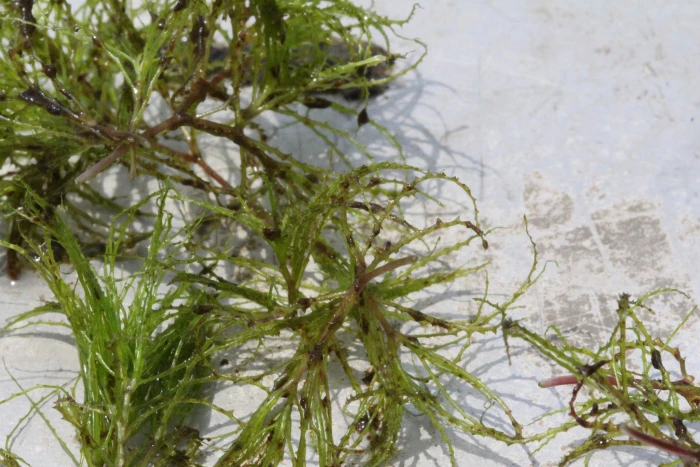

Samuel A. Schmid
CC BY 4.0

Image By:
Samuel A. Schmid
Recorded By:
Copyright:
CC BY 4.0
Copyright Notice:
Photo by: Samuel A. Schmid | License Type: CC BY 4.0 | License URL: http://creativecommons.org/licenses/by/4.0/ | Rights Holder: Samuel A. Schmid | Publisher: iNaturalist | Date Created: 2023-06-05T13:45:52-07:00 |





Summary
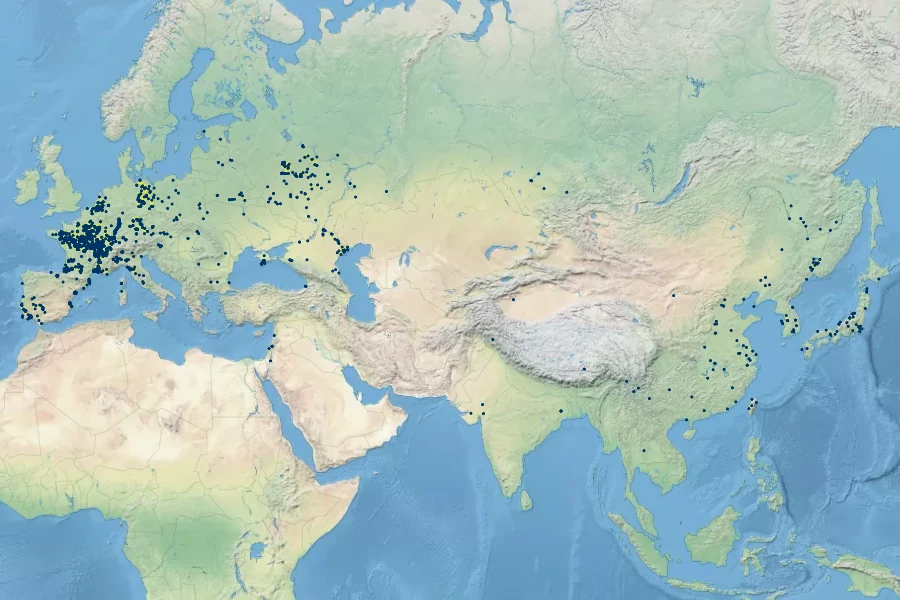
Najas minor, commonly known as brittle naiad, is an annual aquatic herb native to freshwater habitats such as ponds, lakes, and slow-moving streams in Europe, Asia, and North Africa. It has become invasive in parts of North America. This plant typically thrives in calm waters up to 13 feet deep, where it forms dense clusters with highly branched stems. The leaves of brittle naiad are narrow, up to 1 inch long, and have serrated margins, which can feel rough to the touch. It produces inconspicuous greenish flowers from June to September.
Brittle naiad is valued for its use in aquariums and ponds due to its ability to oxygenate water and provide habitat for aquatic life. However, its invasive nature outside its native range can lead to the displacement of native aquatic plants and alteration of local ecosystems. In cultivation, it requires submerged conditions in freshwater and can tolerate a wide range of light conditions, from full sun to partial shade. It is not particular about soil type as it anchors in the soft substrate at the bottom of water bodies. Gardeners should be cautious and ensure it is not invasive in their region before planting. It is an invasive aquatic weed across the eastern United States, forming dense underwater stands.CC BY-SA 4.0
Brittle naiad is valued for its use in aquariums and ponds due to its ability to oxygenate water and provide habitat for aquatic life. However, its invasive nature outside its native range can lead to the displacement of native aquatic plants and alteration of local ecosystems. In cultivation, it requires submerged conditions in freshwater and can tolerate a wide range of light conditions, from full sun to partial shade. It is not particular about soil type as it anchors in the soft substrate at the bottom of water bodies. Gardeners should be cautious and ensure it is not invasive in their region before planting. It is an invasive aquatic weed across the eastern United States, forming dense underwater stands.CC BY-SA 4.0
Plant Description
- Plant Type: Herb
- Height: 0.5-3 feet
- Width: 1-2 feet
- Growth Rate: Rapid
- Flower Color: Brown, Green
- Flowering Season: Summer, Fall
- Leaf Retention:
Growth Requirements
- Sun: Full Sun, Part Shade
- Drainage: Standing
Common Uses
Low Maintenance, Water Garden
Natural Habitat
Freshwater habitats such as ponds, lakes, and slow-moving streams in Europe, Asia, and North Africa
Other Names
Common Names: Slender Naiad, Brittle Waternymph, European Naiad, Slender-Leaf Naiad
Scientific Names: Najas minor, Caulinia fragalis, Caulinia fragilis, Caulinia minor, Fluvialis minor, Ittnera minor, Najas dichotoma, Najas fragalis, Najas fragilis
GBIF Accepted Name: Najas minor