Parrot Feather Watermilfoil
/
(Myriophyllum aquaticum)
Parrot Feather Watermilfoil (Myriophyllum aquaticum)
/


Víctor Dávalos
CC BY 4.0

Image By:
Víctor Dávalos
Recorded By:
Copyright:
CC BY 4.0
Copyright Notice:
Photo by: Víctor Dávalos | License Type: CC BY 4.0 | License URL: http://creativecommons.org/licenses/by/4.0/ | Rights Holder: Víctor Dávalos | Publisher: iNaturalist | Date Created: 2016-07-18T13:53:07-07:00 |





Summary
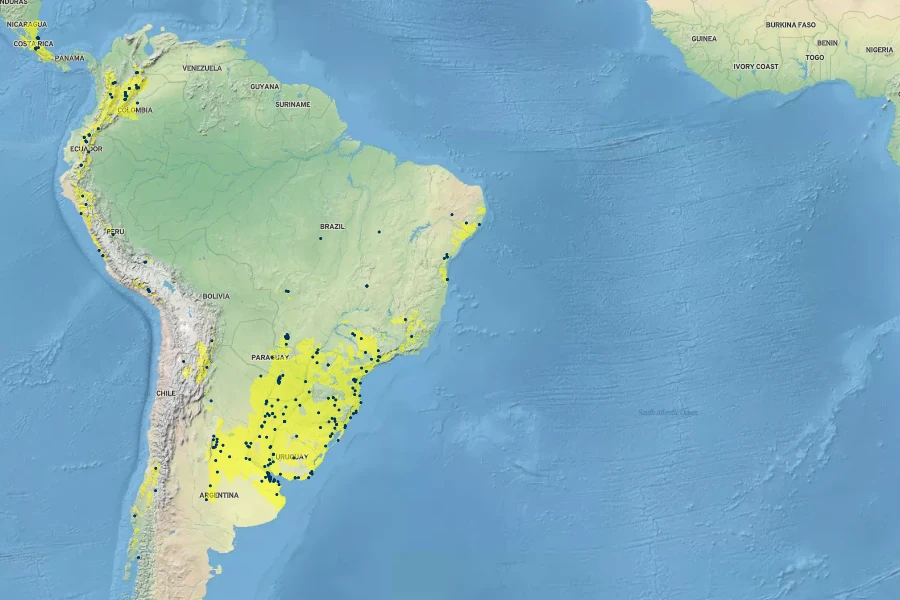
Myriophyllum aquaticum, commonly known as Parrot Feather Watermilfoil, is an evergreen perennial herb. It is native to Central and South Tropical America, where it thrives in still or slow-moving freshwater bodies such as streams, ponds, and wetlands. This plant typically grows to a height of 0.3-0.5 feet and can spread 0.5-1 feet wide. Parrot Feather Watermilfoil is characterized by its feathery, bright green foliage that emerges above the water surface, giving it a distinctive, ornamental appearance reminiscent of small fir trees. The emergent stems can grow over 5 feet long and often reach the bank and shore. The inconspicuous pinkish-white flowers are small, about 1/16 inches long, and bloom in the spring and sometimes in the fall.
Parrot Feather Watermilfoil is valued for its aesthetic appeal and is used in water gardens and aquariums. It provides a lush, textured look and can help oxygenate the water, benefiting fish and other aquatic life. However, it can become invasive outside its native range, outcompeting native species and altering aquatic ecosystems. It prefers full sun to part shade and requires an aquatic environment with standing water. While it is easy to grow, caution is advised due to its invasive potential. It can spread rapidly through plant fragments and intentional plantings, and once established, it is difficult to control. It is invasive worldwide, including Europe, the U.S., and Australia; banned for sale across the UK and EU due to dense aquatic infestations.CC BY-SA 4.0
Parrot Feather Watermilfoil is valued for its aesthetic appeal and is used in water gardens and aquariums. It provides a lush, textured look and can help oxygenate the water, benefiting fish and other aquatic life. However, it can become invasive outside its native range, outcompeting native species and altering aquatic ecosystems. It prefers full sun to part shade and requires an aquatic environment with standing water. While it is easy to grow, caution is advised due to its invasive potential. It can spread rapidly through plant fragments and intentional plantings, and once established, it is difficult to control. It is invasive worldwide, including Europe, the U.S., and Australia; banned for sale across the UK and EU due to dense aquatic infestations.CC BY-SA 4.0
Plant Description
- Plant Type: Herb
- Height: 0.3-0.5 feet
- Width: 0.5-1 feet
- Growth Rate: Moderate
- Flower Color: N/A
- Flowering Season: Summer
- Leaf Retention: Evergreen
Growth Requirements
- Sun: Full Sun, Part Shade
- Drainage: Standing
Common Uses
Bird Garden, Potted Plant, Water Garden
Natural Habitat
native to Central and South Tropical America, where it thrives in still or slow-moving freshwater bodies such as streams, ponds, and wetlands
Other Names
Common Names: Brazilian Water-Milfoil, Water-Feather, Thread-Of-Life, Parrot’s-Feather, Parrot Feather Water-Milfoil, Parrot’s Feather, Brazilian Watermilfoil, Parrot Feather, Parrotfeather, Waterduisendblaar
Scientific Names: Myriophyllum aquaticum, Myriophyllum mattogrossense, Myriophyllum brasiliense, Myriophyllum proserpinacoides, Enydria aquatica
GBIF Accepted Name: Myriophyllum aquaticum (Vell.) Verdc.