Coastal Honeymyrtle
/
(Melaleuca systena)
Coastal Honeymyrtle (Melaleuca systena)
/


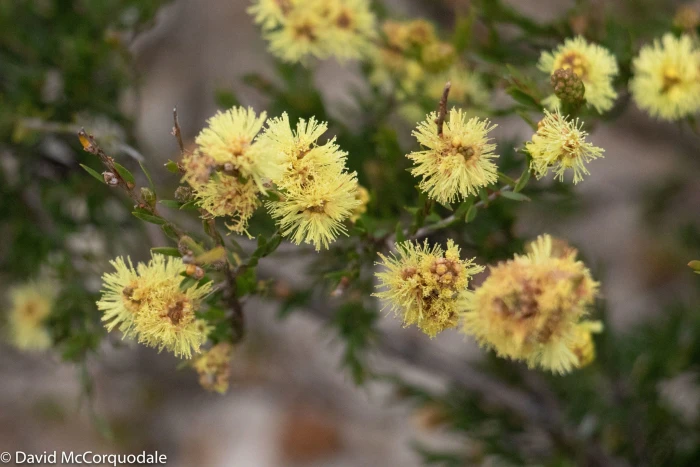

David McCorquodale
CC BY 4.0

Image By:
David McCorquodale
Recorded By:
Copyright:
CC BY 4.0
Copyright Notice:
Photo by: David McCorquodale | License Type: CC BY 4.0 | License URL: http://creativecommons.org/licenses/by/4.0/ | Rights Holder: David McCorquodale | Publisher: iNaturalist | Date Created: 2018-11-02T10:26:57-07:00 |





Summary
Melaleuca systena, commonly known as Coastal Honeymyrtle, is a small evergreen shrub endemic to the coastal and inland regions of southwestern Western Australia. It typically grows up to 7 feet tall and has a bushy, rounded form. The leaves of Coastal Honeymyrtle are linear to egg-shaped, fleshy, and aromatic when crushed. From late winter to spring, it produces showy clusters of white to creamy-yellow flowers at the ends of branches, which are highly attractive to bees and other pollinators.
Coastal Honeymyrtle is valued for its hardiness and ability to thrive in poor soils, making it a suitable choice for coastal gardens, erosion control on sand dunes, and as a low-maintenance ornamental shrub. It prefers full sun to part shade and is tolerant of drought, salt spray, and wind, which makes it ideal for seaside planting. While it generally requires little care once established, it can benefit from occasional pruning to maintain its shape and encourage denser foliage.CC BY-SA 4.0
Coastal Honeymyrtle is valued for its hardiness and ability to thrive in poor soils, making it a suitable choice for coastal gardens, erosion control on sand dunes, and as a low-maintenance ornamental shrub. It prefers full sun to part shade and is tolerant of drought, salt spray, and wind, which makes it ideal for seaside planting. While it generally requires little care once established, it can benefit from occasional pruning to maintain its shape and encourage denser foliage.CC BY-SA 4.0
Plant Description
- Plant Type: Tree, Shrub
- Height: 2-8 feet
- Width: 1.5-2.5 feet
- Growth Rate: Moderate
- Flower Color: White, Yellow
- Flowering Season: Spring, Summer
- Leaf Retention: Evergreen
Growth Requirements
- Sun: Full Sun
- Drainage: Medium, Slow
Common Uses
Bird Garden, Hedges, Low Maintenance, Showy Flowers, Water Garden
Natural Habitat
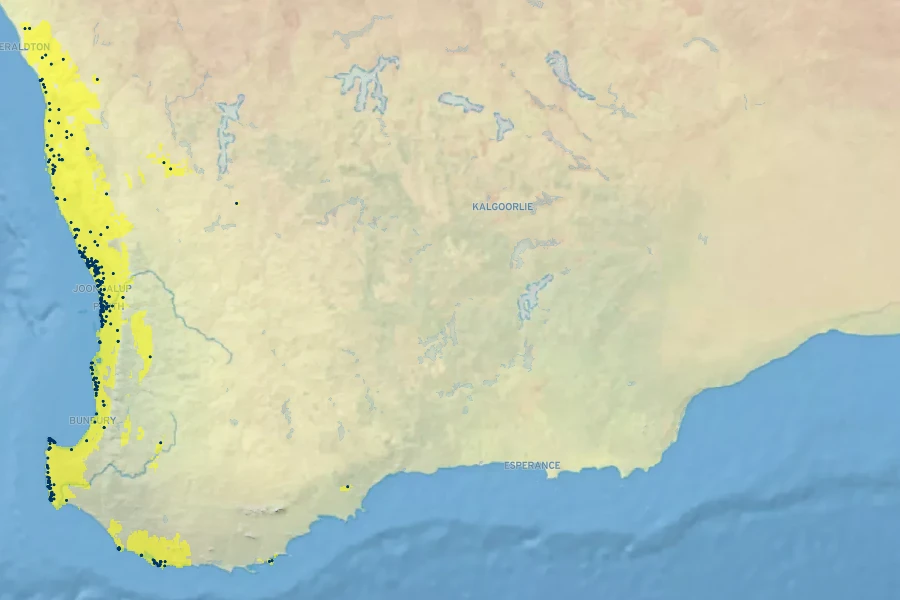
Coastal and inland regions of southwestern Western Australia, including biogeographic regions like Avon Wheatbelt, Coolgardie, Geraldton Sandplains, Jarrah Forest, Swan Coastal Plain, Warren, and Yalgoo
Other Names
Common Names:
Scientific Names: Melaleuca systena, Melaleuca acerosa, Myrtoleucodendron acerosum
GBIF Accepted Name: Melaleuca systena