Pheasant-Berry
/
(Margaritaria discoidea)
Pheasant-Berry (Margaritaria discoidea)
/


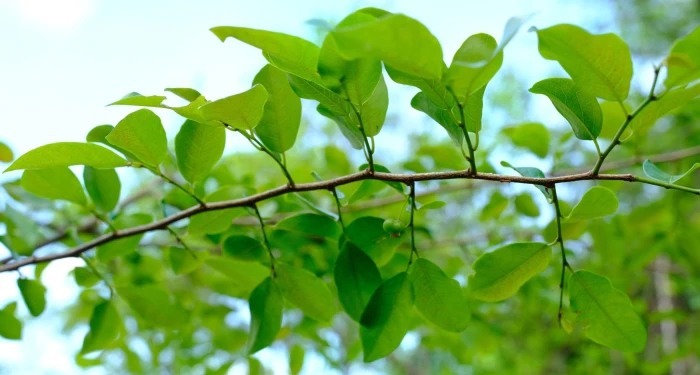

Nick Helme
CC BY-SA 4.0

Image By:
Nick Helme
Recorded By:
Copyright:
CC BY-SA 4.0
Copyright Notice:
Photo by: Nick Helme | License Type: CC BY-SA 4.0 | License URL: http://creativecommons.org/licenses/by-sa/4.0/ | Rights Holder: Nick Helme | Publisher: iNaturalist | Date Created: 2021-12-15T06:43:18-08:00 |





Summary
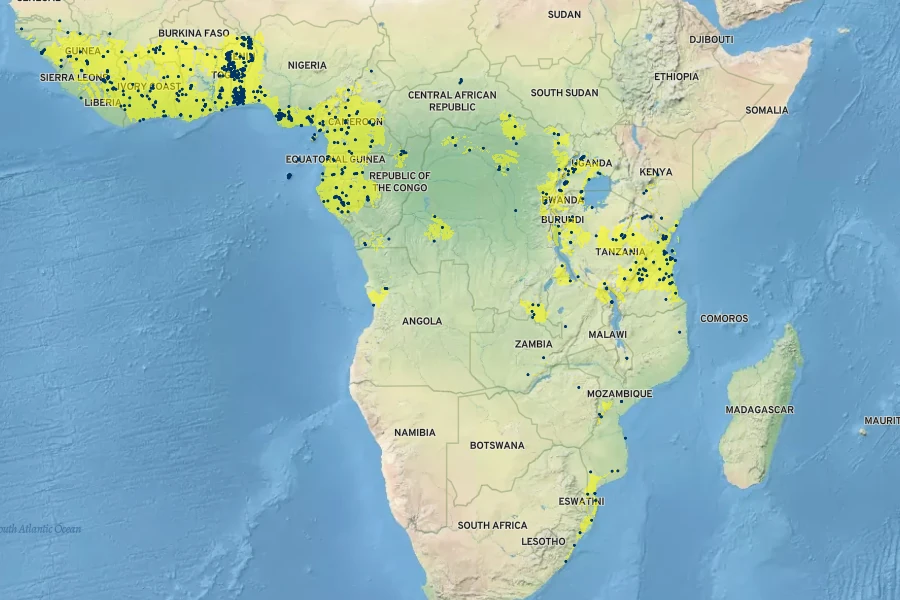
Margaritaria discoidea, commonly known as pheasant-berry, egossa red pear, or bushveld peacock-berry, is a deciduous tree native to the diverse ecosystems of sub-Saharan Africa, including savannas, open woodlands, and riverine forests. It is particularly prevalent in warmer, higher rainfall areas, from the Eastern Cape of South Africa to tropical Africa. This species can reach up to 98 feet in height and is characterized by a straight stem with rough, flaking bark that adds textural interest. The fragrant flowers are small, greenish-yellow, and inconspicuous, blooming in clusters. Following flowering, it produces distinctive three-lobed capsules about 0.4 inches in diameter, with a dark metallic blue-green inner part that is visually striking against the foliage.
The pheasant-berry is valued for its ornamental fruit and its use in traditional medicine, as it contains alkaloids like phyllochrysine and securinine with anti-inflammatory and analgesic properties. In cultivation, it is used for cabinetry and building due to its durable wood. The tree also plays a role in supporting local biodiversity; its leaves serve as food for butterfly larvae, and its flowers are a nectar source for bees and other pollinators. For successful growth, it requires a warm climate with ample rainfall, well-drained soil, and full sun to partial shade. While not commonly cultivated outside its native range, it can be grown in similar tropical and subtropical climates. Potential problems include susceptibility to pests such as ticks, which local extracts have been used to combat.CC BY-SA 4.0
The pheasant-berry is valued for its ornamental fruit and its use in traditional medicine, as it contains alkaloids like phyllochrysine and securinine with anti-inflammatory and analgesic properties. In cultivation, it is used for cabinetry and building due to its durable wood. The tree also plays a role in supporting local biodiversity; its leaves serve as food for butterfly larvae, and its flowers are a nectar source for bees and other pollinators. For successful growth, it requires a warm climate with ample rainfall, well-drained soil, and full sun to partial shade. While not commonly cultivated outside its native range, it can be grown in similar tropical and subtropical climates. Potential problems include susceptibility to pests such as ticks, which local extracts have been used to combat.CC BY-SA 4.0
Plant Description
- Plant Type: Tree
- Height: 10-50 feet
- Width: 5-15 feet
- Growth Rate: Moderate
- Flower Color: Green, Yellow
- Flowering Season: Spring
- Leaf Retention: Deciduous
Growth Requirements
- Sun: Full Sun
- Drainage: Medium, Fast
Common Uses
Bee Garden, Bird Garden, Low Maintenance
Natural Habitat
Native to savannas, open woodlands, and riverine forests within sub-Saharan Africa
Other Names
Common Names: Phulwara Tree, Disk Fruit
Scientific Names: Margaritaria discoidea, Cicca discoidea, Diasperus discoideus, Flueggea klaineana, Flueggea klaineana, Margaritaria discoidea subsp. discoidea, Phyllanthus discoideus
GBIF Accepted Name: Margaritaria discoidea