Horse Mango
/
(Mangifera foetida)
Horse Mango (Mangifera foetida)
/


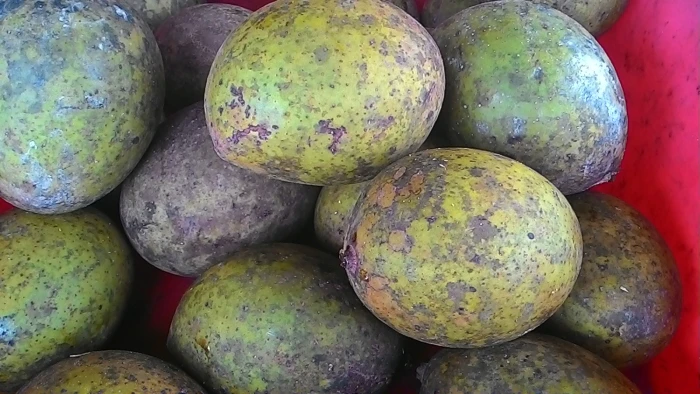

© Ong Jyh Seng
CC BY-SA 4.0

Image By:
© Ong Jyh Seng
Recorded By:
Copyright:
CC BY-SA 4.0
Copyright Notice:
Photo by: © Ong Jyh Seng | License Type: CC BY-SA 4.0 | License URL: http://creativecommons.org/licenses/by-sa/4.0/ | Uploader: ongzi | Publisher: iNaturalist |





Summary
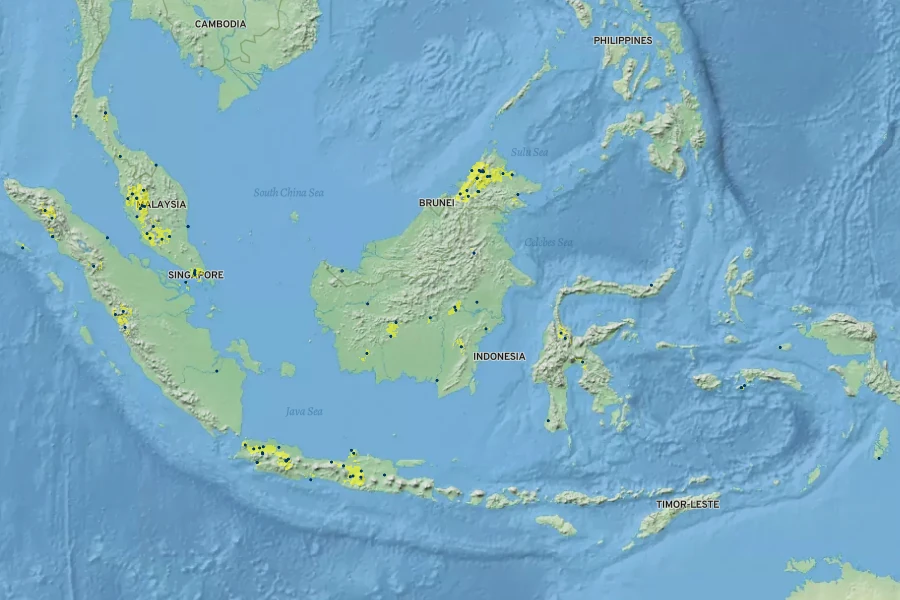
Mangifera foetida, commonly known as Horse Mango or Bachang, is a tropical evergreen tree native to the lowland rainforests of Southeast Asia, particularly in Indonesia, Malaysia, and Thailand. It can grow up to 98 feet (30 meters) in height and 30 feet (9 meters) in width. The tree is characterized by its dense canopy, dark green leaves, and large, yellowish-green fruit with a pungent odor. The flowering season occurs in the early rainy season, with small, pinkish-white flowers that are not particularly showy. The bark is grey and somewhat rough, adding to the tree’s tropical appearance.
Horse Mango is valued for its edible fruit, despite its strong smell, and is often used in local culinary practices to make jams and juices. The mature fruits are fibrous and have a unique flavor profile. In cultivation, it requires moist, well-draining clay soil and thrives in full sun. The tree’s seed is disease-resistant, making it an excellent rootstock for grafting other mango varieties. It is also used in traditional medicine and as a shade tree due to its dense foliage. However, gardeners should be cautious as the sap of young fruits can cause skin irritation. Horse Mango is not commonly found in commercial cultivation outside its native range, but it is an interesting species for tropical fruit collectors and those interested in ethnobotanical plants.CC BY-SA 4.0
Horse Mango is valued for its edible fruit, despite its strong smell, and is often used in local culinary practices to make jams and juices. The mature fruits are fibrous and have a unique flavor profile. In cultivation, it requires moist, well-draining clay soil and thrives in full sun. The tree’s seed is disease-resistant, making it an excellent rootstock for grafting other mango varieties. It is also used in traditional medicine and as a shade tree due to its dense foliage. However, gardeners should be cautious as the sap of young fruits can cause skin irritation. Horse Mango is not commonly found in commercial cultivation outside its native range, but it is an interesting species for tropical fruit collectors and those interested in ethnobotanical plants.CC BY-SA 4.0
Plant Description
- Plant Type: Tree
- Height: 60-100 feet
- Width: 20-30 feet
- Growth Rate: Slow, Moderate
- Flower Color: N/A
- Flowering Season: Spring, Summer
- Leaf Retention: Evergreen
Growth Requirements
- Sun: Full Sun
- Drainage: Medium, Fast
Common Uses
Edible*Disclaimer: Easyscape's listed plant edibility is for informational use. Always verify the safety and proper identification of any plant before consumption.
Natural Habitat
Native to the lowland rainforests of Southeast Asia
Other Names
Common Names: Horse Mango, Limus, Bachang Mango, Gray Mango, Bambangan, Kwini
Scientific Names: Mangifera foetida, Mangifera foetida var. leschenaultii, Mangifera foetida var. sphaeroidea, Mangifera horsfieldii, Mangifera indica, Mangifera leschenaultii
GBIF Accepted Name: Mangifera foetida