Jacarandá-De-Espinho
/
(Machaerium biovulatum)
Jacarandá-De-Espinho (Machaerium biovulatum)
/


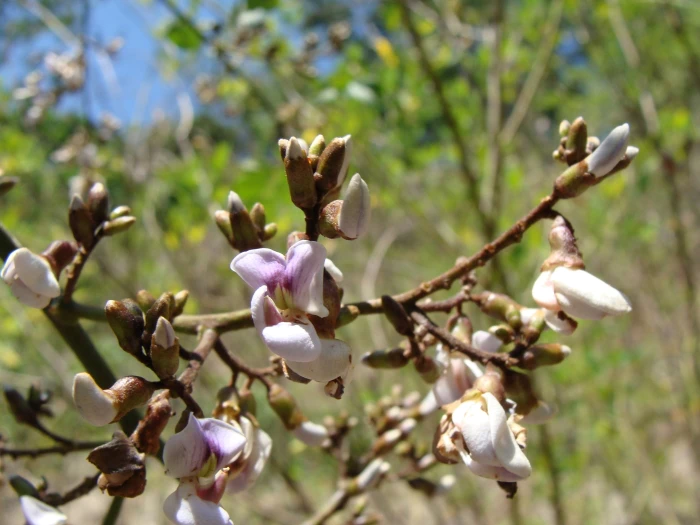

Alexis López Hernández
CC BY 4.0

Image By:
Alexis López Hernández
Recorded By:
Copyright:
CC BY 4.0
Copyright Notice:
Photo by: Alexis López Hernández | License Type: CC BY 4.0 | License URL: http://creativecommons.org/licenses/by/4.0/ | Rights Holder: Alexis López Hernández | Publisher: iNaturalist | Date Created: 2021-01-22T13:39:36-08:00 |



Summary
Machaerium biovulatum, commonly known as Jacarandá-de-espinho, is a deciduous tree native to Mexico, Central America, and South America, often found in dry tropical forests and savannas. This species typically grows to a height of 15-20 feet (4.5-6 meters) with a similar spread. It has a distinctive appearance with its rough, dark brown bark and compound leaves that are bright green in color. The tree produces inconspicuous flowers followed by distinctive woody seed pods that are bi-lobed, giving the species its name. The flowering season is not particularly showy due to the small size of the flowers.
Jacarandá-de-espinho is valued for its hard, durable wood, which is used in carpentry and for making musical instruments. In cultivation, it is used for reforestation projects and as an ornamental tree in large gardens and public landscapes. It requires well-drained soils and can tolerate drought conditions once established, thriving in full sun to partial shade. While not commonly available in the nursery trade, it can be grown from seed by those interested in its wood or as a native species for ecological restoration.CC BY-SA 4.0
Jacarandá-de-espinho is valued for its hard, durable wood, which is used in carpentry and for making musical instruments. In cultivation, it is used for reforestation projects and as an ornamental tree in large gardens and public landscapes. It requires well-drained soils and can tolerate drought conditions once established, thriving in full sun to partial shade. While not commonly available in the nursery trade, it can be grown from seed by those interested in its wood or as a native species for ecological restoration.CC BY-SA 4.0
Plant Description
- Plant Type: Tree
- Height: 20-35 feet
- Width: 15-25 feet
- Growth Rate: Moderate
- Flower Color: Purple
- Flowering Season: Spring
- Leaf Retention: Deciduous
Growth Requirements
- Sun: Full Sun, Part Shade
- Drainage: Medium
Common Uses
Low Maintenance
Natural Habitat
Native to Mexico, Central and South America, often found in dry tropical forests and savannas
Other Names
Common Names:
Scientific Names: Machaerium biovulatum, Machaerium acanthothyrsus, Machaerium habroneurum, Machaerium langlassei, Machaerium lilacinum, Machaerium robiniifolium var. ampliatum
GBIF Accepted Name: Machaerium biovulatum