Christmas Berry
/
(Lycium carolinianum)
Christmas Berry (Lycium carolinianum)
/


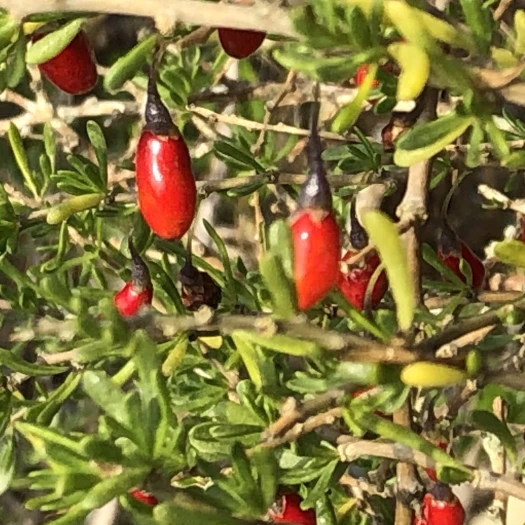

Pete Grannis
CC BY 4.0

Image By:
Pete Grannis
Recorded By:
Copyright:
CC BY 4.0
Copyright Notice:
Photo by: Pete Grannis | License Type: CC BY 4.0 | License URL: http://creativecommons.org/licenses/by/4.0/ | Rights Holder: Pete Grannis | Publisher: iNaturalist | Date Created: 2019-02-17T21:02:39Z |



Summary
Lycium carolinianum, commonly known as Christmas Berry, is an evergreen shrub native to coastal areas, salt marshes, and saline soils along the Gulf Coast of the United States and Mexico. This species typically reaches a height of 6-8 feet (1.8-2.4 meters) and a width of 5-8 feet (1.5-2.4 meters). The plant has a sprawling habit with arching branches and small, fleshy leaves that are adapted to its saline environment. It produces small, tubular purple flowers which bloom from spring to fall, followed by bright red berries that persist into winter, providing a festive appearance that gives the plant its common name.
Christmas Berry is valued for its tolerance to salt, making it suitable for coastal landscaping and restoration projects. It is also used as an ornamental shrub in residential gardens for its year-round interest, particularly the colorful berries which attract birds. In cultivation, it requires full sun to part shade and can adapt to a range of water conditions, though it naturally prefers moist to wet soils. While it is tolerant of various soil types, good drainage is beneficial. Gardeners should be aware that the plant can spread via suckers.CC BY-SA 4.0
Christmas Berry is valued for its tolerance to salt, making it suitable for coastal landscaping and restoration projects. It is also used as an ornamental shrub in residential gardens for its year-round interest, particularly the colorful berries which attract birds. In cultivation, it requires full sun to part shade and can adapt to a range of water conditions, though it naturally prefers moist to wet soils. While it is tolerant of various soil types, good drainage is beneficial. Gardeners should be aware that the plant can spread via suckers.CC BY-SA 4.0
Plant Description
- Plant Type: Shrub
- Height: 6-8 feet
- Width: 5-7.5 feet
- Growth Rate: Slow
- Flower Color: Pink, Purple, White
- Flowering Season: Fall
- Leaf Retention: Deciduous
Growth Requirements
- Sun: Full Sun, Part Shade
- Drainage: Fast, Medium, Slow
Common Uses
Bank Stabilization, Bee Garden, Bird Garden, Butterfly Garden, Edible*Disclaimer: Easyscape's listed plant edibility is for informational use. Always verify the safety and proper identification of any plant before consumption., Erosion Control, Hummingbird Garden, Low Maintenance, Salt Tolerant
Natural Habitat
Native to coastal areas, salt marshes, and saline soils along the Gulf Coast of the United States and Mexico
Other Names
Common Names: Christmasberry, Carolina Desert-Thorn, Carolina Matrimony Vine, Carolina Wolfberry, Creeping Wolfberry
Scientific Names: Carolina Desert-Thorn
GBIF Accepted Name: Lycium carolinianum Walter